Republicans Are Holding Far Fewer Town Halls Than Democrats, Report Says
Key Takeaways
- •Republicans have held 39 in-person town halls so far in 2026, while Democrats have held 451.
- •GOP lawmakers cited protests, security concerns, and wider audience reach as reasons for favoring virtual events.
- •House GOP leadership encouraged lawmakers in spring 2025 to avoid in-person town halls after several contentious public meetings.
- •Democrats say the reduced number of town halls weakens direct feedback from constituents and accountability for lawmakers.
- •Rep. Mike Flood of Nebraska said he intends to keep holding three town halls a year under a pledge he made in 2022.
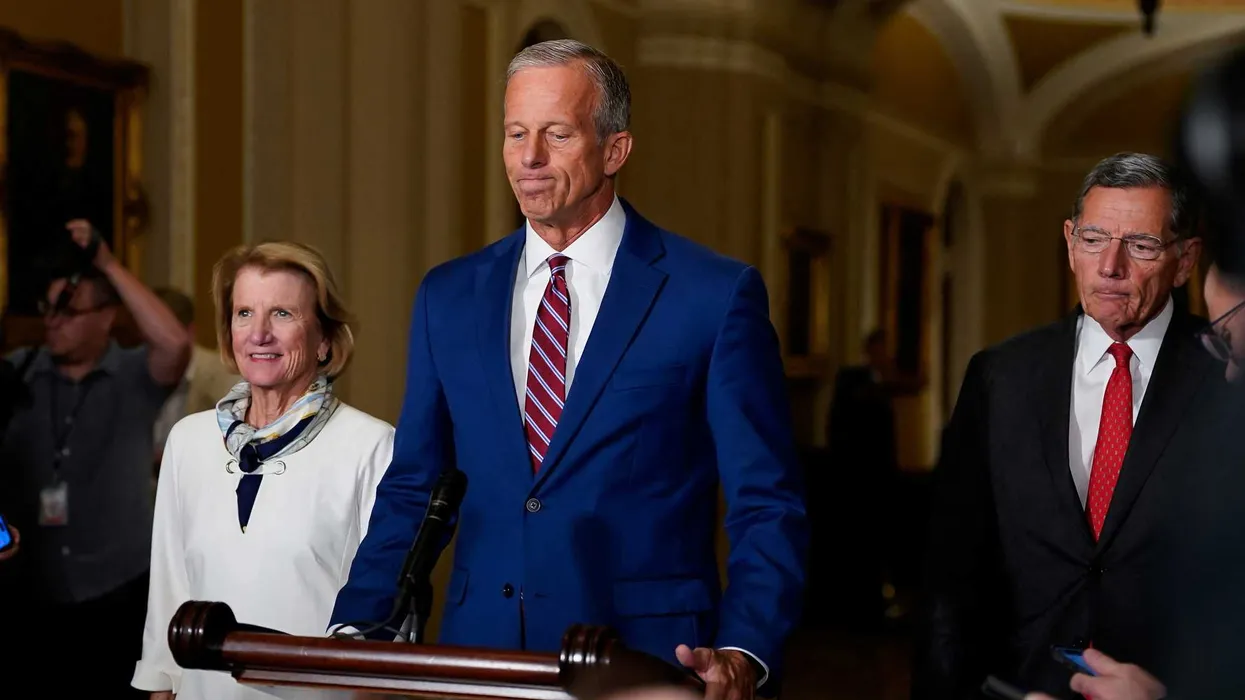
Republicans have sharply reduced the number of in-person town hall meetings they hold with constituents, according to new reporting from MS NOW.
So far in 2026, Republicans have held just 39 town halls, while Democratic lawmakers have held 451. MS NOW wrote on Thursday, “The Republican town hall is disappearing. Once a mainstay of life as a lawmaker, in-person town halls have become increasingly rare for House Republicans, who are opting instead for virtual events and more private meetings with constituents.”
MS NOW said it spoke with GOP lawmakers who cited three main reasons for the shift. Some said they want to avoid being protested or heckled at public events. Others said virtual meetings allow them to reach more people at once. A third group pointed to security concerns, including the assassination attempts against President Donald Trump and other officials. As MS NOW put it, “Republicans acknowledged a broad rejection of the traditional town hall.”
“They’re a setup,” one House Republican told MS NOW, requesting anonymity to discuss the sensitive topic. “It’s just a setup to get us — get you off guard. And for me, personally, it’s a good way to get shot. There’s a lot of crazies out there right now.” The lawmaker added, “I just don’t feel like there is any gain to be had.”
Another Republican said, “It’s the disruptive factor. It’s the screaming factor. But it’s also, truthfully, a security factor. The Republicans have been the ones shot at. Republicans have been the ones attacked.”
Those concerns have precedent. In 2017, a gunman opened fire on Republican lawmakers at a congressional baseball practice in Alexandria, Virginia, seriously wounding then-House Majority Whip Steve Scalise, and Trump survived two assassination attempts during his 2024 campaign.
A third lawmaker argued that virtual events are the better format. “If you actually want to have a conversation, hear questions and give answers, it makes no sense to not do a tele-town hall,” the lawmaker said. “It’s the best way to do it.” Tele-town halls — conference-call-style events that let a member speak with thousands of constituents at once by dialing into a live line — have been a staple of congressional communications for members of both parties for years.
MS NOW said the move away from in-person events could weaken “the congressional feedback loop between lawmakers and the voters they represent.” The outlet wrote that town halls are not only a chance for members of Congress to explain their votes, but also a rare opportunity to hear directly from constituents about how policies are affecting them. According to the report, backlash at these events can serve as a reality check for lawmakers and sometimes push them to rethink their positions.
The reporting said the decline in Republican town halls accelerated in spring 2025, when House GOP leadership — led by Rep. Richard Hudson of North Carolina, chair of the National Republican Congressional Committee — encouraged lawmakers to avoid in-person town halls and instead hold virtual gatherings. That guidance followed several viral GOP town halls in which constituents and activists protested Trump administration policies, placing lawmakers on the defensive in front of cameras. Voter criticism reportedly covered rising costs, Medicaid cuts in the GOP’s reconciliation bill, and even the Jeffrey Epstein files.
Hostile town halls are not unique to either party. In the summer of 2009, Democratic lawmakers returned to their districts to face shouting crowds opposed to the Affordable Care Act, an early catalyst of the tea party movement, and in early 2017 Republican members themselves confronted packed, angry audiences over their party’s effort to repeal that law.
The broader trend shows a steep decline in Republican town halls over time. Republicans held 229 in the first half of 2024, 122 in 2025, and just 39 in 2026 so far. Democrats moved in the opposite direction: they held 214 town halls in the first half of 2024, 924 in 2025, and 451 so far this year. In some cases, individual Democrats have held more town halls than the entire Republican Party, and some have begun holding events in Republican districts to fill the gap. That outreach comes with the November 2026 midterms approaching, when all 435 House seats will be on the ballot and Republicans will be defending a narrow majority in the chamber.
“Republicans know their agenda is deeply unpopular, so they’re hiding from their constituents,” said Rep. Brendan Boyle (D-PA), who has been holding town halls in a nearby opponent’s district. “After voting to gut healthcare, raise costs and shower billionaires with tax breaks, they won’t even defend their record back home. I’ve held town halls in Republican districts, and I’ll keep showing up where my Republican colleagues won’t.”
One Republican who has continued to hold town halls is Rep. Mike Flood (R-NE), even after being criticized at an event last year. Flood told MS NOW that he had promised in 2022 to hold three town halls a year and intends to keep that pledge. “Things only get better when you go to the town square and you have an exchange of ideas,” he said.
Other Republicans have chosen a different path, preferring virtual campaigning and fewer direct public forums. Democrats have criticized that approach. Viet Shelton, a spokesperson for the Democratic Congressional Campaign Committee, said, “If you no longer believe it’s worth your time to listen to the people who elected you, then you no longer deserve the job.”
