Shattered GOP hunts for someone to blame as the 'House of Trump' falls apart: report
Key Takeaways
- •Journalist Patrick Cockburn argues that Republicans will direct blame for their midterm election losses at President Donald Trump.
- •Cockburn contends the GOP under House Speaker Mike Johnson operated as a rubber stamp for Trump, protecting him from legal and political threats while approving his contentious policies.
- •Trump personally chose primary winners based on loyalty, backing Ken Paxton over incumbent Sen. John Cornyn in Texas, and multiple Trump-picked candidates cited by CNN's Jake Tapper and John King lost on election night.
- •According to Cockburn, the coalition that twice elected Trump has disintegrated, and the devotion of MAGA loyalists alone proved insufficient in the midterms.
- •Democrats, amid public suspicion of an Epstein cover-up, plan to pursue maximum transparency on the Jeffrey Epstein files, making Congress the next arena for the issue.
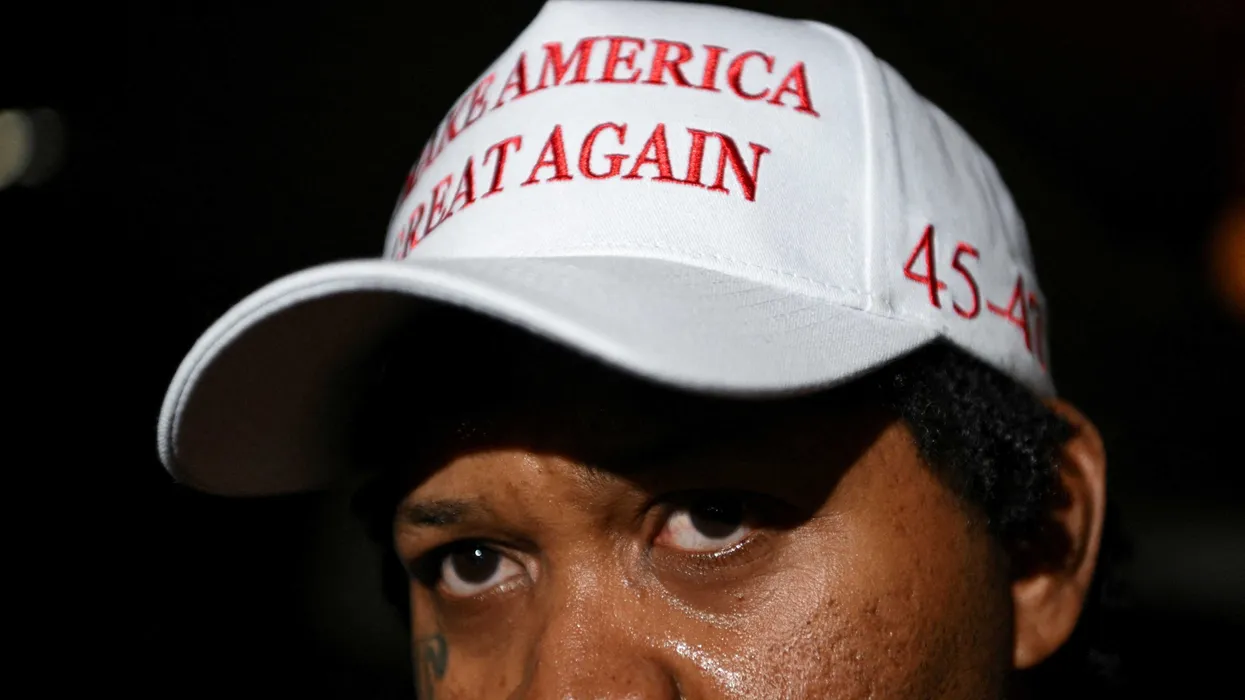
Shattered Republicans are already searching for someone to blame after Tuesday's midterm elections, with journalist and author Patrick Cockburn arguing that the fallout from the GOP's electoral calamity will land squarely on President Donald Trump. Midterm elections, held midway through a president's term, are traditionally read as a referendum on the party in power — which helps explain why the search for scapegoats began almost immediately.
Cockburn, writing in the i Paper, observes that whenever a group of angry villagers gathers with torches, a fire is likely to follow — and the House of Trump appears to be the kindling.
"A shattered Republican Party will be looking for somebody to blame for their electoral calamity – and accusing fingers are already pointing at Trump as the pied piper who led them to their doom," he reports.
Under House Speaker Mike Johnson, the Republican Party has served as little more than a rubber stamp for Trump — excusing his behavior, protecting him from both the law and impeachment, rationalizing his most controversial statements, and approving his most contentious policies.
Cockburn notes that Trump sought to move on from the scandal surrounding child abuser Jeffrey Epstein, with Democratic representatives alleging that the Justice Department has released only half of the papers relating to Epstein. With Republicans in charge of the House and Senate, critics say the party largely succeeded in blocking much of the information and pertinent names in the files.
And what did Republicans get for their devotion? A 6-foot, 3-inch anchor with a troubling hyper-focus on ballrooms and a habit of calling inflation a hoax.
Worse, Cockburn argues, Trump has acted as a dictator over the GOP, personally picking and choosing primary winners based on who showed the most fealty to him — or who happened to be running against another Republican who had at some point crossed him — regardless of whether his personal pick was the best candidate to survive a general election. Trump chose flawed Texas Senate candidate Ken Paxton to survive the GOP primaries and chased out incumbent Sen. John Cornyn, a well-respected figure who was arguably more competitive than Paxton. For a party that had treated the president's endorsement as a decisive primary asset, election night amounted to an audit of that strategy.
One exchange between CNN anchor Jake Tapper and reporter John King made things brutally lucid as they ran through the long list of candidates Trump personally chose who bombed on Tuesday night.
"Who picked Darline Graham in South Carolina?" asked King.
"Trump," said Tapper.
"Who picked Michael Whatley in North Carolina?" said King.
"Trump," responded Tapper.
"Who picked Mike Collins in Georgia?"
"Trump."
"Who picked Vivek Ramaswamy in a governor's race in Ohio?" called King.
"Trump," answered Tapper.
"Welcome to the night," said King, casually summarizing the GOP's midterm disaster.
"In the last few years, [Trump] has kept an iron grip on his party as he repeatedly delivered victory and crushed dissent," Cockburn argued in the i Paper. "But the coalition that twice sent him to the White House has now disintegrated. Though he may still enjoy the devotion of fanatic MAGA loyalists, the midterms showed that this is not nearly enough. The house that Trump built is falling apart before our eyes."
But now the villagers are at the drawbridge, and Republicans have few incentives to put themselves in harm's way to defend Castle Trump.
"Amid widespread public suspicion of a [Epstein] cover-up, the Democrats will ensure the case has maximum transparency," said Cockburn. "Accusations of corruption against Trump and his associates cut through with voters during the campaign and will be a focus of congressional attention."
That pledge of maximum transparency sets up Congress as the next arena for the Epstein files, an issue Cockburn notes cut through with voters during the campaign.
One of many, most likely.

