Robert Reich Warns of Trump's Renaming of Landmarks and Places as an Assertion of Dominance
Key Takeaways
- •Trump said he decided to rename Lake Ontario to Lake America out of anger at Canada, though the lake straddles the U.S.–Canada border and unilateral renaming carries no international standing.
- •The Gulf of Mexico was renamed the Gulf of America by executive order in early 2025, with federal agencies directed to adopt the new name; Google Maps and Apple Maps followed the change while MapQuest refused.
- •Google said it would display 'Gulf of America' to U.S. users while keeping 'Gulf of Mexico' for others, resulting in different populations seeing different names for the same body of water.
- •A Supreme Court majority allowed Trump to continue building a ballroom at the White House, a ruling Chief Justice John Roberts dissented from, citing Theodore Roosevelt's view of the building's stately simplicity.
- •Reich argues that no single person in a democracy should arbitrarily alter shared place names and physical places, describing Trump's actions as 'place robbery' intended to assert dominance.
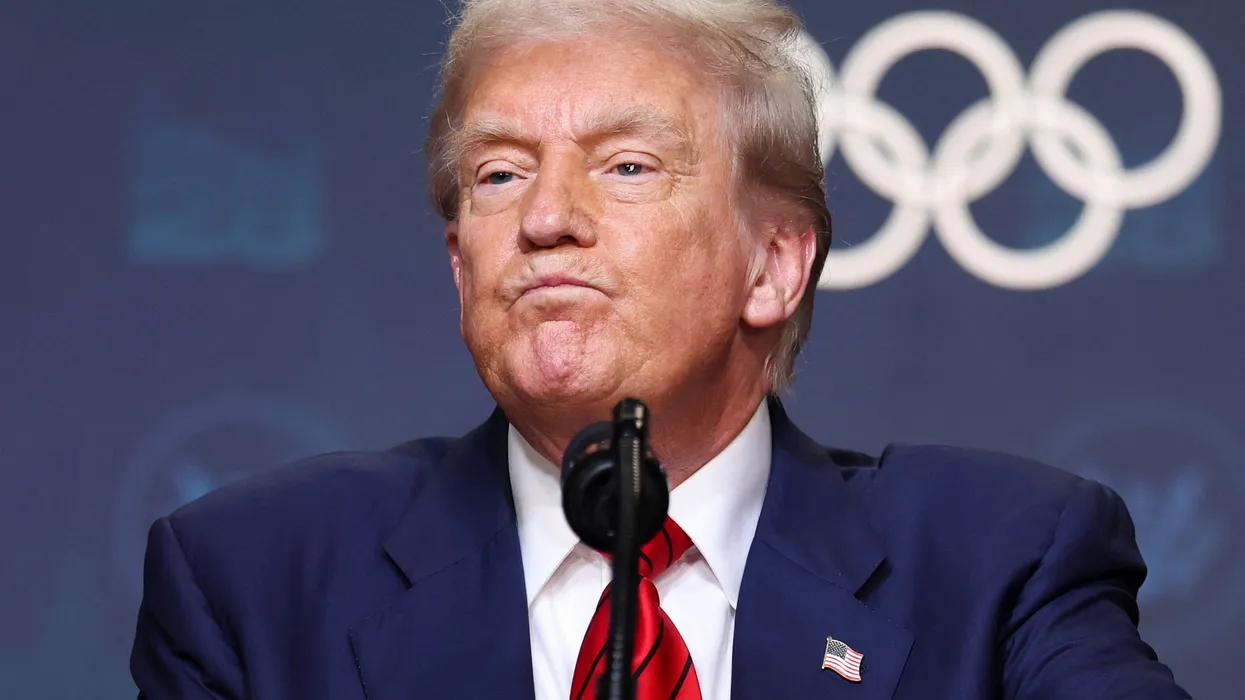
There is a distinction between President Trump usurping powers that constitutionally belong to Congress, and usurping places that belong to everyone, writes Robert Reich. His concern centers on the renaming and physical alteration of what Americans share in common.
Trump said he "decided" to change the name of Lake Ontario to Lake America because he was angered at Canada. Reich questions how one man can decide to rename one of the Great Lakes — a name Americans learn in elementary school — noting that it is part not only of shared heritage but of common reality. Well-known place names anchor people, he argues, providing a shared set of markers by which individuals navigate themselves and situate others. It is also an international body: Lake Ontario straddles the U.S.–Canada border, so any unilateral renaming by one country has no standing with Canada or with international naming bodies, raising questions about how such a change could take hold beyond U.S. official maps.
Trump has also changed the Gulf of Mexico to the Gulf of America — a renaming carried out by executive order in early 2025, with federal agencies directed to adopt the new name in official documents — and has even considered renaming the Atlantic and Pacific Oceans. While a U.S. president has legal authority to instruct the U.S. Board on Geographic Names, the interagency body created in 1890 to standardize American place names, to update official maps and domestic databases, Reich notes that this authority exists to maintain uniformity — the opposite of what Trump is doing, in his view. He also questions why Google Maps and Apple Maps are following Trump's decision to change these place names, and credits MapQuest for refusing. The episode illustrates how a domestic naming decision can ripple outward, since Google said it would show "Gulf of America" to U.S. users while retaining "Gulf of Mexico" elsewhere, leaving different populations looking at different names for the same water.
Reich's concerns extend beyond place names to revered places held in common. The White House in Washington, D.C., he writes, is as much a part of shared reality and common heritage as Lake Ontario or the Gulf of Mexico. President Theodore Roosevelt once said of the White House that its "stately simplicity is … in accord with the purposes it was designed to serve," and that safeguarding it provides continuity with the past. Chief Justice John Roberts quoted this line in his dissent from the Supreme Court majority's recent opinion allowing Trump to continue building his ballroom. Once a giant ballroom stands in place of the East Wing, Reich argues, the White House will lose that continuity with the past.
The same applies, he writes, to the Reflecting Pool, the long pool extending eastward from the Lincoln Memorial to the Washington Monument. Trump had its bottom painted dark blue and is now claiming that vandals caused the paint to peel. West of the Lincoln Memorial lie Arlington National Cemetery and the stately Lee-Custis Mansion — also part of shared heritage — and Trump wants to erect a giant arch that would block the view.
Reich clarifies that he is not arguing shared reality must remain fixed through time: place names relied on for entire lives can be changed, and iconic buildings and monuments can be altered. But no single person, he contends, should be able to summarily and heedlessly change these places — Lake Ontario, the Gulf of Mexico, the White House, the Reflecting Pool, the view from the Lincoln Memorial. In a democracy, no one should arbitrarily alter the place names and physical places that anchor, orient, and provide shared meaning.
Trump's "place robbery," Reich writes, is another way of asserting dominance: signaling the power to alter the world at will, forcing people to call places whatever he decides, to accept whatever physical alterations he makes, and to submit to what Reich describes as one of the most intimate kinds of subservience — literally losing one's place.
Reich hopes that when others are once again in charge, among their first acts will be to restore the names, demolish the impositions, and reclaim common understandings of where and who Americans are. How durable any of these renamings and physical alterations prove to be remains an open question, since place names set by one administration can be changed by the next, and the Supreme Court's ballroom ruling was a majority decision over a noted dissent.
Robert Reich is a professor of public policy at Berkeley and former secretary of labor. His writings can be found at .

