Chancellor Healey Says Growth Is the 'Pathway Out of Debt' but Refuses to Be Drawn on Tax Rises
Key Takeaways
- •Chancellor John Healey declined to speculate on tax rises ahead of his first Budget on 28 October, while reaffirming Labour's manifesto commitments ruling out increases to income tax, VAT and national insurance.
- •Analysts at Pantheon Macroeconomics and City institutions consider tax rises highly likely because elevated borrowing costs and defence and welfare spending pressures are narrowing fiscal headroom.
- •Healey announced a review into railway costs, Treasury rule changes to favour long-term infrastructure investment, backing for a 25 per cent cut in business administration costs by 2030, and a target to double the number of UK unicorn startups, currently 205 according to Dealroom.
- •The British Chambers of Commerce called for replacing the triple lock pension and cutting employers' national insurance for under-25s; the OBR estimates the triple lock will cost £15.5bn a year by 2030.
- •As Healey concluded, Jaguar Land Rover confirmed around 4,000 job cuts aimed at removing roughly £1.7bn from its cost base amid weak EV demand, US tariff threats and Chinese competition.
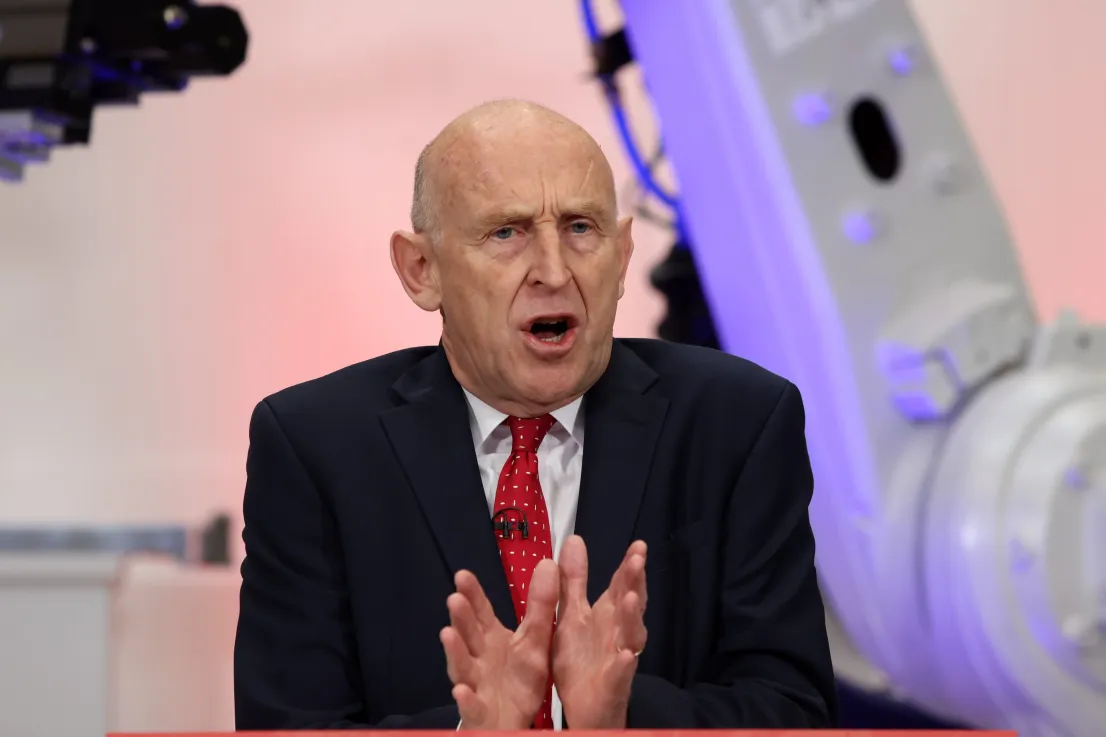
Chancellor John Healey has said he will "not speculate" on expected tax rises at his maiden Budget next month, arguing that growth lies at the "heart of fiscal challenges" facing the UK.
Delivering his first major speech as Chancellor in Coventry, Healey deflected questions over whether businesses and households were set to face another wave of tax rises in October.
He set out his focus on boosting growth "in more places" and on its importance in securing the public finances. Responding to media questions, the former defence minister pledged that the government was "keeping" Labour's 2024 manifesto commitments ruling out increases to income tax, VAT and national insurance.
"I'm not going to speculate on questions of tax," he added. "If I respond to those questions, I'm only going to fuel more speculation."
The Budget is just over seven weeks away. Analysts at Pantheon Macroeconomics and multiple City institutions believe tax rises are highly likely, as higher government borrowing costs driven by elevated gilt yields, together with spending pressures on defence and welfare, are set to narrow the fiscal headroom available to the Chancellor. UK chancellors are typically constrained by self-imposed fiscal rules — usually requiring debt to fall as a share of GDP over a five-year horizon — and the Office for Budget Responsibility judges against these rules at each fiscal event, meaning shrinking headroom effectively forces a choice between tax rises, spending cuts or rule changes at the Budget.
The 'sustainable pathway out of indebtedness'
In his speech, Healey described growth as "indivisible" from fiscal stability, explaining that higher growth would be the UK's "sustainable pathway out of indebtedness and into prosperity". The argument that faster growth expands the tax base and eases debt-servicing costs has become a familiar refrain among UK chancellors, as the country's debt interest bill has risen alongside elevated borrowing costs.
He backed Sir Keir Starmer's pledge to cut business administration costs by 25 per cent by 2030 and to reform planning rules to boost nuclear energy production under the Fingleton Review.
It was also announced that the government would launch a review into railway costs and rewrite Treasury rules to prioritise longer-term investment in public infrastructure.
"People who elected us expect us to get on with it," Healey said. "Legal risk is not the be all and end all of government decisions."
Alongside job creation and investment, innovation featured prominently in Healey's first speech, with a new target to double the number of UK unicorn startups — companies valued at more than $1bn. One index by Dealroom puts the number of UK unicorns at 205, the largest concentration in Europe, though UK startup funding has come under pressure in recent years amid a broader slowdown in European venture capital.
The Chancellor also indicated that devolution would be central to his first Budget as a means of delivering growth "in more places" beyond London, where regional productivity gaps with the capital have long been among the widest in Europe.
Healey 'failed to end uncertainty' on taxes
The speech was the first in a series of public appearances Healey will make before the Budget on 28 October.
The Treasury has set a Wednesday night deadline for business leaders to submit proposals and ideas for the Budget.
The British Chambers of Commerce (BCC) urged the Chancellor to replace the triple lock pension and to cut employers' national insurance contributions for all under 25-year-olds in order to tackle high levels of youth unemployment.
The triple lock, which guarantees the state pension rises each year by whichever is highest out of wage growth, inflation or 2.5 per cent, has been labelled "unsustainable" for public finances by economists from across the political spectrum. The Office for Budget Responsibility (OBR) has said it will cost £15.5bn a year in extra costs by 2030.
Labour promised in its manifesto to keep the triple lock, and the BCC is the only major industry body calling for it to be scrapped.
Asked about the triple lock pension, Healey said he agreed with the BCC that youth unemployment was a "blight" on the country, but said his plans would be based on proposals from Alan Milburn, whose review of joblessness is due to be completed later this year.
Shadow chancellor Andrew Griffith said "warm words about growth will not make growth a reality or cover up the enormous damage" caused by previous tax rises on businesses and households.
"Healey failed to end uncertainty by ruling out more tax rises, failed to set out a serious plan to reform welfare, and failed to commit to funding defence properly – the very issue he resigned over as defence secretary," Griffith said.
"Even as Jaguar Land Rover cuts jobs, he offered no pause to Labour's job-destroying employment red tape and no measures to get ruinously high energy bills down."
As the Chancellor finished speaking, the carmaker confirmed it would cut around 4,000 jobs in a push to remove roughly £1.7bn from its cost base, the latest in a series of restructuring moves by UK carmakers facing weak demand for electric vehicles, US tariff threats and intense competition from Chinese manufacturers.
