Reflect Orbital Wins FCC Approval for Controversial Space Mirror Satellite Amid Scientific Opposition
Key Takeaways
- •The FCC granted Reflect Orbital permission to launch a demonstration satellite equipped with a massive mirror to redirect sunlight toward Earth.
- •Reflect Orbital aims to commercialize the technology by selling focused sunlight for up to $5,000 per hour to support nighttime solar generation and municipal lighting.
- •International scientific societies are urging regulatory reform, warning the light beams could disrupt ecosystems, harm human health, and impair astronomical research.
- •The FCC determined it is not required to conduct an environmental review because current laws regulating space communications do not mandate one.
- •Reflect Orbital plans to scale the technology rapidly, with long-term goals of deploying tens of thousands of mirror-equipped satellites by 2035.
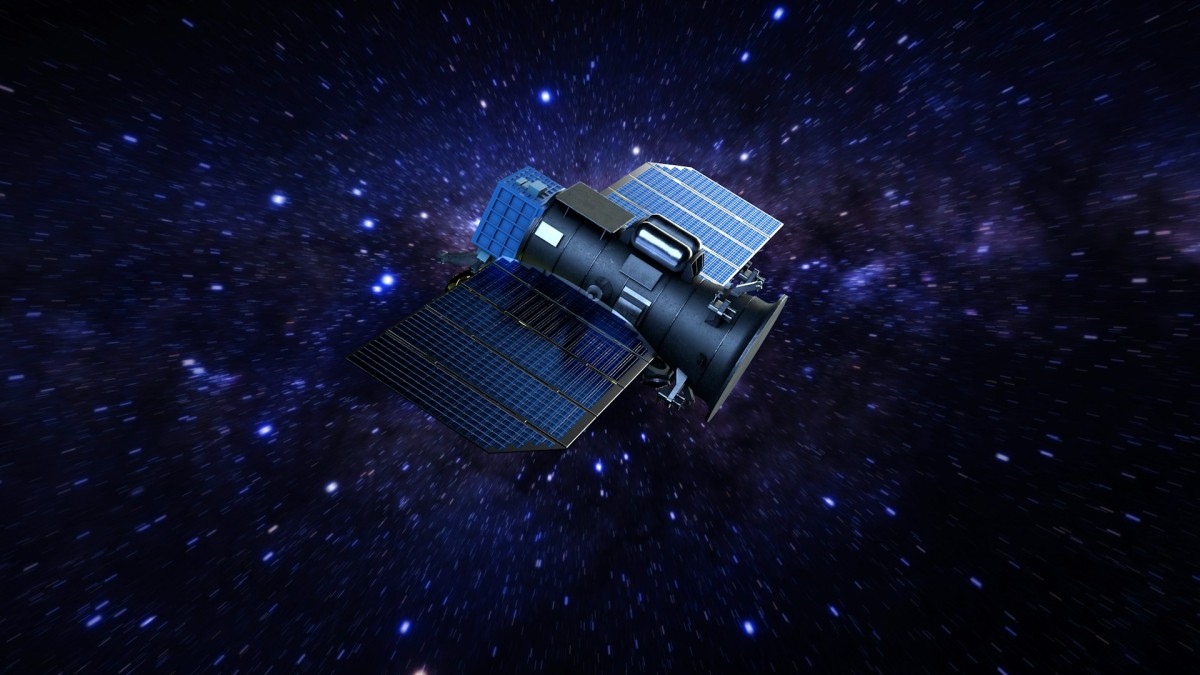
The California-based startup Reflect Orbital has received approval from the U.S. Federal Communications Commission (FCC) to test a satellite equipped with an 18-metre-wide mirror, designed to redirect sunlight onto solar farms and illuminate areas on Earth's dark side at night. The decision has drawn sharp criticism from the global scientific community over potential environmental, health, and astronomical impacts.
Reflect Orbital raised a $20 million Series A in May 2025 to accelerate development of its satellite technology. The company plans to launch its Eärendil-1 demonstration satellite into low Earth orbit before the end of the year. The FCC stated that the project could provide "potentially groundbreaking technology" capable of advancing American leadership in space.
Once in orbit, the satellite will deploy a large thin-film reflector to bounce sunlight back toward the nighttime side of Earth. Reflect Orbital aims to direct sunlight onto areas between 5 km and 6 km wide on demand, with adjustable brightness ranging from "full moon to full noon." If the technology proves viable, the company intends to sell the reflected sunlight to companies and municipalities at up to $5,000 per hour for street illumination or nighttime solar farm operations.
The proposal has generated significant opposition. Scientists warn that the concentrated light beams could "flash blind" pilots, disrupt astronomical observations, and interfere with circadian rhythms in humans, animals, and plants. Additional concerns include disruption to nocturnal species migration, seasonal plant cycles, and the rhythms of marine phytoplankton that form the foundation of ocean food webs.
Roohi Dalal, director of public policy at the American Astronomical Society, stated: "It is clear that the activities that Reflect Orbital is proposing will have an impact on the Earth environment, including on human health, agriculture and wildlife, in addition to astronomy."
The FCC received more than 1,800 public comments regarding Reflect Orbital's satellite application. Presidents of four international scientific societies, collectively representing approximately 2,500 researchers across more than 30 countries, submitted letters urging the agency to conduct a comprehensive environmental review and establish limits on satellite reflectivity and cumulative night sky brightness.
Charalambos Kyriacou, president of the European Biological Rhythms Society, said: "We're saying, please think before you go through with this, because this could have global implications for things like food security. Plants need the night. You can't just get rid of it."
The FCC, however, maintained that space is not subject to the same environmental laws that apply on Earth. The agency regulates satellites primarily through communications licensing under the Communications Act, and scientists have called for reform to close what they see as a regulatory gap in environmental oversight of commercial space activities. Reflect Orbital co-founder and CEO Ben Nowack said the pilot project will enable the company to gather data and confirm that its onboard safeguards can properly manage the light beams the satellite generates. "We're grateful to the FCC for recognising the importance of testing novel technologies in space," Nowack said.
Reflect Orbital has outlined ambitious expansion plans contingent on the pilot's success. The company intends to deploy an additional 1,000 satellite mirrors by 2028 and a total of 50,000 by 2035. Production satellites could feature mirrors up to 55 metres wide. According to the European Southern Observatory, a single sunbeam from these satellites would appear approximately four times brighter than the full Moon within the illuminated area. A constellation of this scale would also add substantially to the growing population of objects in low Earth orbit, where satellite operators and space agencies are already grappling with congestion and collision-risk management.
Environmental groups have also raised concerns about the carbon emissions generated by the rocket launches required to place the satellites into orbit.
Reflect Orbital is not alone in pursuing space-based solar and energy infrastructure. Elon Musk's SpaceX has proposed launching up to 1 million satellites to build a large-scale solar-powered orbital computing network for artificial intelligence applications. SpaceX says orbital data centres could reduce the energy and cooling demands of terrestrial facilities and deliver computing capacity for "billions of users globally." The company's existing Starlink constellation of nearly 10,000 satellites has already faced criticism over orbital congestion and its visible impact on the night sky. In a January post on X, Musk wrote: "The satellites will actually be so far apart that it will be hard to see from one to another. Space is so vast as to be beyond comprehension."
While satellites designed to enhance solar power generation or provide nighttime illumination could advance understanding of space-based energy systems, researchers caution that light pollution has well-documented detrimental effects on the environment. The large-scale deployment of such technology, scientists argue, could pose significant risks to human, animal, and plant health.
By Felicity Bradstock for OilPrice.com

