Ray Dalio Warns Cash Is the 'Worst' Long-Term Investment as Inflation Erodes Purchasing Power
Key Takeaways
- •Ray Dalio considers cash the worst long-term investment because inflation steadily erodes its real purchasing power over time.
- •Even interest-bearing accounts fail to adequately protect wealth, as taxes on earned interest can leave after-tax returns below the inflation rate.
- •Dalio recommends gold as an effective portfolio diversifier, noting the precious metal has climbed 126% over the past five years.
- •Real estate serves as another inflation hedge, with the S&P Cotality Case-Shiller U.S. National Home Price Index rising 87% over the past decade.
- •Despite his critique, Dalio does not advocate eliminating cash entirely, as it remains useful for emergencies, major purchases, and future investment opportunities.
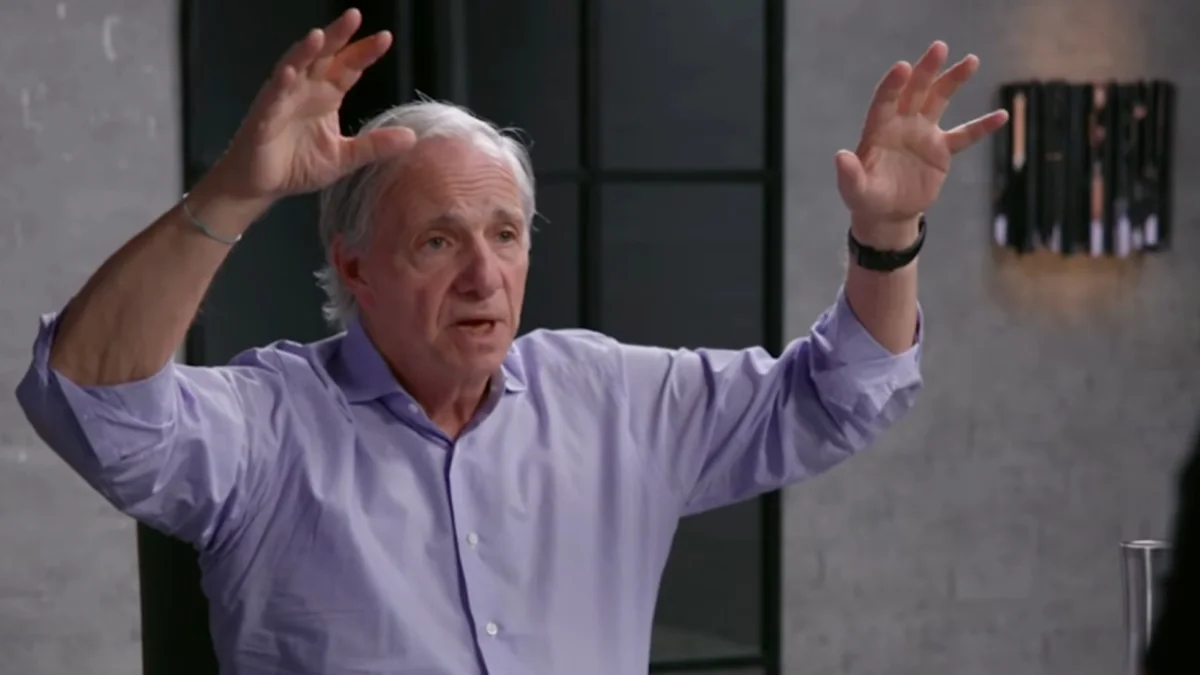
Billionaire investor and Bridgewater Associates founder Ray Dalio — who built Bridgewater into the world's largest hedge fund — has issued a stark warning about what he considers the most dangerous asset in many Americans' portfolios — not because of volatility, but because of its deceptive sense of safety.
That asset is cash, including money held in savings accounts, money market funds, and other short-term, interest-bearing vehicles.
During a recent appearance on The Diary of a CEO podcast hosted by Steven Bartlett (YouTube), Dalio called cash the "worst" long-term investment available to investors.
"People think that that's the safest. It's not," Dalio said. "It's the worst investment over a long period of time because inflation will eat it away."
Dalio clarified that his warning extends well beyond physical currency. His definition of cash encompasses any short-term holding — "a money market fund, whatever it is that is that short-term, 'I'll deposit it and it'll give me an interest rate.'"
While earning interest is preferable to letting physical cash sit idle, Dalio argued that even interest-bearing accounts fail to adequately protect wealth over time.
Cash "has the lowest return, guaranteed almost to have the worst return over the longer period of time," he stated.
When Bartlett observed that people hold cash because it feels safer, Dalio countered: "That's right. And I'm saying it's not safer because of inflation."
The Purchasing Power Problem
Dalio's warning centers on purchasing power — the actual quantity of goods and services a given amount of money can buy. He estimated that if cash earned no interest, the holder would simply "lose to the inflation rate," which he put at roughly 3.5% to 4%.
That estimate closely tracks the latest official figures. The U.S. Consumer Price Index rose 3.5% between June 2025 and June 2026, according to the Bureau of Labor Statistics. Even at the Federal Reserve's own 2% long-term inflation target, cash holders would lose nearly half their purchasing power over roughly 35 years — a structural feature of fiat currency systems that Dalio has warned about for decades.
Interest-bearing accounts can offset some erosion, but Dalio noted that the advertised yield does not capture the full picture.
"Now I'll get an interest rate on it if I put it someplace, and it'll give me maybe an interest rate that's somewhere in that vicinity, similar to that — and then I have to pay taxes on it," he explained. "Even though you really didn't gain relative to inflation, you still have to pay the taxes on whatever you've earned. Anyway, over the long term, it's a lousy return."
In other words, interest income on cash holdings may be taxable, and the after-tax return can still fall short of keeping pace with rising prices.
While annual inflation of 3.5% may appear manageable in any single year, its effects compound substantially over decades. According to the Federal Reserve Bank of Minneapolis, $100 in 2026 has the same purchasing power as just $11.74 did in 1970 — meaning a dollar today buys less than 12 cents did 56 years ago.
Gold as a Diversifier
Dalio has repeatedly advocated gold as a key component of a resilient portfolio. In a prior interview with CNBC, he remarked: "People don't have, typically, an adequate amount of gold in their portfolio," adding, "When bad times come, gold is a very effective diversifier."
Gold's appeal as a store of value stems partly from its finite supply — unlike fiat currencies, it cannot be issued at will by central banks. It is also widely regarded as a safe-haven asset, unlinked to any single country, currency, or economy.
Over the past five years, as inflation has eroded the dollar's purchasing power, gold has climbed 126%.
Other prominent voices share a bullish outlook. JPMorgan CEO Jamie Dimon has said that in the current environment, gold could "easily" rise to $10,000 an ounce.
Real Estate as an Inflation Hedge
Real estate has historically served as another hedge against inflation. When inflation rises, property values frequently increase alongside it, reflecting higher costs for materials, labor, and land. Rental income also tends to rise, providing a revenue stream that adjusts for inflation.
Over the past ten years, the S&P Cotality Case-Shiller U.S. National Home Price NSA Index has risen 87%, reflecting persistent housing demand and constrained supply.
However, elevated home prices and mortgage rates have made direct property ownership more challenging, and managing tenants and maintenance requires significant time and effort.
Diversification Beyond Traditional Markets
Dalio and other prominent investors have long emphasized diversification, particularly because many traditional assets tend to move in the same direction during periods of market stress. Dalio codified this philosophy in his well-known "All Weather" portfolio strategy, designed to perform reasonably across different economic environments by balancing assets that respond differently to growth and inflation shifts.
That concern is especially relevant today. Nearly 40% of the S&P 500's weight is concentrated in its ten largest stocks, and the index's CAPE (cyclically adjusted price-to-earnings) ratio has reached levels not seen since the dot-com boom.
For investors seeking alternatives beyond stocks, bonds, and cash, options range from real estate and precious metals to private equity and collectibles. Post-war and contemporary art, for instance, has outpaced the S&P 500 with low correlation since 1995. The supply of premier works is inherently limited, and many highly sought-after pieces are already held by museums and private collectors.
In 2022, a collection of art owned by the late Microsoft co-founder Paul Allen sold for $1.5 billion at Christie's New York, making it the most valuable collection in auction history.
Balancing Cash Holdings
Despite his critique, Dalio's warning does not suggest investors should eliminate cash entirely. Cash can still serve essential purposes — whether as a reserve for emergencies, a saving vehicle for major purchases, or dry powder for future investment opportunities.
The more nuanced question, according to financial professionals, is whether an investor's overall asset allocation aligns with their specific goals, time horizon, and risk tolerance. Individual circumstances — including income, debt obligations, and investment objectives — ultimately determine how much cash it makes sense to hold.
Sources: YouTube (1); Bureau of Labor Statistics (2); Federal Reserve Bank of Minneapolis (3); S&P Global (4); Christie's (5). This article provides information only and should not be construed as investment advice.

