Whither Real Rates?
Key Takeaways
- •Expansionary fiscal policy, slower growth, and weaker policy credibility are cited as factors keeping real rates elevated.
- •Real rates are described as a benchmark for comparing inflation-adjusted returns across major asset classes.
- •Real rates also affect borrowing conditions for households, firms, and the government.
- •The chart compares 10-year TIPS yields with DKW-estimated short real rates over the next ten years.
- •The gap between market pricing and the estimated rate path is identified as the main focus for future policy reassessment.
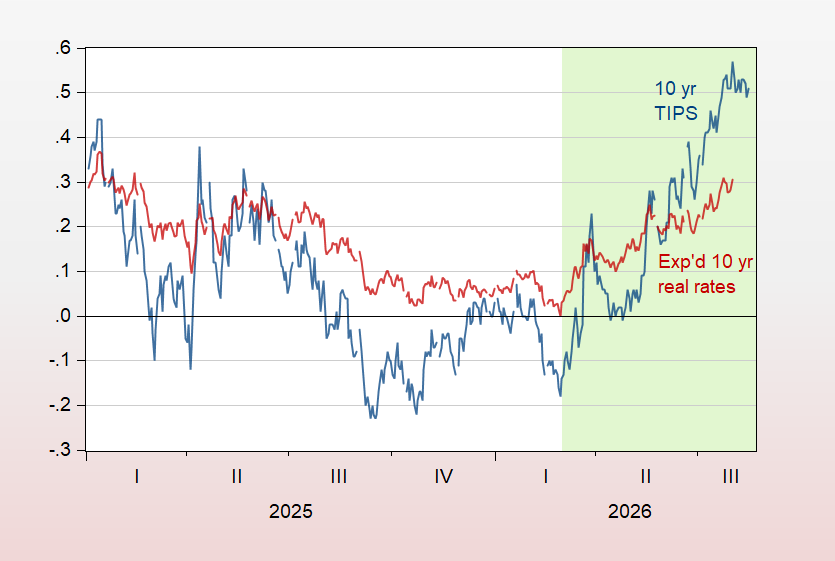
The collision of expansionary fiscal policy, slowing growth, and the erosion of policy credibility, particularly since 27 February 2026, suggests real rates remain elevated. In practice, that matters because real rates are a key benchmark for comparing returns across cash, bonds, and other assets after inflation, and they also shape borrowing conditions for households, firms, and the government. With the figure below juxtaposing TIPS 10-year yields against DKW-estimated short real rates over the next decade, the gap between market pricing and estimated path is the relevant part to watch in any further reassessment of policy expectations.
Figure 1: TIPS 10-year yield (blue) and DKW-estimated short real rates over the next ten years (red), both in percent.

