McConnell's Senate Absence Fuels Questions Over His Health, Staff Influence and Kentucky Succession
Key Takeaways
- •McConnell fell at home on June 14 and briefly lost consciousness, and only two hospital-room photos have been released since then.
- •The article says even McConnell’s allies remain uncertain about his recovery and whether he is able to communicate normally.
- •McConnell previously backed a Kentucky law change that would prevent Governor Andy Beshear from appointing a replacement if the senator died in office.
- •The piece says McConnell’s longtime political network continues to shape Republican leadership, including figures such as John Thune, John Barrasso, and likely successor Andy Barr.
- •The article suggests McConnell could still play a decisive role in the Senate if needed for a close vote.
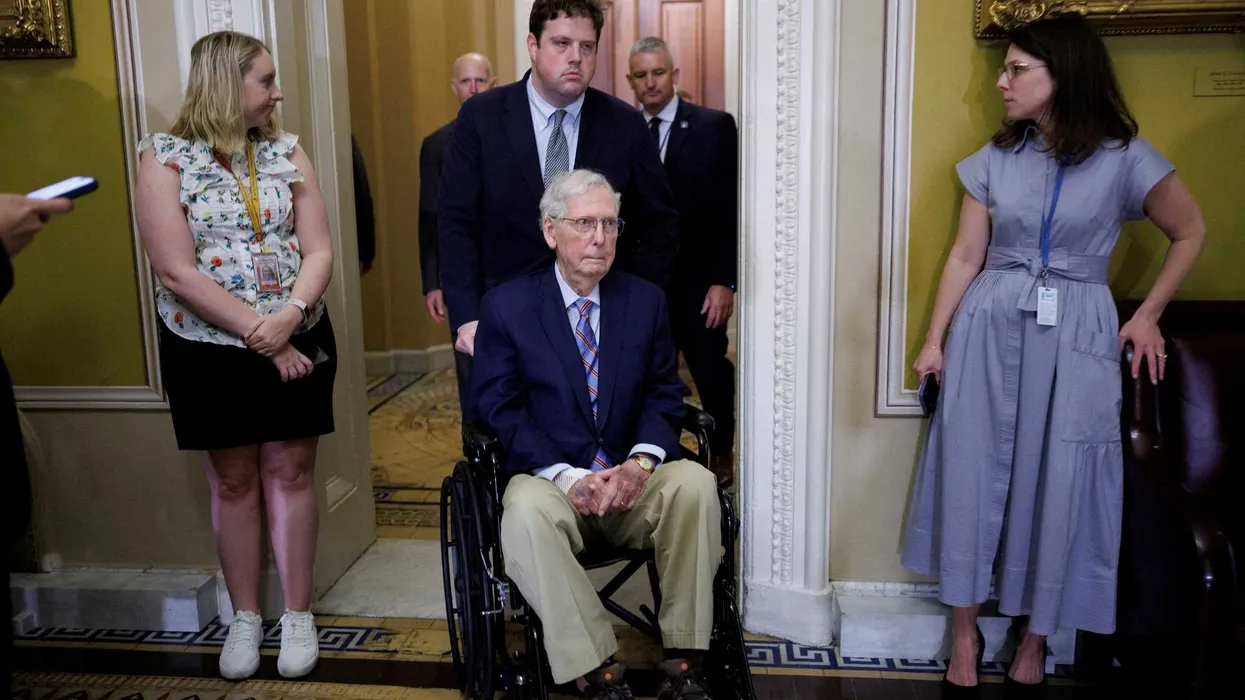
Sen. Mitch McConnell (R-Ky.) may be absent from the Senate, but his ghost, in the framing of a new assessment of his legacy, maintains a stranglehold over the Republican Party that will last for a generation.
Writing for New York Magazine, Nate Weisberg reported that while McConnell remains in recovery, even his allies remain unclear about his condition and his stability.
McConnell, 84, fell in his home on June 14 and briefly lost consciousness. Since then, the senator has released only two photographs from his hospital room, and no photos or videos documented his move from the hospital to his Capitol Hill home.
Weisberg raised two possible interpretations. One is that McConnell has become an incapacitated officeholder whose staff may be exercising greater control while concealing the seriousness of his condition. The other explanation is simpler: McConnell is seriously ill, nearing retirement, and feels no obligation to satisfy public demands for more information. Because he is not seeking reelection, he may believe he can focus on his recovery without the pressure of justifying himself to voters.
"He could be barely able to communicate, or he could be just as articulate as ever. We got no way of knowing," former Democratic representative Mike Ward told Weisberg. "Mitch doesn't give a s—— about letting the people know how he's looking or feeling."
Keith Runyon, who spent 25 years running the Louisville Courier-Journal's editorial page, voiced doubt about the office's statements. "I've lost the ability to believe entirely in what his office says."
"For many, McConnell is the latest exhibit in a familiar pattern: an elderly legislator — in this case, after 41 years in office — becomes hopelessly debilitated, and his staff conceals how much power has quietly passed into their hands," Weisberg wrote. McConnell's longtime chief of staff, Terry Carmack, earns an annual salary of $226,850, making him one of five senior staffers in the office who are paid more than the senator himself.
Samuel Moyn, the Yale Law professor and author of Gerontocracy in America: How the Old Are Hoarding Power and Wealth — and What to Do About It, described what he called the "underappreciated syndrome" of the very old remaining in office. A politician, he said, "can be completely incapacitated" while the people around him have "every interest in hiding the medical reality of the situation."
While Moyn's description may fit absentee lawmakers propped up by their staff, Weisberg argued that such an arrangement is not even necessary in McConnell's case. "He rigged the system to protect his party's power years ago," Weisberg wrote.
After Democrat Andy Beshear won his election, McConnell ensured that the governor could no longer appoint a replacement if the senator died in office. Under that legislation, Beshear would have little power to do anything about it. The governor could, however, easily challenge the constitutionality of the laws: the Kentucky Constitution says that all statewide vacancies "shall be filled" by the governor, and the legislative change did not amend the Constitution.
McConnell's leadership in the Senate also persists through his longtime colleagues. Sens. John Thune (R-S.D.) and John Barrasso (R-Wy.) spent many years on the leadership team with their ailing colleague, while Rep. Andy Barr (R-Ky.) is seen as McConnell's likely successor. Barr is a former McConnell intern, as were three of his primary opponents.
"When McConnell disappeared, they were among the Republicans publicly vouching that they were still speaking with him," Weisberg said. "Even Thune's general approach to dealing with Trump seems to be learned from McConnell — don't always do what he wants, especially on Senate prerogatives like the filibuster, but never argue with him."
Weisberg closed by suggesting that if a close vote arises, McConnell could be wheeled into the Senate to cast it. "It would be the most McConnell ending available: months of silence followed by one decisive exercise of power," he quipped.

