On This Day in 1984: Reagan's Accidental 'Bombing in Five Minutes' Broadcast
Key Takeaways
- •Reagan made the remark while preparing to deliver his weekly radio address from Rancho del Cielo on 11 August 1984.
- •The comment was a joke about outlawing Russia and bombing in five minutes, but it was heard on a live feed by radio stations nationwide.
- •The Associated Press, Gannett News Service, and later The New York Times reported the incident, while TASS condemned it as unworthy of a head of state.
- •Walter Mondale criticized Reagan’s words as careless, but the public response largely favored Reagan’s relaxed demeanor.
- •Reagan won the 1984 election decisively, carrying 49 states and securing a 525–13 Electoral College margin.
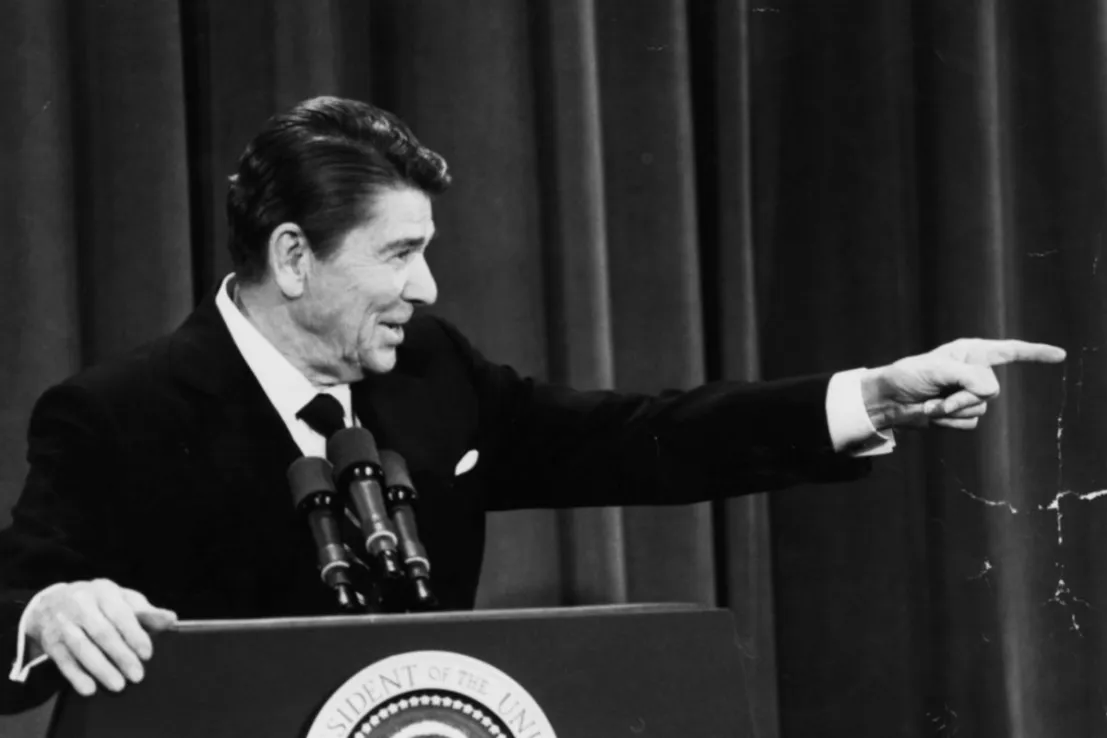
On 11 August 1984, a offhand quip by President Ronald Reagan during a routine microphone check accidentally reached radio stations across the United States — and briefly stirred a political firestorm. In this historical retrospective, Eliot Wilson revisits the incident and the broader context of Reagan's mastery of radio broadcasting.
A Veteran of the Airwaves
By the summer of 1984, Ronald Reagan was a seasoned broadcasting professional. More than five decades had passed since his radio debut as a sports commentator for WOC in Davenport, Iowa, where he called baseball games.
In 1982, Reagan revived a tradition established by President Franklin D. Roosevelt: weekly Saturday morning radio addresses to the nation. The practice endured through subsequent administrations until Donald Trump's first presidency, when it effectively lapsed.
The Origins of Reagan's Weekly Addresses
Reagan's rise as a conservative voice dated back two decades earlier. A week before the 1964 presidential election, he delivered a electrifying televised address in support of Republican nominee Senator Barry Goldwater of Arizona. Titled A Time for Choosing, the speech laid out the conservative case in plain, passionate terms. Although President Lyndon Johnson went on to defeat Goldwater by a margin of 16 million votes, the address propelled Reagan into the front rank of Republican conservatism.
Among those who took notice was William A. Rusher, a figure who bridged Bill Buckley's National Review and the broader conservative movement. In March 1982, Rusher penned an article for Universal Press Syndicate titled "Let's Have 'Fireside Chats' by Ronald Reagan," explicitly comparing Reagan to Roosevelt and calling him "a man of great personal charm and powerful qualities of leadership." Rusher argued that regular broadcasts would allow the President to communicate directly with the American public, bypassing the press.
"If he is to win, for all of us, the battle to change America's direction, that voice will have to be raised, and raised regularly, where the American people can hear it."
The radio format suited Reagan perfectly. Assisted by speechwriters including Ken Khachigian, Peggy Noonan, and Peter Robinson, he delivered memorable lines tied to historic occasions: "'We the people', this breed called Americans"; "These are the boys of Pointe du Hoc. These are the men who took the cliffs"; "Mr Gorbachev, tear down this wall"; "A tall, proud city built on rocks stronger than oceans."
Yet Reagan could converse as effectively as he could orate. Radio, an intimate medium, demands precision — without visuals, every phrase and rhythm must be exact. The unfiltered "fireside chats" played to Reagan's strengths: his folksy charm, self-deprecating wit, and natural storytelling ability. It was, after all, the profession in which he had come of age.
"Talk to your audience," Reagan later wrote, "not over their heads or through them. Don't try to talk in a special language of broadcasting or even of politics, just use normal everyday words."
'We Begin Bombing in Five Minutes'
On Saturday, 11 August 1984 — less than two weeks before the Republican National Convention would formally nominate him for the November election — President Reagan was at Rancho del Cielo, his vacation home near Santa Barbara in California's Santa Ynez Mountains. He was scheduled to deliver his weekly address at 9:05 a.m., focusing on the Equal Access Act, which he had signed into law that day.
The joke that followed landed at a moment of acute Cold War tension. In March 1983, Reagan had delivered a speech to the National Association of Evangelicals in which he branded the Soviet Union an "evil empire." Arms control negotiations between Washington and Moscow were stalled, and NATO's deployment of intermediate-range Pershing II missiles in Western Europe had provoked mass protests across the continent. The previous November, an estimated 100 million Americans had watched ABC's television film The Day After, which dramatized the aftermath of a nuclear exchange and intensified public anxiety about the prospect of war.
Before going on air, Reagan bantered with the sound engineers. When asked to perform a microphone check, he delivered a spontaneous parody of his upcoming speech.
"My fellow Americans," he declared, "I'm pleased to tell you today that I've signed legislation that will outlaw Russia forever. We begin bombing in five minutes."
The remark was unmistakably a joke. However, the live feed from Rancho del Cielo was already connected to radio stations nationwide, many of which were recording in preparation for the President's address. Broadcasters and journalists overheard the quip, but — remarkably by today's standards — both CBS and CNN kept the recording under wraps. This restraint followed an earlier incident in October 1982, when Reagan had made a blunt remark about the Polish government; in its wake, the White House Correspondents' Association had informally agreed not to publicize clearly off-the-record comments.
Secrecy in politics, however, is fleeting. The Associated Press and Gannett News Service reported Reagan's remarks, and by Monday, The New York Times soberly noted that the President had "reportedly made a joke about national security."
The Soviet Union also weighed in. The official news agency TASS condemned the remark as repugnant and unworthy of a head of state, and Soviet newspapers amplified the story in the days that followed.
Burt Reinhardt, then President of CNN, declined to view the incident lightly. "I'm told the President says a lot of funny things from time to time," he remarked. When asked whether he found the joke about outlawing Russia amusing, he replied: "Not particularly."
Walter Mondale, who had been confirmed as the Democratic presidential nominee weeks earlier, sought to capitalize on the controversy. "A president has to be very, very careful with his words," he told a press conference. "I am willing to accept he saw it as a joke… but others will think it is serious… I don't think it is very funny."
The Voters' Verdict
Reagan's poll lead dipped slightly, but the public response ultimately favored the President's demeanor over Mondale's criticism. Voters appeared to view Mondale as hypersensitive, while Reagan came across as relaxed and relatable.
On 6 November 1984, the American electorate delivered a decisive verdict. Reagan carried 49 of the 50 states — Mondale won only his home state of Minnesota — and the President's 525–13 Electoral College victory remains the second-largest in U.S. history.
The episode underscored the power of Reagan's weekly addresses. Journalists feigned outrage, politicians shook their heads, but the American public dismissed what they recognized as a joke. Voters faced a choice between a liberal critic they saw as overly sensitive and an experienced incumbent who could both tell a joke and take one. Their answer was emphatic.
Eliot Wilson is a writer and historian. He is a senior fellow for national security at the Coalition for Global Prosperity and a contributing editor at Defence on the Brink.

