RBA Holds Rates at 4.35%, Governor Bullock Warns Further Hike 'Quite Possible'
Key Takeaways
- •The RBA maintained its cash rate at 4.35% for a second straight meeting, a level representing among the highest Australian borrowing costs in well over a decade.
- •Governor Michele Bullock indicated that a further rate increase was 'quite possible,' with the board having actively discussed a hike at this meeting rather than just holding steady.
- •Revised RBA forecasts project inflation returning to the 2%–3% target band in the second half of next year, easing to 3.6% by year-end and 2.6% by the end of 2027.
- •Swaps markets priced in approximately a 50% probability of a rate increase by November and an 80% likelihood of a move by early next year.
- •The RBA's hawkish posture contrasts with a broader global trend in which several major central banks have begun signaling or implementing rate cuts.
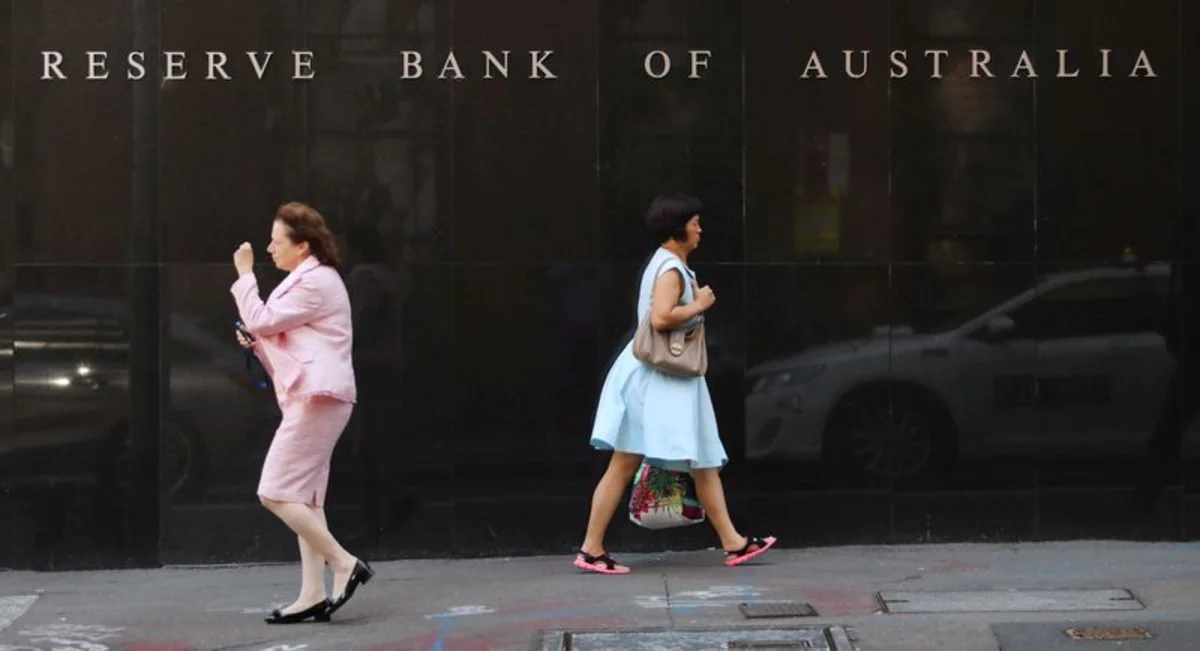
By Stella Qiu and Wayne Cole
SYDNEY, Aug 11 (Reuters) — The Reserve Bank of Australia (RBA) kept its cash rate unchanged at 4.35% for a second consecutive meeting on Tuesday, a level that ranks among the highest Australian borrowing costs in well over a decade, noting that the economy was slowing in line with expectations, while cautioning that another rate hike remains on the table if necessary to rein in inflation.
At the post-meeting press conference, RBA Governor Michele Bullock adopted a hawkish stance, stating she personally believed it was "quite possible" that rates would need to rise again — keeping alive the prospect of a fourth increase this year.
"And we will go again if we need to. And I think personally that it is quite possible we might need to go, but we will wait and see what the data tells us," Bullock said.
Concluding its August policy meeting, the RBA emphasized that aggregate demand would need to remain subdued to ease capacity pressures. The central bank pledged to do whatever is necessary to return inflation to its target band, including further increases to the cash rate if upside risks materialize.
The unanimous decision to hold was widely anticipated. Markets had positioned for a steady outcome after second-quarter inflation data came in below forecasts and the housing market weakened more sharply than policymakers had projected.
Bullock noted that, unlike in June, the board actively discussed a rate hike at this meeting, citing the re-escalation of the Middle East conflict as a factor. She said the board was giving serious consideration to when it might be appropriate to raise rates.
The RBA has already lifted rates by 75 basis points this year, fully unwinding the policy easing implemented in 2025, as it grapples with persistent inflationary pressures driven largely by surging energy costs. Last month, Bullock indicated that a further economic slowdown might be required to bring inflation down.
The hawkish posture stands in contrast to a broader global trend in which several major central banks had begun signaling or implementing rate cuts, leaving the RBA as one of the most explicitly tightening-leaning monetary authorities among developed economies.
Market Reaction
The Australian dollar held flat at $0.7055, while 3-year government bond yields climbed 2 basis points to 4.572%.
Following Bullock's hawkish remarks, swaps markets began pricing in roughly a 50% probability of a rate increase by November, with an 80% likelihood of a move by early next year.
Housing Slowdown and Competing Risks
Elevated borrowing costs have brought an abrupt end to a record housing boom. Falling auction clearance rates, a sharp drop in loan applications, and declining sales volumes all point to increasingly difficult conditions ahead.
Counterbalancing those signs of weakness, consumer spending has held firm and the labor market continues to generate jobs. Meanwhile, the re-escalation of the Middle East conflict has kept policymakers on alert for potential pass-through effects from higher oil prices to broader sectors of the economy.
Second-quarter inflation data — closely watched by markets and policymakers alike — surprised on the downside, giving the RBA room to pause this month.
Updated Inflation Forecasts
Revised RBA projections now show inflation returning to the 2%–3% target band in the second half of next year, a timeline Bullock has described as "reasonable" given the series of economic shocks in recent years. With headline inflation still at 3.9% in the second quarter — nearly a full percentage point above the top of the target band — the path back to target remains the central policy challenge shaping the RBA's stance.
Consumer price inflation is projected to moderate to 3.6% by year-end, down from 3.9% in the second quarter, and to ease further to 2.6% by the end of 2027.
"Today's decision should not be interpreted as an all-clear on inflation as the Reserve Bank has signalled that it remains alert to upside risks and stands ready to respond," said Cherelle Murphy, EY Oceania chief economist. "We continue to see a material risk of further policy tightening later this year if, as we predict, inflation proves more persistent than the Reserve Bank currently expects."
(Reporting by Stella Qiu and Wayne Cole; Editing by Kevin Buckland)

