Range Rover Electric First Drive: Inside the Long-Awaited £154,000 Electric SUV
Key Takeaways
- •The Range Rover Electric starts at £154,070, roughly £6,390 more than a similarly specified V8 petrol model and far less than a Rolls-Royce Spectre.
- •The EV delivers up to 550hp, reaches 0-62mph in 4.5 seconds, and offers a WLTP range of 372 miles, with JLR promising 330 miles in real-world driving.
- •Its 118.5kWh 800-volt battery can rapid-charge from 10 to 80 percent in 22 minutes, adding 137 miles of range in 10 minutes.
- •A launch delay stemmed from overheating of the original front induction motor during sand dune testing, prompting a switch to a permanent-magnet motor.
- •JLR sees the model as pivotal to its electrification plans, backed by 60,000 expressions of interest and brand loyalty above 70 percent.
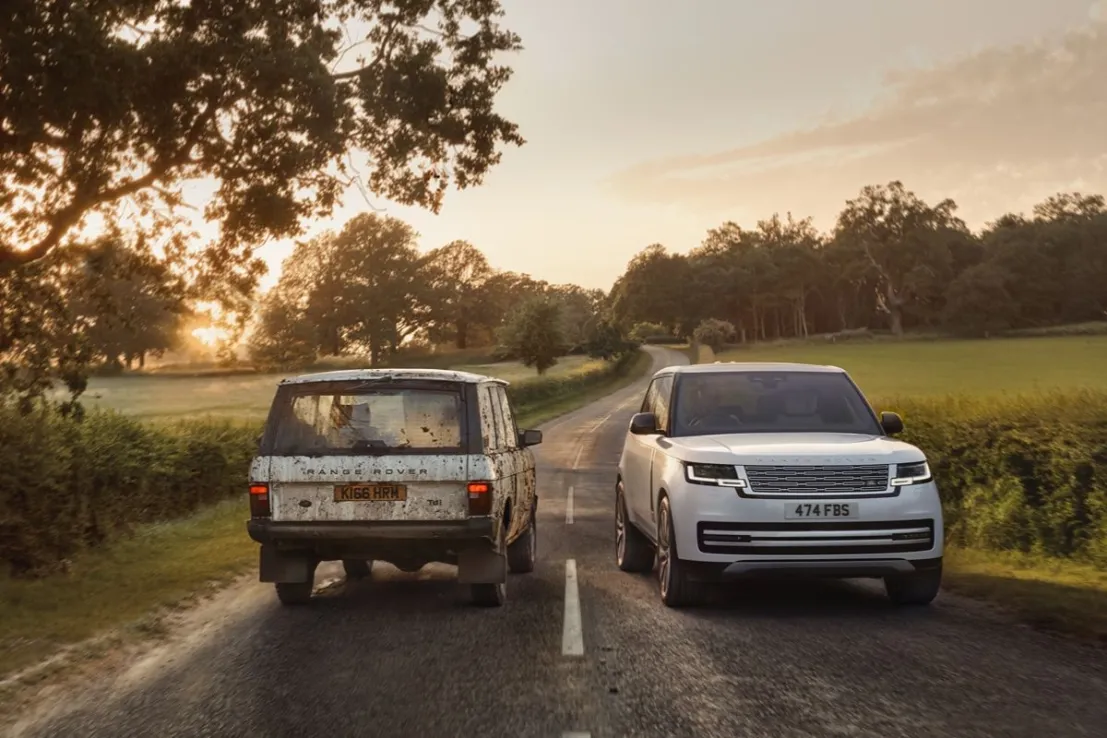
The new Range Rover Electric has finally arrived, offering V8-rivalling power, a battery range of up to 372 miles and a starting price of £154,070. While formidable, that price is a relatively modest £6,390 more than a similarly powerful V8 petrol Range Rover in Autobiography specification – and less than half the price of a Rolls-Royce Spectre. It also undercuts the Rolls-Royce Spectre by a wide margin while squaring off against other luxury EVs such as the BMW i7 and Mercedes EQS SUV, giving the Range Rover a strong position in the still thinly populated ultra-luxury electric SUV segment.
The Range Rover Electric not only costs roughly the same as the V8 version, it is almost identical in design. That is intentional, according to Range Rover MD Martin Limpert: "This is a Range Rover first, an electric car second." Even the 'EV' wheel centre caps are optional. "It looks the same because we want it to be a powertrain choice," Limpert added. The only visual differences on the EV are an aero-optimised front grille and wheels, which extract a few extra miles of real-world range.
The 118.5kWh NMC battery uses a double-decker design, fully sealed to prevent water ingress – the Range Rover Electric matches the 900mm wading depth of a petrol model. Each of the 344 cells in a pack has its own wireless control unit and is surrounded by a high-tech thermal material to minimise heat transfer. The advanced ThermAssist technology is one of 300 patents filed for the Range Rover Electric. Despite the size of the battery, the car is only 75kg heavier than the mild hybrid V8 version, and it can still tow loads of up to 2.5 tonnes.
Thanks to 800-volt technology, the battery can be DC rapid-charged from 10 to 80 percent in 22 minutes, with 137 miles of range added in 10 minutes. While the official WLTP-tested range is 372 miles, JLR promises 330 miles in real-world conditions.
On performance, the front and rear electric motors deliver up to 550hp and 0-62mph in 4.5 seconds – faster than the V8. Motor speed can be controlled in 50 milliseconds, up to 100 times faster than any petrol Range Rover, with anywhere from zero to 100 percent of drive directed to either axle. An EV-specific single pedal mode allows the Range Rover Electric to pull away from a standstill on a 33-degree slope – comparable to a black diamond ski run – or a rolling climb of up to 45 degrees.
Testing the Range Rover Electric
Part of the delay in launching the Range Rover Electric was caused by a switch to a different type of front electric motor. The original induction motor overheated during sand dune testing, so engineers switched to the same permanent-magnet motor used at the rear. This extended the testing and development programme beyond what was originally planned. The new EV has been driven the equivalent of 38 times around the world in physical testing, alongside 250,000 hours of virtual testing, making it the most thoroughly tested Range Rover ever.
While EVs are inherently quiet, JLR has added active noise cancelling for an even more hushed drive and a cabin up to 7dB quieter – described as "like going from your living room to a library." Alex Vine, JLR's first full-time active sound designer and a former music producer, created a specific EV 'soundscape' for the Range Rover based around the F-major chord, though it can be turned off for those who prefer absolute silence.
Further luxury comes from standard air suspension, while rear-wheel steering makes the large SUV easier to drive in town. Buyers can also specify an in-car fragrance system offering botanical, fresh and woody scents. "They've been developed by England's leading fragrance supplier," JLR said.
JLR has long pointed to 60,000 'expressions of interest' in the new Range Rover Electric. While these are not actual orders, the company views it as a strong starting point. Customer loyalty to the Range Rover brand stands at more than 70 percent. The launch also carries broader significance for JLR, which has made the electric Range Rover the flagship of its electrification plans after delaying other planned EV models; UK regulations requiring an increasing share of zero-emission new car sales add further weight to getting this model right.
"EV is the perfect platform to embody Range Rover," said Limpert. "This is therefore a pivotal vehicle for us." With orders now open in short- and long-wheelbase guises across a broad range of derivatives, the focus shifts to how much of that interest converts into firm orders for the first-ever Range Rover Electric.
Range Rover Electric: Behind the Wheel
A brief first drive took place at JLR's Gaydon proving ground during 2026's record-breaking summer heatwave, so there was no opportunity to test the SUV on slippery mud – but it offered a chance to experience its climate-controlled refinement away from the blazing heat.
It still looks like a Range Rover, has the same interior and features identical controls. Nothing is off-putting or unfamiliar: pulling the familiar gearshifter into drive, the car glides away. The experience feels immediately rich – no vibration, no noise, just a luxurious smoothness. The near-silence typical of EVs has been elevated to feel even more premium.
The ride retains the cushioned, controlled character long demonstrated by petrol and diesel Range Rovers. With only a few minutes and a couple of corners to assess the handling, the linearity and positivity remain intact – perhaps even enhanced by the EV's lower centre of gravity.
Next came JLR's formidable-looking rock crawl area, an intentionally machine-punishing challenge that was more dramatic to watch than to drive. It proved straightforward to steer through, with no vibration, squeaks or rattles – just a sense of uncanny control. A drive through the fuselage of an old jet airliner (yes, really) demonstrated low-speed, severe-angle control. With no differentials or low-range gears to manage, simply setting a suitable drive mode – or letting the car do so automatically – shows how instant EV torque can enhance even the most extreme off-roading.
There is much more still to discover about the new Range Rover Electric, but these first impressions support the claim that this EV is more luxuriously 'Range Rover' than ever.
• Richard Aucock writes for Motoring Research

