Pudgy Penguins Expands Walmart Partnership After $10 Million in Toy Sales
Key Takeaways
- •Pudgy Penguins expanded its Walmart partnership after the brand's toy line generated $10 million in sales through the retailer.
- •The project began as an Ethereum-based NFT collection of 8,888 penguin avatars in July 2021 and was acquired by entrepreneur Luca Netz in April 2022.
- •Walmart operates over 4,600 U.S. locations, giving Pudgy Penguins access to a retail foot-traffic scale that far exceeds any NFT marketplace.
- •Each toy ships with a QR code enabling buyers to claim a digital adoption certificate, creating an on-ramp to the project's online community without requiring crypto knowledge.
- •The expansion illustrates that NFT-native intellectual property can be successfully translated into mass-retail consumer products even as secondary NFT market volumes have declined from 2021 highs.
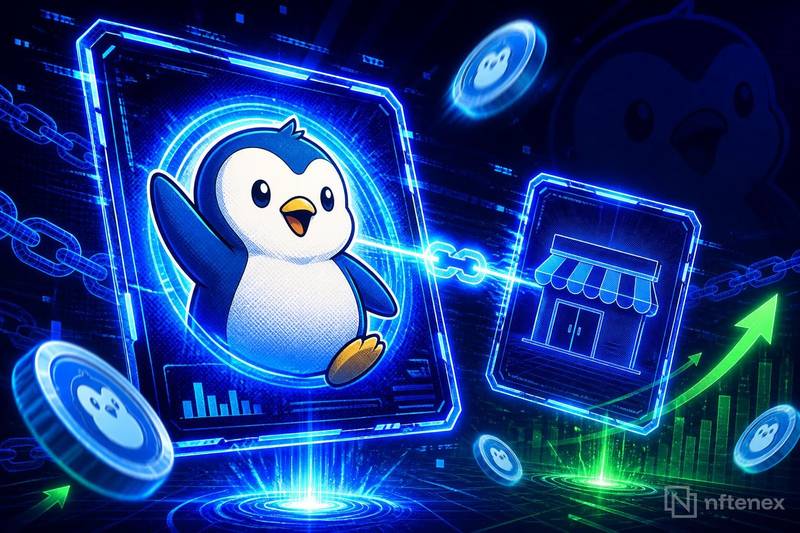
Pudgy Penguins has expanded its retail partnership with Walmart, building on a relationship that has already generated $10 million in toy sales. The project announced the expansion on X, positioning the sales milestone as the basis for the retailer's decision to deepen the collaboration.
From Digital Collectibles to Retail Shelves
The Walmart expansion marks a significant step for Pudgy Penguins, a brand that originated as an Ethereum-based NFT collection of 8,888 penguin avatars launched in July 2021. The project was acquired by entrepreneur Luca Netz (Luca Schnetzler) in April 2022, after which it pivoted aggressively toward consumer products and intellectual property licensing.
The broader Walmart footprint signals a shift from an audience measured in crypto wallet holders to one measured in retail store visitors. Walmart operates more than 4,600 locations across the United States, giving the brand access to a foot-traffic scale that dwarfs any NFT marketplace. The Pudgy Penguins toy line includes plush figures and blind-box collectibles, each shipped with a QR code that lets buyers claim a digital adoption certificate—creating an on-ramp from physical purchase to the project's online community without requiring prior knowledge of crypto or NFTs.
By translating internet-native intellectual property into physical products that sell at scale, Pudgy Penguins has become a prominent example of an NFT-native brand crossing into mainstream retail. This crossover has taken place against a broader contraction in NFT trading volumes from their 2021 highs, a period during which many collections struggled to maintain relevance—making the retail licensing route a notable counterexample of a Web3 brand growing its audience while the secondary market for digital collectibles cooled.
The $10 Million Sales Milestone
According to CoinMarketCap, the expansion follows $10 million worth of Pudgy Penguins toys sold through Walmart. Strong sell-through performance is the clearest metric a retailer uses when deciding whether to grant wider shelf presence or introduce additional product lines. The $10 million figure served as the primary proof point behind the decision to expand the partnership.
Significance for NFT Brands and IP Licensing
Pudgy Penguins remains an NFT-native brand at its core, but its Walmart traction demonstrates that an audience built around digital collectibles can be extended into a mass-retail consumer base rather than remaining confined to secondary NFT marketplaces. That crossover carries broader implications for brand licensing and merchandising within the Web3 space, as other NFT projects look for pathways to translate community-driven intellectual property into physical consumer goods.
The expansion also reflects a wider trend of blockchain-based brands pursuing retail and entertainment partnerships as a means of reaching audiences beyond crypto-native communities. Whether additional NFT-originated brands can replicate the Pudgy Penguins model will depend in part on whether they possess intellectual property recognizable enough to compete for shelf space alongside established toy and entertainment franchises.

