Psychologist Says Trump’s Recent Public Appearances Show Signs of Decline
Key Takeaways
- •Psychologist Dr. John Garrison cited slurred speech, word-finding difficulties, and repeated involuntary right-arm movements across several recent public appearances as evidence of what he characterized as significant decline.
- •Garrison observed that Trump struggled to recall Hillary Clinton's name and had trouble enunciating during a South Carolina rally.
- •Garrison suggested the pattern could stem from a medical event roughly a year ago or a progressive neurodegenerative disease such as Alzheimer's or Lewy body dementia.
- •Trump became the oldest person ever inaugurated as U.S. president when he was sworn in for his second term in January 2025.
- •Official presidential health information has traditionally come from White House physician exams and memos, and reports after Trump's past physicals described him as being in good or excellent health, while the APA's Goldwater Rule discourages clinicians from diagnosing public figures they have not examined.
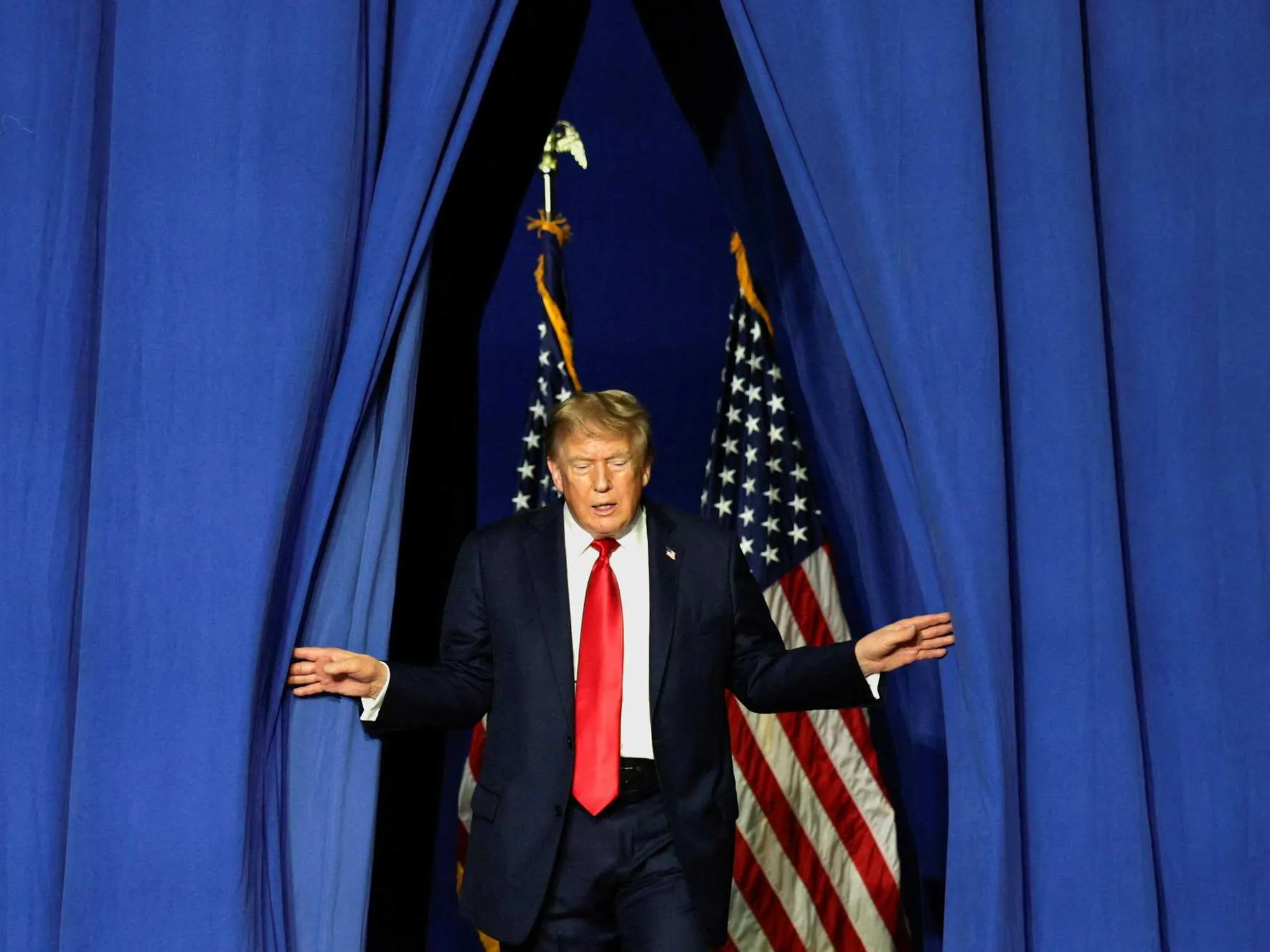
During a series of recent events, President Donald Trump displayed “highly concerning behavior” that included “slurring his words,” “having word-finding issues,” and other problems that “appear to suggest that he is in significant decline.” That assessment comes from the widely cited psychologist Dr. John Garrison, who said, “it appears that this has been getting dramatically worse over the past year.”
Trump became the oldest person ever inaugurated as U.S. president when he was sworn in for his second term in January 2025, and the age and fitness of the country’s most senior leaders has been a recurring subject of public debate in recent years. Public assessments of presidents from afar also sit on contested professional ground: the American Psychiatric Association’s “Goldwater Rule,” adopted in 1973 after clinicians publicly speculated about Barry Goldwater’s fitness for office, instructs psychiatrists not to offer professional opinions about public figures they have not personally examined — a standard that is routinely invoked, and debated, whenever clinicians comment on the health of political leaders.
Garrison pointed first to a recent rally in South Carolina, where Trump began with a slurred “nnn-ank you.” He said, “He's having a hard time enunciating, and that is concerning neurologically because it could be post-stroke behavior. It could be suggesting some degree of dementia, Alzheimer's type dementia, Lewy body dementia. There's all sorts of concerning behaviors that we're seeing that are in line with a variety of neurological concerns.”
“I do want to acknowledge that people do trip over their words,” Garrison added. “But he does this constantly. We are hearing a distinct change in how he communicates.”
As Trump continued speaking, his elbow made a sudden sharp movement. Garrison focused on the motion, saying, “You may already be noticing there's his arm twitching again. We're going to see a lot more of that today, but he does this constantly when he's at the podium. His right elbow is just constantly twitching.”
Later in the rally, Trump turned to one of his frequent targets, Hillary Clinton. While attacking his longtime political rival, Garrison said, “There were a number of issues. One is that he was struggling to remember Clinton's name. His teleprompter probably says Hillary, but you're going to see him close his eyes when he tries to remember the name Clinton. He is struggling there and then he can't say it directly afterwards because I don't think he can remember it right then. We're seeing these kinds of neurological glitches over and over.”
Garrison then showed footage from the Freedom 250 Grand Prix event in Washington, D.C., saying, “He was having significant problems with spasms, with involuntary spasms[.] The amount of control he's losing is getting more substantial.” In one segment, as Trump prepared for an interview, Garrison said, “he looks uncomfortable. You can see on his face that he looks uncomfortable. He's breathing through his teeth in a very unusual way… he looks more uncomfortable here than he normally does.”
According to Garrison, Trump appeared increasingly overwhelmed in such settings. “You're seeing more discomfort from situations like this because I think he gets overwhelmed, which is not something we used to see. And this is what we see when people have neurological deficits. They get overwhelmed more easily. Loud noises can be more distracting. They have a much harder time focusing. So, situations like this that didn't used to be distressing can become very distressing.”
Finally, Garrison reviewed footage from Trump’s latest Rose Garden event. He said Trump “does not use his right hand as much as he used to” and that “there are times where I think that there seems to be some distinct weakness in his right hand.” He added that this is often accompanied by right arm spasms. When another speaker took the podium, Trump’s right arm made what appeared to be a noticeable involuntary twitch.
“You could very clearly see it again right there,” Garrison said. “And the reason this happens when he's standing by listening to people is, I believe, because he dislikes having to sit and listen to people. And when he's agitated, he's more likely to have these types of spasms. Sometimes when people are more intensely emotional, then we are going to see more loss of control like this.”
As the speaker continued, Garrison said Trump’s tics persisted. “You're seeing spasms all over the place,” he said. “It doesn't matter where he is. They are constant and they are noticeable. We're also seeing problems with verbal fluency. We're seeing him get confused. We're seeing him slur his words. There are so many challenges we're seeing over and over and over again.”
Garrison said the pattern suggests a broader decline. “If you're not paying close attention, it's very easy not to notice this, but there is clearly something going on. I've suggested it seems like there was some kind of medical event about a year ago and there's been a decline since then. It may also be that we're dealing with a progressive neurodegenerative disease.”
Official information about a president’s health has traditionally come through periodic physical exams and memos from the White House physician rather than outside commentary, and reports released after Trump’s past physicals have described him as being in good or excellent health. Any future physician updates, together with the president’s visible public schedule, have long been the customary reference points against which such questions are assessed.
He also noted that Trump is making fewer public appearances. That, Garrison said, could become more noticeable over time. “We might start to see a trend. He might start speaking publicly less. We might start seeing less of him because these issues are going to become so difficult to control.”

