Psychologist Says Trump's On-Camera 'Microsleeps' Signal 'Neurological' Decline
Key Takeaways
- •Psychologist John Garrison attributes President Trump's repeated dozing in meetings to 'microsleeps,' which he interprets as evidence of significant neurological decline.
- •Garrison's assessment is based solely on video footage, including an Oval Office meeting with Susan Dell and rally footage with Roger Clements, rather than an in-person examination.
- •He suggests the underlying cause could be dementia or a brain injury, citing attention lapses, slurred language, mild coordination issues, and difficulty with social cues as supporting indicators.
- •Garrison identified involuntary movements in the rally footage, describing a myoclonic jerk in Trump's right arm that appeared to spread to his limp left arm and trunk, symptoms he says have progressed over several months.
- •The American Psychiatric Association's Goldwater Rule discourages psychiatrists from offering opinions on individuals they have not personally examined, though it does not directly apply to psychologists like Garrison.
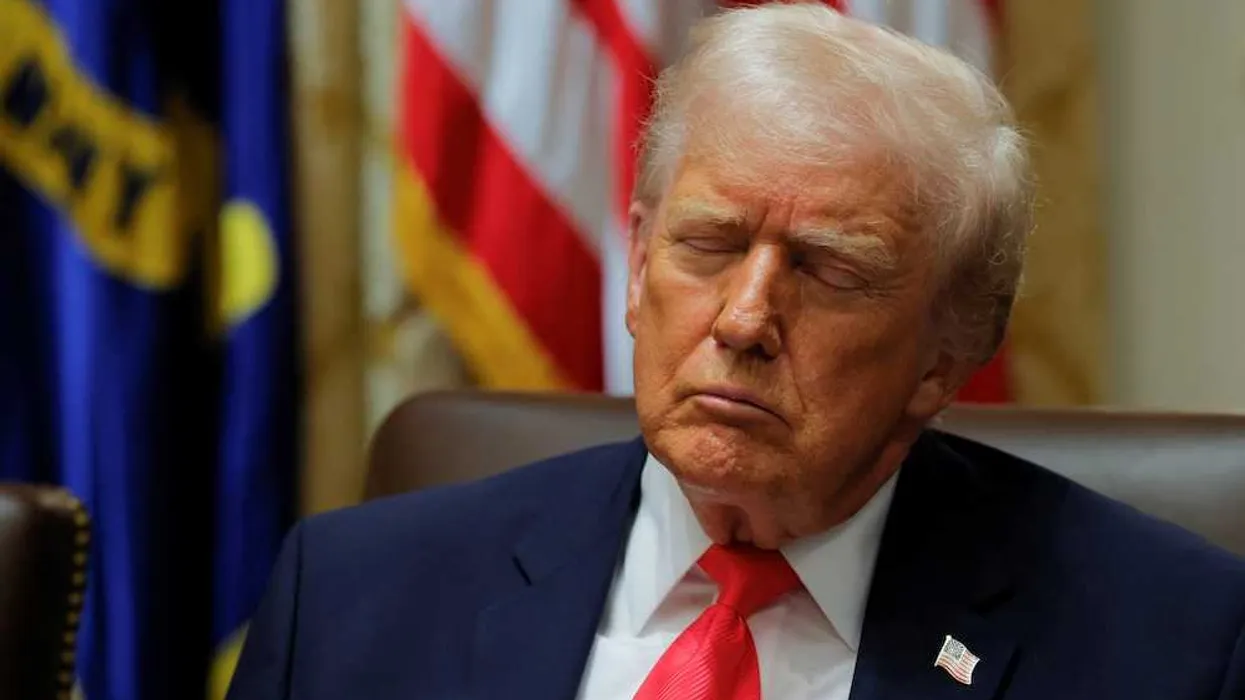
President Donald Trump has repeatedly been caught on video appearing to doze off during meetings, but psychologist John Garrison argues the episodes are not simply a matter of fatigue. According to Garrison, the president's "microsleeps" are another indication of what he describes as Trump's "significant neurological decline." Garrison's assessment, notably, is based on his review of video footage rather than any in-person examination.
Garrison was reacting to footage from an Oval Office meeting with Susan Dell of Dell computers, in which Trump appeared to nod off. "I believe what's happening are microsleeps," Garrison explained. "And this is a little bit different than just sleeping at his desk.sleeps can be very quick. You can go from wakefulness to sleep back to awake and alert very quickly with microsleeps."
In the footage, Trump abruptly opens his eyes with a look of alarm. Garrison suggested, "There's a little bit of confusion, and he may not even know that he's falling asleep." Noting how quickly Trump shifts between wakefulness and sleep, Garrison elaborated that "the systems that regulate arousal with wakefulness and sleep can be affected by neurological disorders." The underlying cause, he warned, could be "dementia" or "some sort of brain injury."
Video-based assessments of public figures occupy contested ground: the American Psychiatric Association's long-standing ethics provision — adopted after the 1964 election and known as the Goldwater Rule — discourages psychiatrists from offering professional opinions on individuals they have not personally examined. The norm doesn't directly bind psychologists like Garrison, but it frames the recurring debate over how much can responsibly be concluded from clips alone.
Garrison also pointed to potentially "neurological" issues behind Trump's difficulty paying attention. As soon as Trump stops focusing on Dell and the discussion at hand, "he seems to fall asleep almost immediately," Garrison noted. "We've seen this meeting after meeting after meeting." While attention can fluctuate for a variety of reasons, Garrison said that based on Trump's history, "dementia" or "brain injury" could again be the culprit. The president's "mild coordination issues" and "challenges in social cues," he added, bolster such a diagnosis.
"As soon as anybody starts talking, he's unable to sustain attention," Garrison explained. "And attention is more than just looking at somebody's face. It's a complex process, and we see for people that have neurological challenges or neurodegenerative diseases that attention becomes very, very difficult." Trump's slurred language in the video, Garrison said, further supports that assessment.
Garrison then turned to footage of Trump at a rally alongside retired baseball player Roger Clements, pointing to a series of issues that have persisted for months but have begun to "progress" and "get worse." "First, you're going to see his right arm spasm at the elbow, which appears to be a myoclonic jerk," Garrison said. "These are involuntary and can be neurological in origin. And then you're going to see it spread to his left arm, which has a very different motion. His left hand remains limp while his left arm seems to spasm as well."
Trump then appears to have difficulty controlling the motion of his left hand. "And after that, we see a brief spasm from his trunk, which makes sense because these share pathways," Garrison noted.
For months, Garrison said, Trump has displayed these "glitches" and other symptoms, and they appear to be getting "worse." In Garrison's estimation, the conclusion is clear: the president's "neurological challenges" keep stacking up — claims that carry inherent public weight because they concern the fitness of the sitting president, and that remain, at this stage, one psychologist's interpretation of the footage.
Source: Alternet

