Iran Sets Sweeping Preconditions for Reopening Strait of Hormuz, Clouding Oman-Mediated Progress
Key Takeaways
- •Iran's Supreme National Security Council stated the Strait of Hormuz will remain closed until the United States lifts its naval blockade, ends all sanctions, withdraws military forces from the region, pays war reparations, releases frozen Iranian assets, and halts threats against Iranian leadership.
- •Despite expressed optimism from Iranian and U.S. officials about an Iran-Oman temporary shipping route agreement, Iran's security establishment and the IRGC have clarified that any navigation deal with Muscat is entirely separate from the political conditions required to unblock the strait.
- •The Strait of Hormuz facilitates approximately 20% of global oil and gas shipments, and the continuing closure threatens to sustain energy supply disruptions and upward pressure on fuel prices and global inflation.
- •Saudi Arabia, Pakistan, and Turkey signed a defense agreement in Mecca containing a mutual defense clause modeled on NATO's Article 5, with Egypt potentially joining once technical issues are resolved.
- •The UAE reported that Iran struck another vessel affiliated with Abu Dhabi National Oil Company with a missile, bringing the total to 15 ADNOC-affiliated vessels hit since hostilities began on February 28.
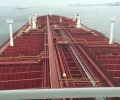
Iran on Saturday presented an extensive set of demands to the United States as a prerequisite for reopening the Strait of Hormuz, undermining hopes in Washington that a bilateral routing agreement between Tehran and Oman would swiftly restore commercial tanker traffic through the critical oil chokepoint.
According to CNBC, Mohammad Bagher Zolghadr, Secretary of Iran's Supreme National Security Council, stated that the strategic waterway will remain closed until Washington "corrects its behavior" and satisfies a detailed list of Iranian conditions.
Reopening the strait, per the report, would require the U.S. to lift its naval blockade, end all sanctions against Iran, withdraw its military forces from the surrounding region, pay war reparations, release frozen Iranian assets, halt attacks on Iran's regional allies, and cease threats against Iranian leadership. Zolghadr asserted that the security council will not retreat from these demands, whether in war or in negotiations.
The uncompromising stance from Iran's top security body signals a widening rift between diplomatic efforts and security hardliners in Tehran. While technical routing talks with Oman offered a potential pathway to resume maritime trade, Iran's insistence on structural U.S. concessions — such as war reparations and a full military withdrawal — substantially diminishes the likelihood of a near-term reopening.
The chokepoint handles approximately 20% of global oil and gas shipments, meaning the continuing impasse threatens to prolong energy supply disruptions and sustain upward pressure on fuel prices and global inflation. The narrow channel, at its narrowest just 21 miles wide, connects Persian Gulf producers to the Arabian Sea and serves as the primary export route for crude from Saudi Arabia, the UAE, Kuwait, Iraq, and Qatar. Major Asian importers — including China, Japan, South Korea, and India — rely heavily on uninterrupted passage through the strait, and limited overland pipeline alternatives, such as Saudi Arabia's East-West pipeline and the UAE's Habshan-Fujairah line, can only partially offset a sustained closure.
Muscat Talks vs. Security Council Reality
Earlier on Saturday, Iranian Foreign Minister Abbas Araghchi said Tehran and Oman were "very close" to an agreement on a temporary shipping route to replace the previous traffic separation scheme. Reuters reported that U.S. officials had voiced similar optimism on Friday, suggesting a deal between the two nations on either side of the strait would allow normal crude shipments to resume shortly.
A U.S. official told Reuters on Friday that progress was being made between Oman and Iran, adding that once a deal was announced to restore commercial shipping without impediments, the United States would lift its blockade of Iranian ports.
However, statements from both Zolghadr and the Islamic Revolutionary Guard Corps (IRGC) make clear that Tehran views technical navigation agreements with Oman as entirely separate from the political conditions required to unblock the channel. IRGC spokesperson Hossein Mohebbi reiterated that reopening the passage is not related to negotiations between Iran and Oman and depends strictly on Washington accepting Iran's terms. The Strait of Hormuz has been a flashpoint in prior conflicts, including the "Tanker War" phase of the Iran-Iraq War in the 1980s, when attacks on commercial vessels prompted international naval escorts — a precedent that underscores how disruptions at the chokepoint have historically drawn outside military involvement.
Fresh Attacks and Shifting Regional Security Architecture
The hardening diplomatic rhetoric coincided with continued tactical exchanges in the waterway. The United Arab Emirates reported Saturday that Iran struck a vessel affiliated with its state energy firm, Abu Dhabi National Oil Company (ADNOC), with a missile during transit. No injuries were reported in Saturday's strike, though ADNOC noted that 15 of its vessels have been hit since hostilities began on February 28, resulting in one death and 20 injuries.
The standoff comes as regional powers rapidly establish new collective security frameworks. Turkish Foreign Minister Hakan Fidan confirmed Saturday that the defense agreement signed Friday in Mecca between Saudi Arabia, Pakistan, and Turkey is technically identical to Article 5 of the NATO alliance, stipulating that an attack on one member state will be interpreted as an attack on all.
Fidan stated that a ministerial committee and a general secretariat, similar to NATO's structure, will be established under the alliance. He added that Egypt may join the defense agreement once certain technical issues are resolved, while emphasizing that the pact is purely defensive and not aimed at Iran unless member states are attacked. The formation of the pact marks a notable shift in Gulf security architecture, where the United States has served as the primary security guarantor for decades, and raises questions about how multiple defense frameworks — including existing U.S. basing arrangements and the new Mecca alliance — will interact during an active confrontation.
Meanwhile, in Tehran, Iranian President Masoud Pezeshkian defended ongoing diplomatic contacts with Washington against domestic hardline critics, highlighting internal political friction over how to manage the confrontation.

