Psychologist Points to 'Concerning' Stroke-Like Symptoms in Trump's Recent Public Appearances
Key Takeaways
- •Clinical and forensic psychologist Dr. John Paul Garrison has suggested that President Trump may have suffered a stroke last year, based on his review of footage from speeches and appearances in recent months.
- •Garrison interpreted Trump's two-fingered gesture after a handshake with Ukrainian President Volodymyr Zelensky at the United Nations General Assembly as involuntary muscle contractions rather than a voluntary hand sign.
- •At a more recent Oval Office event, Garrison identified similar hand problems affecting Trump's left side and flagged the unusual choice of keeping his right hand out of view beneath the Resolute Desk as a distinct change in behavior.
- •Garrison also asserted that Trump's ability to sustain attention has disappeared almost entirely, a shift he argued warrants concern regardless of whether its cause is a stroke or another neurological condition.
- •Garrison's claims are drawn solely from public video footage rather than a clinical examination, and his interpretation of the gestures diverges from widespread online readings of them as deliberate signs.
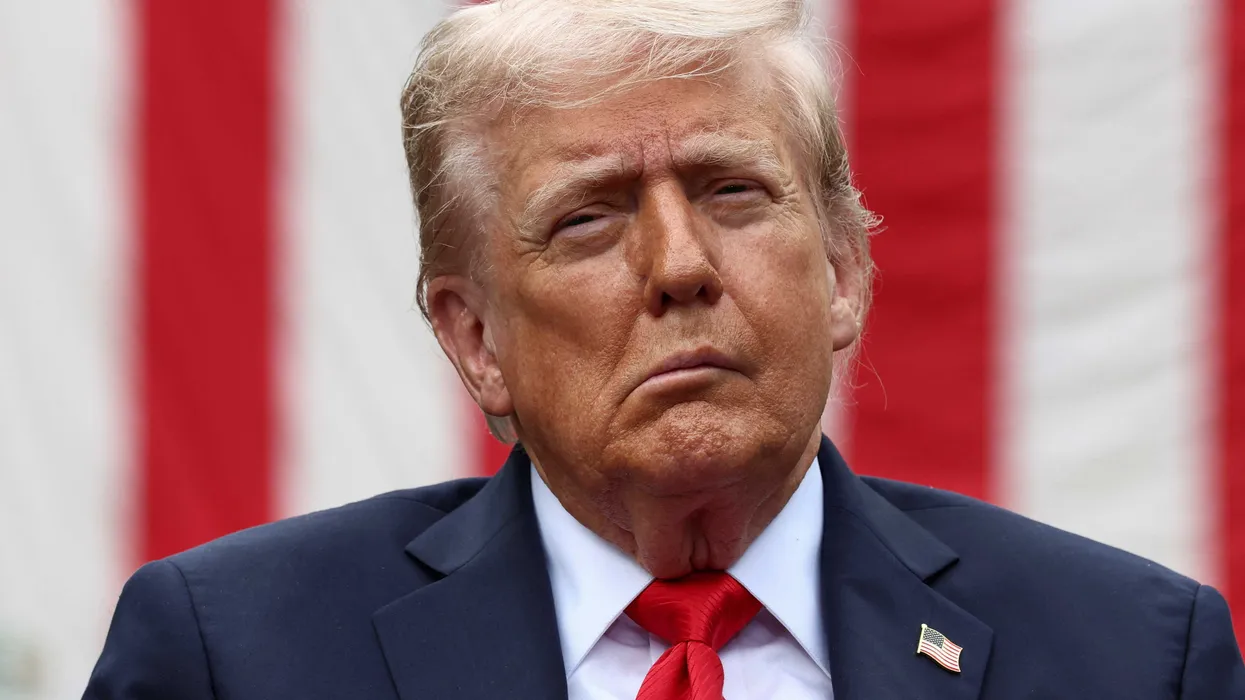
Clinical and forensic psychologist Dr. John Paul Garrison says President Donald Trump displayed "concerning behaviors" during a recent public appearance, including symptoms concentrated on the right side of his body that he argues resemble those seen in patients who have suffered a stroke.
Garrison, a specialist in body language cues who produces videos offering professional insight into the behavior of major public figures, has examined Trump across a series of speeches and appearances in recent months. In those videos, he has pointed to what he describes as signs of significant neurological decline, at one point suggesting the president may have suffered a stroke sometime last year. His readings are drawn entirely from public footage rather than a clinical examination — a distinction worth holding onto given the weight such claims carry when they concern a sitting president.
His latest video (viewable on YouTube) focuses on footage from Trump's recent meeting with Ukrainian President Volodymyr Zelensky at the United Nations General Assembly, where the symptoms he identified were concentrated on the right side of the president's body. Garrison highlighted an odd two-fingered gesture Trump made after pulling back from a handshake with his Ukrainian counterpart — a moment that has already been widely dissected online. The attention reflects how closely the president's physical mannerisms are being watched, and how quickly competing interpretations of a single gesture can take hold.
"This clip has been making its rounds online. A lot of people seem to think that he's making a voluntary hand sign to people," Garrison explained. "Now, my interpretation is very different. To me, this does not look voluntary at all. To, this looks like involuntary muscle contractions. Sometimes this can happen after a stroke. For example, when someone makes a quick movement or when someone shakes hands, sometimes there can be muscle contractions like this, particularly around the wrist and fingers, exactly like what we're seeing."
In Garrison's view, Trump appeared aware of the movement as it happened.
"If you watch President Trump's expression, you can see that he clearly knows that something's going on," he continued. "It doesn't seem to be painful because you don't see him wincing. You don't see any acknowledgement of pain, but he certainly does seem to know that something's going on with his hand. But much like many of the other issues we've seen, he basically just ignores it and moves on."
The video also cited examples of unusual hand behavior at a more recent event in the Oval Office, indicating the problem was not confined to the president's right side, as similar issues cropped up in his left hand as well. At one point, Garrison said, Trump "seemed like he was having a hard time articulating his fingers."
During that same event, Trump made the "unusual" choice of keeping his right hand out of view beneath the Resolute Desk — something he almost never does. Garrison called it "a distinct change in behavior" that could be indicative of deeper issues.
Garrison also addressed what he described as a complete loss of sustained attention, drawing on the Oval Office clip.
"Something that's been very apparent recently is that President Trump's ability to sustain attention is totally gone," he said. "As soon as anybody else starts speaking, he's looking elsewhere. He's paying absolutely no attention to what's going on around him unless he's really excited about something. Aside from that, he can't seem to listen for more than a few seconds."
The reason that matters, Garrison argued, is that such a change is significant regardless of its underlying cause.
"The reason that matters is whether it's due to a neurodegenerative condition, whether it's due to a stroke or something else neurological, is that attention is a very complex brain activity," he said. "So, if we're seeing a shift or a change in that, it's worth paying attention to."
That split — between viewers who read the gesture as a deliberate hand sign and Garrison's interpretation of involuntary contractions — frames what to watch next. Further public appearances will bring new footage, and with it a running test of whether the patterns Garrison describes persist across settings or prove isolated moments.

