International Padel Federation President: London's Embrace of Padel Signals Global Milestone for the Sport
Key Takeaways
- •The London Premier Padel P1 tournament will be held in August at Olympia, marking the first time top-ranked professional padel players compete in the city.
- •Premier Padel now stages tournaments across 16 countries and is broadcast in 244 territories, with the International Padel Federation counting more than 90 national federations among its members.
- •Padel is a doubles-only racket sport played on an enclosed court roughly a quarter the size of a tennis court, with origins in Spain, Argentina, and Mexico.
- •Spain alone has several million active padel players and over 20,000 courts, while the UK is at an earlier growth stage with new clubs opening daily.
- •A successful London tournament could accelerate infrastructure investment across the UK, where demand for padel courts already outpaces supply.
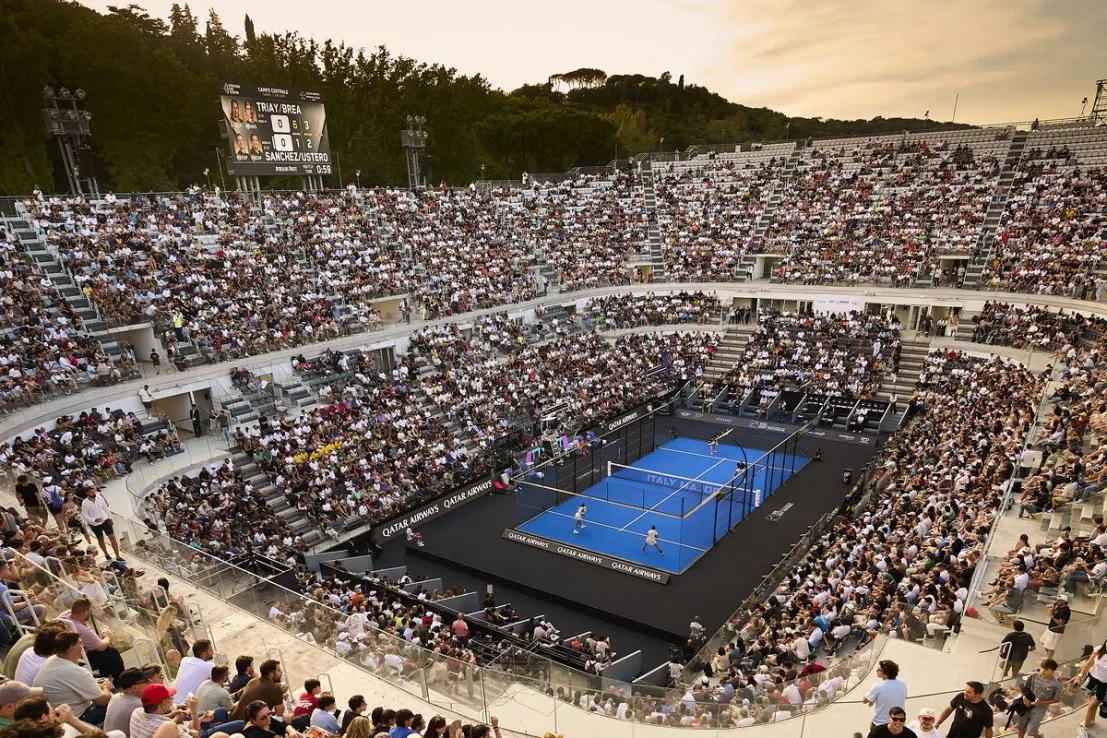
Ahead of the London Premier Padel P1 tournament in August, Luigi Carraro, President of the International Padel Federation, makes the case for the British capital as a pivotal stage for the rapidly growing sport.
London has long demonstrated an ability to recognise and champion sports worth watching. The London 2012 Olympic and Paralympic Games stands as a prime example — an extraordinary month that showcased a wide range of sporting disciplines. That same openness has enabled leagues such as the NFL, NBA, and Formula E to cultivate passionate fanbases across the UK.
The arrival of Premier Padel — the world's professional padel tour — in London marks a significant moment for the sport. Padel is not a British invention; it traces its roots to Spain, Argentina, and Mexico. For those still unfamiliar, it is a doubles-only racket sport played on an enclosed court roughly a quarter the size of a tennis court, where glass and metal walls form part of the play — closer in feel to squash than to lawn tennis, yet using a simplified tennis scoring system. That accessibility is central to why participation has surged. Today, it is being embraced across Europe, the Middle East, and Latin America, with Spain alone home to several million active players and over 20,000 courts. The UK is at an earlier stage of its padel journey, yet the growth has already been remarkable. New clubs are opening daily, and courts are active from morning until night. Players who had never picked up a padel racket two years ago are now participating on a weekly basis.
A Capital That Embraces New Traditions
London has a natural tendency to embrace new cultures and traditions, and its emerging enthusiasm for padel reflects that pattern. Some players discovered the game while living in Madrid; others encountered it on holiday or through colleagues from Argentina or Italy. They then introduce it to family members and friends, and before long, a sport that felt unfamiliar just a couple of years ago becomes part of the routine.
There is genuine curiosity among the British public about the professional side of padel. When Premier Padel arrives at Olympia, the world's top-ranked players will compete in London for the first time. The event is sold out from Thursday through Sunday. Spectators attending their first professional padel matches can expect to be struck by the speed, athleticism, and theatricality of the sport — qualities that set it apart from other racket sports. Television conveys some of this energy, but the courtside experience is distinctly different, and it quickly becomes clear why the sport has expanded so rapidly.
Padel's Global Expansion
Padel's ascent is increasingly difficult to overlook. Premier Padel now stages tournaments across 16 countries and is broadcast in 244 territories, drawing audiences that would have been considered implausible just a few years ago. The International Padel Federation now counts more than 90 national federations among its members, reflecting how quickly the sport has moved beyond its Iberian and Latin American strongholds.
London occupies an important place in this broader narrative. It is not merely another stop on the tour calendar; it remains one of the world's most influential sporting cities, and a sport that succeeds in London tends to attract attention worldwide. This is why the August tournament holds particular significance for the International Padel Federation and the continued development of the sport. A successful London debut could also accelerate the infrastructure investment needed across the UK, where demand for courts already outpaces supply.
In every new city the tour visits, there comes a moment when an attendee arrives out of curiosity, unsure of what padel actually is. Invariably, they leave asking where they can play and where the nearest court might be.
London is a sporting city that has always stayed curious — one that consistently rewards great sport. Luigi Carraro believes padel will be the next to benefit from that spirit.
Luigi Carraro is President of the International Padel Federation (FIP).

