K-Lit Review: Minyoung Kang's 'Plant Lady' Gets Comfortable With 'Cozy Horror'
Key Takeaways
- •The review characterizes “Plant Lady” as a blend of cozy fiction and horror centered on a neighborhood plant shop.
- •Author Minyoung Kang wrote the book to move away from stories in which unnamed women die without being remembered.
- •The novel’s violence is directed at men who abuse or exploit women and children, while Yoohee is portrayed as calm and highly capable.
- •Reviewer Faye Leung says the book is fast-paced, has little suspense, and unfolds over 198 pages.
- •Singaporean translator Shanna Tan’s English version is praised for playful plant-themed phrasing and metaphors.
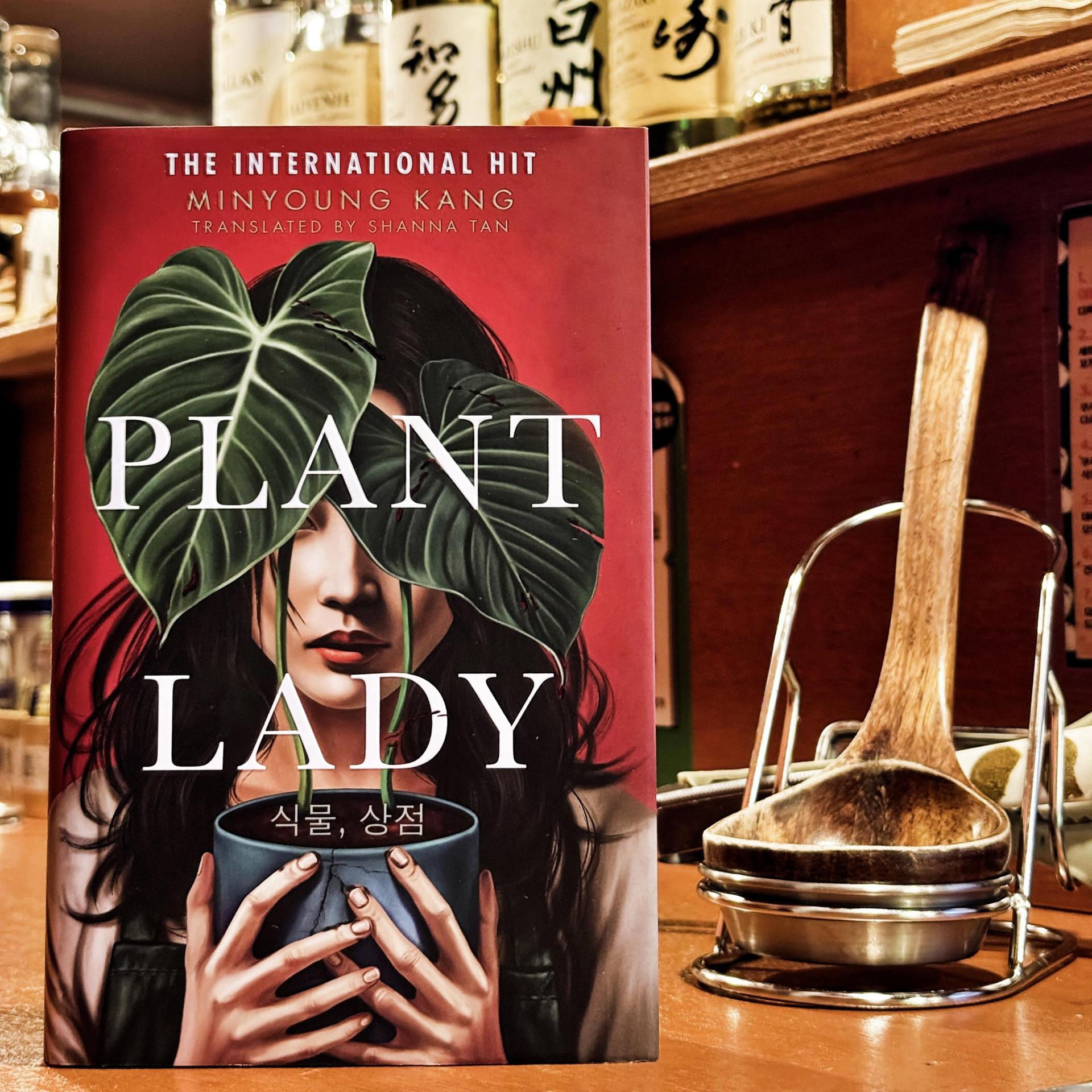
Minyoung Kang's “Plant Lady” has all the essential ingredients of a typical cozy read: a lush plant shop tucked away in an unassuming residential neighborhood; a lone woman snipping and pruning, enveloped by the leaves and shoots she cares for with motherly tenderness; a small cast of ordinary characters, each bearing issues whose resolution promises a happy ending; and, as the must-have feature, some cats. The only complication is the murders.
The reviewer's first piece of advice for this book: skip the blurb — do not read it at all. Writing in The Korea Times, reviewer Faye Leung says she sorely regrets scrutinizing the synopsis from start to finish before diving in, arguing that the preposterous juxtaposition of a soothing neighborhood plant shop and the gruesome plot that unfolds inside it would have been 10 times more impactful had she gone in unprepared. Instead, the book is best approached from three angles: feminine rage, cozy horror and a fast-paced plot that takes no prisoners.
Feminine rage comes first. In her author's note, Kang explains that she had read too many books in which unnamed women died for no good reason. In her own work, she wanted “to shake things up, to write a story where women were remembered, set in a world where [they] weren't always suffering or dying.”
As promised, the suffering and dying in “Plant Lady” happen exclusively to men: men who took women for granted, men who treated women as possessions, and men who inflicted violence on women and children. Nasty, rotten criminals who thought they owned the world meet their match when they cross paths with the calm and unflappable Yoohee, the protagonist and proud owner of Plant Shop — that is the shop's name — who always has advice on hand, or a little something more “impactful” should the first option fail.
Given the astounding extent and frequency of the gore, the review notes, it should go without saying that the book is firmly categorized as horror. Yet the novel's unique traits draw a clear line between it and traditional works of the genre. Impossibly, “Plant Lady” manages to blend the psychological comfort of cozy fiction with the dopamine rush that horror excels at, carving out a niche in a subcategory of its own: cozy horror.
Korean literature dominates this oxymoronic field. National darling Cho Yeeun's brand of horror warms as much as it chills the heart, as the translated book Teddy Bears Never Die demonstrates with its perfect storm of horror, young adult romance and social commentary. Choi Jin-young's “Hunger” became a social media sensation as readers rushed to share the grotesque yet mesmerizing way she portrays love: through cannibalism.
The way violence is carried out in “Plant Lady” is reminiscent of the gory yet guiltily satisfying deadly justice seen in the works of International Booker Prize nominee Bora Chung, whose short-story collection “Cursed Bunny” was shortlisted for the prize in 2022. In an interview, Chung once explained that part of the motivation behind her book Midnight Timetable was the fictional realization of violent fantasies against bad actors that would have been quite illegal in the real world.
Like Chung, Kang approaches justice in her fiction with the same bone-crunching, blood-splattering gusto. “Plant Lady” is a summation of all the rage-filled “if onlys” that could never be in real life, where malicious acts slip through the cracks of the law every day.
Though there is no shortage of violence in “Plant Lady,” the review finds surprisingly little by way of thrills and no heart-in-throat moments of suspense at all throughout the novel. This is due largely to Yoohee, whose nearly inhuman aplomb and capability quickly convince readers to trust that she will always find her way out of a tight spot. That reassured sense of trust keeps readers in a zone of mental safety no matter how violently the plot unfolds.
From the start, the narrative of “Plant Lady” sets off on an incline and only goes upward at breakneck speed. Readers are not given a single moment to catch their breath over 198 pages as violence, murder and worse whiz past one after the other, powered by pure dopamine. Such pesky things as morality and debates about right and wrong have no place in the novel.
As a result, the reader gets much of the satisfaction of a cat perched on a high branch, observing all the commotion from a distance but wholly unbothered by it. The omnibus structure further lessens the mental burden, ensuring that each chapter starts afresh and is neatly wrapped up at the close. All the while, an unhurried overarching plot trundles along underfoot.
The English edition is served by Singaporean translator Shanna Tan, whose name graces the covers of many cozy titles, including Hwang Bo-reum's international hit “Welcome to the Hyunam-dong Bookshop.” Tan delights with her playful translation of the text. When Yoohee first announces that she would quit her job and start a plant shop in a new part of town, she is asked, “Must you really uproot yourself?” Later, when contemplating how to handle an infestation of pests, Yoohee decides that she must “nip the issue in the bud.” The book is similarly peppered with subtle plant-related metaphors — deliberate choices that add authenticity and spruce up the English reading experience.
For readers in search of a low-stakes cozy read but who tire of the same repetitive joy-and-rainbows formula, “Plant Lady” is, in the review's judgment, the perfect step out of the comfort zone — just far enough for a whiff of something new, but still firmly rooted in the nurturing soil of literary healing. That comfort-first strand of Korean fiction has helped build a wide international readership in recent years, and “Plant Lady” grafts its gore directly onto it.
“Plant Lady” is available at dbbooks.co.kr, the Korean online bookseller specializing in English-language titles.
Faye Leung runs @the_bibliocracy, an Instagram account dedicated to singling out reads for savoring. She regularly posts book reviews and recommendations and has a particular fondness for Korean literature.

