Philippine Domestic Trade in Goods Slides 22% in Q2 2026 as Uncertainty Weighs on Demand
Key Takeaways
- •Domestic trade in goods in the Philippines fell 22% in the second quarter of 2026.
- •The decline covered the April-to-June period and represented weaker cargo movement between regions.
- •Analysts said elevated economic uncertainty reduced demand and softened business sentiment.
- •The Philippine Statistics Authority tracks domestic trade using goods transported through seaports and airports.
- •The next quarterly update will be the third-quarter 2026 release.
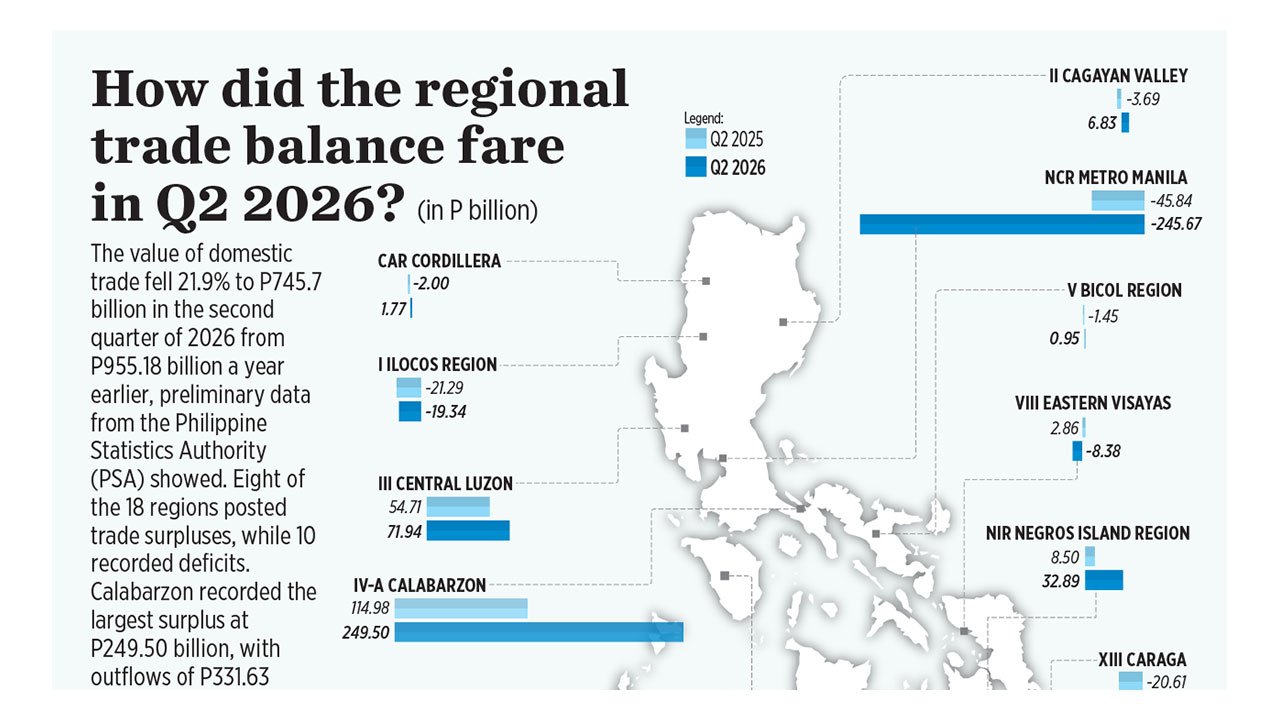
The Philippines' domestic trade in goods fell by 22% in the second quarter of 2026, as heightened economic uncertainty weakened both demand and business sentiment, analysts said.
The decline covers the April-to-June period, a stretch in which the movement of goods between the country's regions contracted. The Philippines is an archipelago of more than 7,000 islands, so inter-island shipping and air cargo form the backbone of domestic commerce linking its provinces and regions. That geography makes the volume of cargo moving between ports a practical read on how actively businesses are supplying markets beyond their own region.
Domestic trade in goods is measured through the flow of commodities transported between the country's seaports and airports, data compiled regularly by the Philippine Statistics Authority (PSA). The indicator serves as a gauge of internal commercial activity, reflecting the volume of cargo that businesses move across the country during a given quarter. Unlike foreign-trade statistics, it captures flows within the country's own borders, offering a complementary view of conditions inside the domestic economy.
Analysts attributed the second-quarter contraction to the weaker economic climate, pointing to elevated uncertainty that softened demand and made business sentiment more cautious. Because the series tracks goods actually transported rather than sentiment surveys alone, a decline of this size marks a concrete reduction in cargo moved between regions during the quarter.
The PSA compiles the domestic trade series on a quarterly cycle, making the third-quarter 2026 release the next checkpoint for whether the contraction extended into the second half of the year.
BusinessWorld's accompanying report, "Domestic trade in goods drops by 22% in Q2", provides further detail on the quarterly figures.
Source: BusinessWorld Online

