Philippine Cash Remittance Growth Settles to Three-Month Low in August
Key Takeaways
- •August cash remittances from overseas Filipinos grew by less than 2%, marking a three-month low and the third straight month of sub-2% growth.
- •Analysts attributed the muted growth to lingering geopolitical tensions affecting both remittance flows and the deployment of Filipino workers abroad.
- •The Bangko Sentral ng Pilipinas compiles and publishes cash remittance data monthly, covering funds sent through banks and other formal channels.
- •Remittances have equaled roughly 8-9% of Philippine gross domestic product in recent years, supporting household consumption and providing a steady source of foreign exchange.
- •September's BSP data will show whether the sub-2% growth streak extends into a fourth month or breaks.
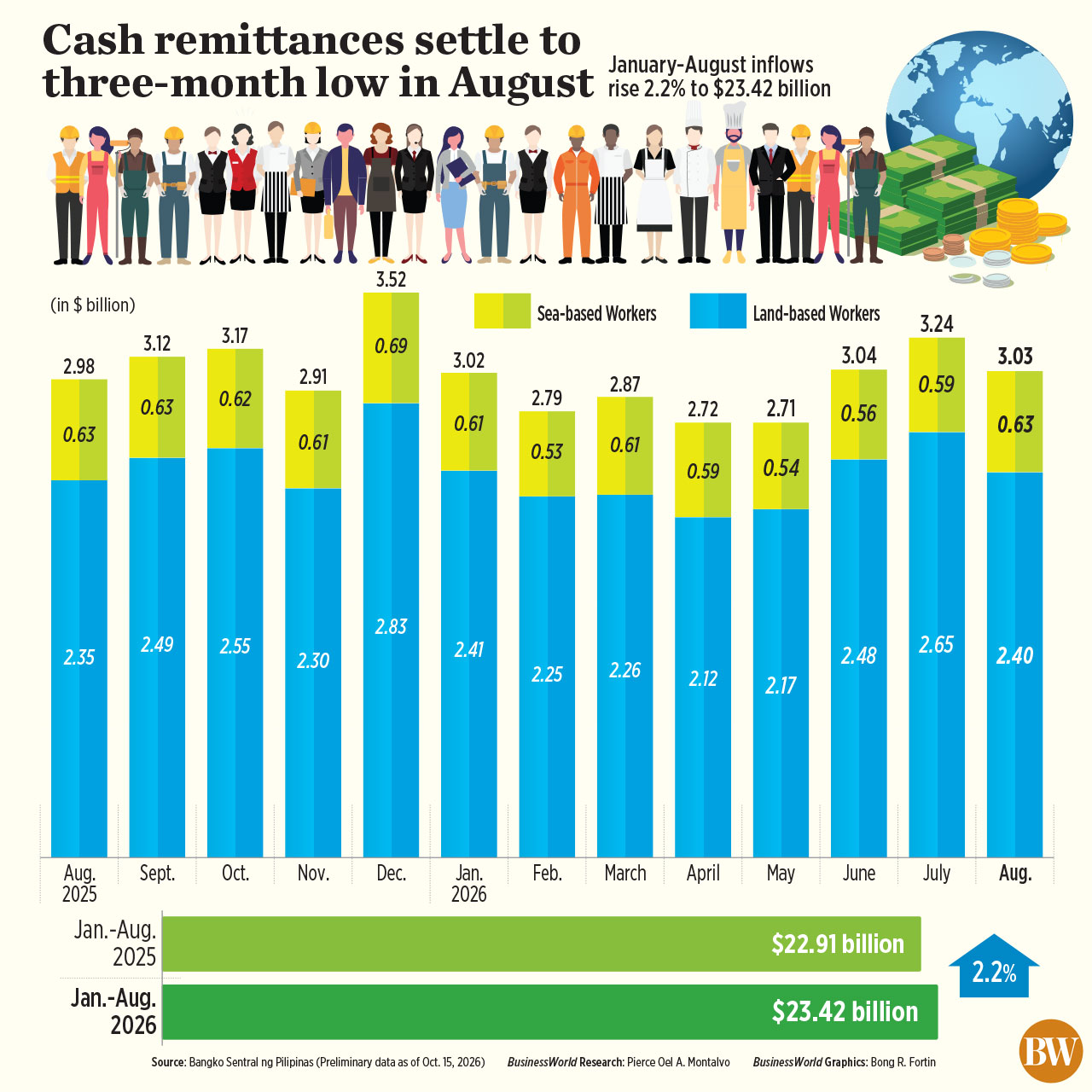
Money sent home by migrant Filipinos grew by less than 2% in August, settling at a three-month low and marking the third straight month of sub-2% growth, as lingering geopolitical tensions continued to weigh on remittance flows and the deployment of overseas workers, analysts said, according to a BusinessWorld report published on Oct. 15, 2026.
Cash remittances — funds wired home by overseas Filipino workers (OFWs) through banks and other formal channels — are compiled and published monthly by the Bangko Sentral ng Pilipinas (BSP), the country's central bank. Deployment — the placement of Filipino workers in overseas jobs — factors into the trend as well, since it shapes the pool of workers abroad whose earnings are sent home.
The flows are a mainstay of the Philippine economy: the Southeast Asian nation consistently ranks among the world's largest recipients of money sent home by migrant workers, and inbound remittances have in recent years been equivalent to roughly 8–9% of gross domestic product. Remittances underpin household consumption, the largest component of Philippine economic output, while also serving as a steady source of foreign exchange for the country. That footprint is why analysts watch the monthly growth rate closely, even when the inflows themselves are still expanding, as a sub-2% gain implies.
With the BSP releasing the figures each month, September's data will show whether the sub-2% streak stretches into a fourth month or breaks.

