Philippine Q2 GDP Growth Likely Slowed as Inflation and Weak Confidence Weighed on Economy
Key Takeaways
- •A BusinessWorld poll indicates that Philippine GDP growth decelerated in the second quarter on a year-on-year basis.
- •Elevated inflation has reduced household purchasing power, affecting consumption that typically represents about three-quarters of Philippine GDP.
- •Weak business confidence and slow public infrastructure spending also contributed to dampened economic activity during the quarter.
- •The GDP outcome could influence the Bangko Sentral ng Pilipinas' monetary policy deliberations as it weighs inflation management against growth support.
- •The Philippines has been among Southeast Asia's faster-growing major economies, making any deceleration notable for regional comparisons and government growth targets.
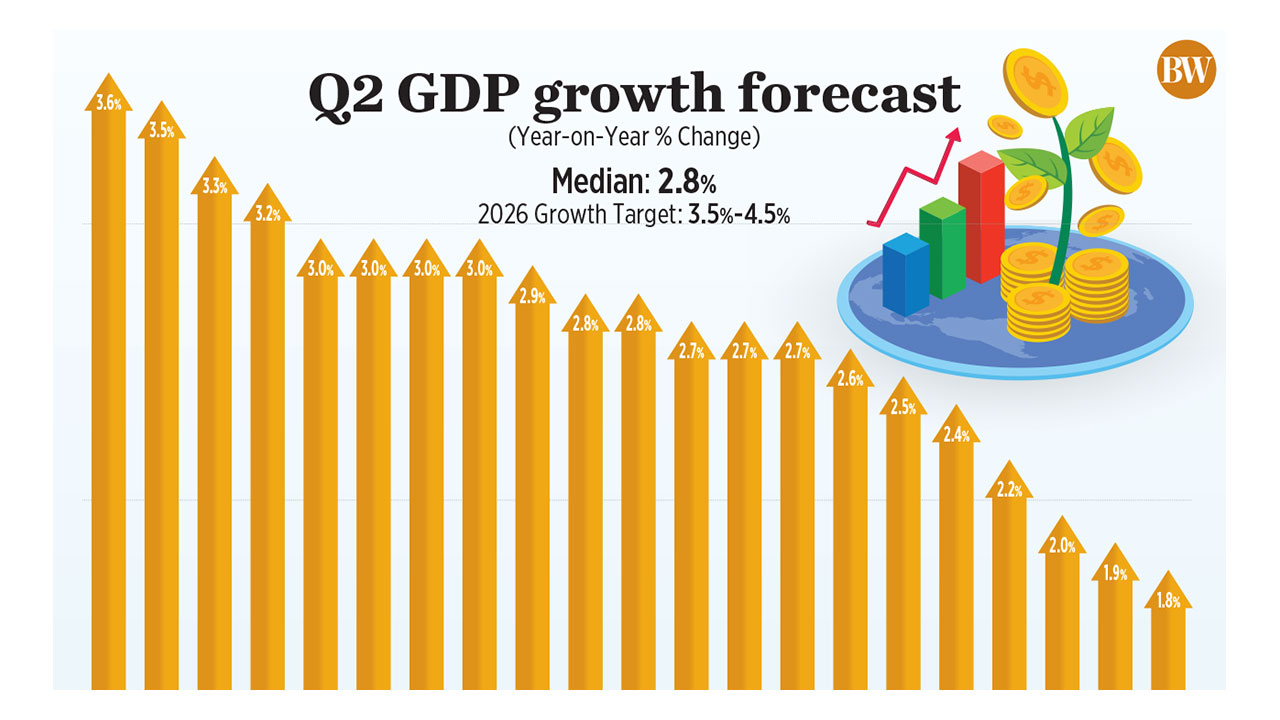
The Philippine economy likely expanded at a slower pace year on year in the second quarter, as elevated inflation weighed on household spending while weak business confidence and sluggish public infrastructure spending dampened overall economic activity.
The Philippines reports gross domestic product (GDP) data through the Philippine Statistics Authority (PSA), which releases quarterly figures based on production and expenditure approaches. GDP growth is a key indicator tracked by policymakers, investors, and international organizations monitoring the country's economic trajectory. The Philippines has been among Southeast Asia's faster-growing major economies in recent years, making any deceleration notable for regional comparisons and for the government's medium-term growth targets.
According to a BusinessWorld poll, analysts expect second-quarter growth to have decelerated, reflecting headwinds from persistent price pressures and tepid private-sector activity. Household consumption, which typically accounts for around three-quarters of Philippine GDP, is sensitive to inflationary pressures that reduce purchasing power. The Bangko Sentral ng Pilipinas (BSP), the country's central bank, has been balancing inflation management against growth support, and the GDP outcome could factor into upcoming monetary policy deliberations.
The full analysis is available on BusinessWorld Online.

