Korean Canadian Folk Musician Janice Jo Lee Brings 'Ancestor Songs' to Korea After Citizenship Battle
Key Takeaways
- •Janice Jo Lee was required to renounce her claim to Korean citizenship under South Korea's Nationality Act to obtain a work visa, a process so prolonged it forced her to cancel an earlier tour.
- •The Jeonju International Sori Festival's then-artistic director Kim Hee-sun invited Lee and her band to Korea after discovering them at an Ottawa performance, calling her music more Korean than Lee herself realized.
- •Lee's artistic identity was profoundly shaped by learning the janggu drum in 2018 and by discovering pansori, both of which she describes as transformative to her composing and singing approach.
- •The QTs, whose name stands for queer/trans cuties, form a multicultural ensemble whose Seoul performance at Uplift will donate part of its proceeds to the Beyond The Rainbow Foundation.
- •The Korea tour begins Friday at Busan's HQ Bar, continues with two consecutive nights in Seoul, and culminates at the Jeonju International Sori Festival on August 13.
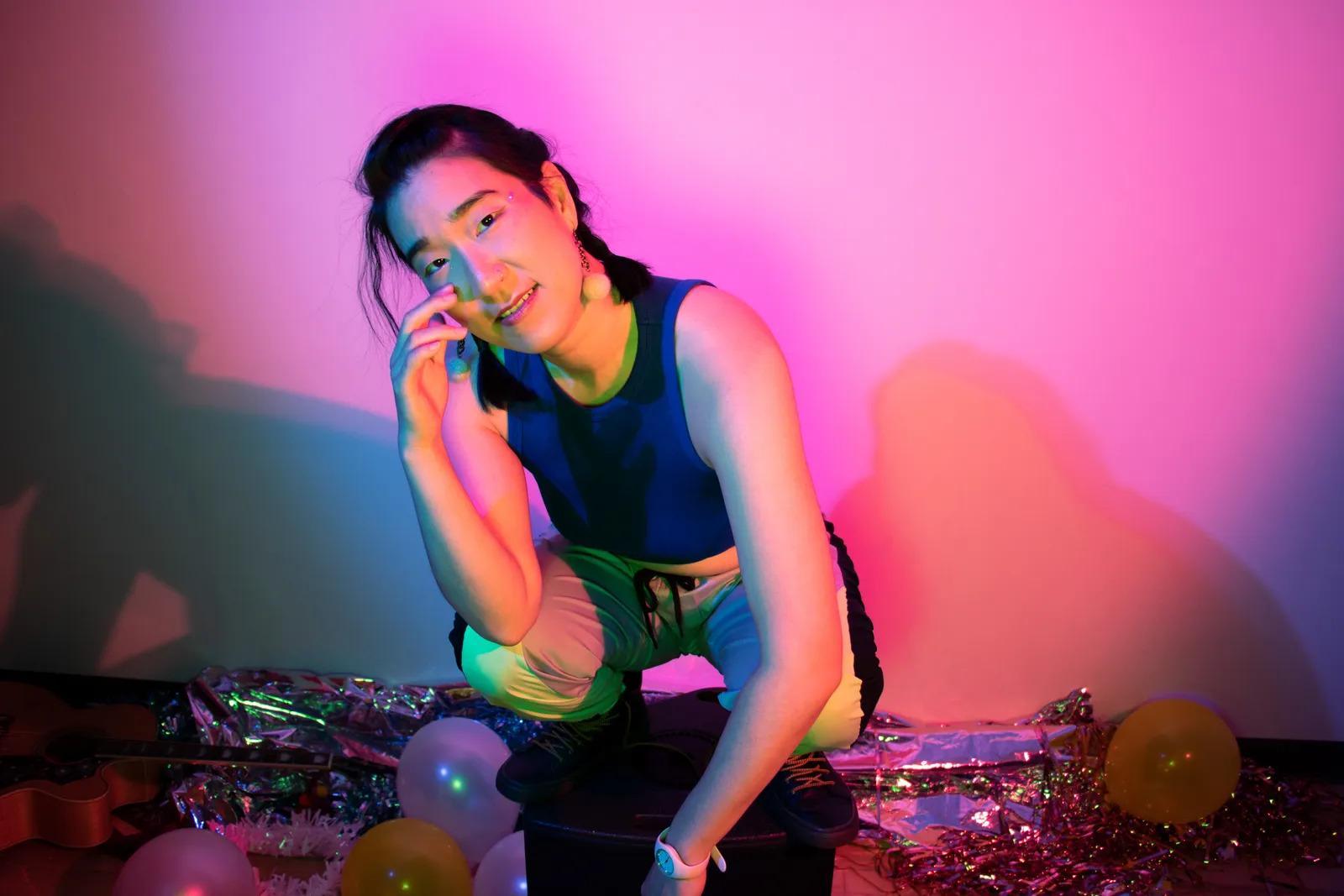
To perform in the land of her ancestors, Korean Canadian folk musician Janice Jo Lee first had to relinquish a piece of her identity: her claim to Korean citizenship.
"Because at the time of my birth in Canada, my parents both held Korean citizenship, I held a claim to Korean citizenship," Lee said. "For the year of my birth, Korea does not allow me to hold dual citizenship. So Korea required me to renounce my claim to Korean citizenship, and apply for a work visa solely as a Canadian. It was a bureaucratic nightmare."
South Korea's Nationality Act generally bars dual citizenship for adults, with narrow exceptions that do not cover most overseas-born descendants of Korean nationals — a policy that has created hurdles for diaspora Korean artists and professionals seeking to work in the country.
The citizenship issue forced Lee to cancel an earlier tour with her Toronto-based folk-fusion band, Janice Jo Lee and the QTs. "We had to cancel our tour last year because of how long the process ended up taking," she said. "My bandmates who are Canadian without Korean heritage, it was easier for them to get a work visa than me."
The irony is sharpened by how the Korea tour came about in the first place. Kim Hee-sun, then artistic director of the Jeonju International Sori Festival — one of Korea's most prominent world music events, founded in 2001 and recognized by UNESCO's International Music Council — saw the QTs perform in Ottawa and invited them to Korea.
"She came backstage and told me the way I sing about my grandmother, the deep melancholy in the melodies — my music was more Korean than I understood," Lee recalled. "That was a huge validating moment for me."
Roots Across the Diaspora
Lee's father's family hails from Ulleung Island in North Gyeongsang Province, while her mother's side comes from Mokpo in South Jeolla Province. Growing up in Toronto, she spoke Korean at home, attended Korean church, and practiced traditions such as "jesa" (ancestral rites) and Lunar New Year celebrations. She also studied Korean traditional music, or gugak, and dance from a young age.
"For children of diaspora in Canada, a 'gyopo' like me, when we grow up here we are made to feel like we are not Canadian enough because we are not white. There is a sense of being an outsider, and we are often reaching for the homeland," she said.
"It's ironic because it was the racism I experienced my whole life that pushed me back to explore my roots. As a folk musician in Canada, I've showcased at many major Canada-U.S. folk events, but festival directors don't know what to do with me, a Korean woman with a guitar."
After experiencing what she described as "my life's greatest spiritual destruction/burnout" roughly a decade ago, Lee spent the following years rebuilding her relationship with music.
"My personal and artistic journey for the past 10 years has been about reconnecting with my roots," she said. "My whole body of work as an artist explores my Korean heritage, my lineage and what I call my 'Ancestor Songs' — the music and voice I inherited through my family."
Discovering Janggu and Pansori
Lee's music is dramatic and rootsy, blending folk storytelling with blues and elements of traditional Korean music. In 2018, she told her father she wanted to learn the janggu, a traditional Korean hourglass-shaped drum. Shortly afterward, he encountered a janggu teacher at a Korean grocery store, called his daughter, and handed over the phone. Private lessons soon followed.
"Learning janggu changed my musical life. Gugak rhythms felt so different in my body. Compared to Western classical music, Korean rhythms are syncopated, less square, lilting — you have to feel them in your body rather than count them in your head," she said. "I tried composing songs to janggu rhythms and it was impossible at first to sing to these rhythms. I had never done it before. So that process became a literal decolonizing of my body of Western classical, to teach my body how to feel Korean rhythms. And when I figured it out, it felt aligned. You can hear it in my song 'Years of Secret Melody.'"
Pansori, the Korean tradition of musical storytelling — which UNESCO designated a Masterpiece of the Oral and Intangible Heritage of Humanity in 2003 — was another profound influence.
"Hearing pansori for the first time was earth-shaking," she said. "I was like 'What is this magic?'"
The experience inspired her to compose "Swim Forever," with lyrics translated into Korean by her mother, Young Hee Kim, a poet. "Without having pansori training, that song is me reaching for pansori," Lee said.
Politics, Economics, and the Band
Lee is candid about the political dimensions of her songwriting. "I try to apply principles of human rights and self-determination to how I run my band, and in my lyrics," she said. "I write a lot about the Earth, and how capitalism and industry destroy the Earth and our souls. My new song 'Fire Fire' is about the grief and destruction of fire around the world. I find myself wailing for the Earth, the forests, the oceans."
As a bandleader, Lee views herself as a small business owner and is frank about the economic pressures facing working musicians.
"Big Tech has taken away our main product — the recording — and social media has made us give away our other product — performances," she said. "Because we have to put all our music online for free now, the last remaining product is the concert. It's tough to break even but I am committed to fair working conditions for my bandmates, my workers."
The QTs comprise Camilo Consuelo Esperanza on voice and keyboard, Nim Agalawatte on bass, and Vania Lee on drums. Together, they form a multicultural ensemble with ties to China, Sri Lanka, Mexico, and Catalonia.
The band's name echoes "cuties" but carries a deeper meaning. "QTs stands for queer/trans cuties," Lee explained. "Asians are often called cute, and I used to resent that, because I felt it was infantilizing. But now I have embraced it more, because I think cute means delightful and full of light, which I am. And I also have no problem fighting with anyone who disrespects me. You can be cute and ferocious."
Lee's hope that the band won't face harassment reflects the broader landscape for LGBTQ+ performers in South Korea, where queer artists have carved out space in Seoul's independent music scene even as legal protections against discrimination remain limited.
Korea Tour Schedule
Janice Jo Lee and the QTs will open their Korea tour on Friday at Busan's HQ Bar, with Nereidas opening. The band then heads to Seoul for two consecutive nights. On Saturday, they will perform at Uplift alongside Hurricane Kimchi, Kontrajelly, and Rhino Rainbow, with a portion of proceeds benefiting the Beyond The Rainbow Foundation. On Sunday, they will take the stage at Seendosi in downtown Seoul with Haepa and Howaho.
On Aug. 13, Lee and the band will perform at the Jeonju International Sori Festival in Jeonju, North Jeolla Province.
This marks only Lee's third visit to Korea.
"I hope that people connect with my music," Lee said of her expectations. "I want my aunt to come to my concert. Most of my family hasn't heard me play music live. I'm excited to take my best friend and bandmate Camilo to Ulleung Island and swim in the ocean. I hope I sell some CDs. I hope we don't get harassed for being queer trans. I hope people are willing to take a chance and come to our concerts. I hope my Korean speaking is OK, or at least comes off cute that I'm trying."
More information is available at janicejolee.ca.

