Philippine Manufacturing PMI Reaches Five-Month High in July
Key Takeaways
- •Philippine manufacturing PMI rose to a five-month high in July, reflecting the sector's ongoing recovery.
- •Both production output and new orders expanded at their fastest pace since February.
- •The improvement indicates strengthened domestic and international demand for Philippine-manufactured goods.
- •PMI trends are monitored as an early gauge of industrial activity before official quarterly GDP figures are released.
- •The Philippines data is part of S&P Global's wider ASEAN manufacturing survey covering several Southeast Asian economies.
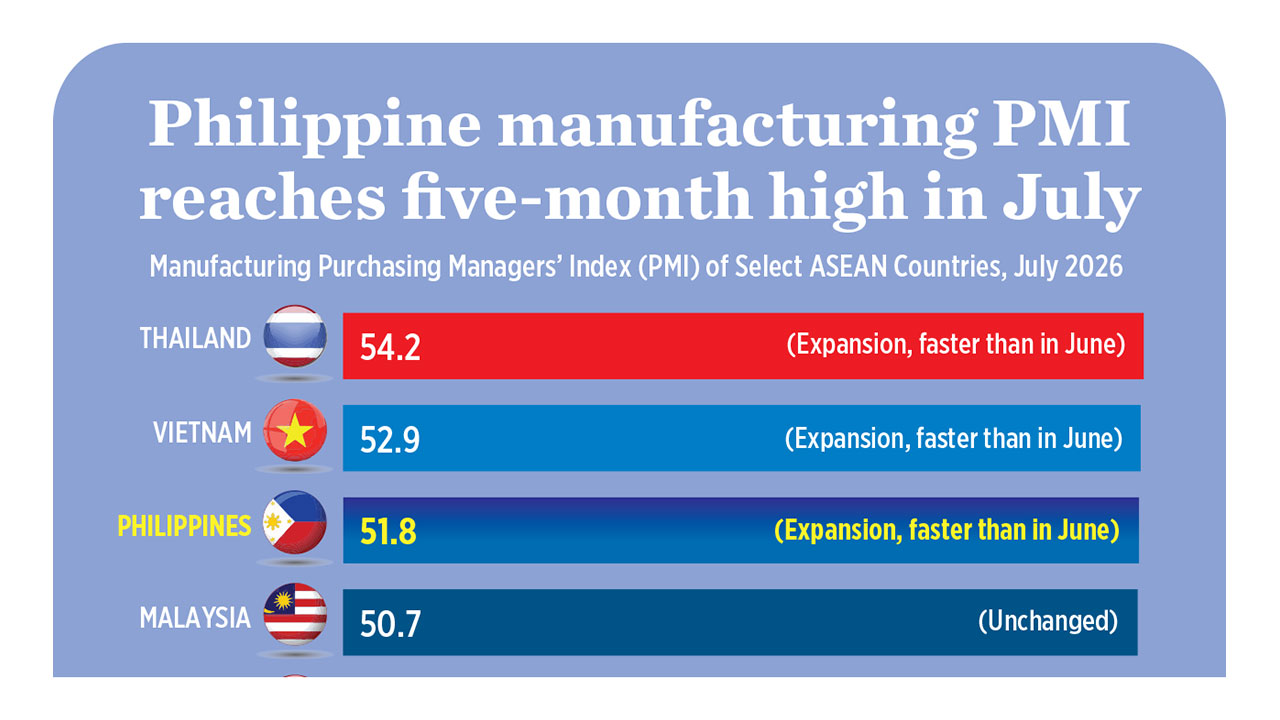
Philippine manufacturing activity climbed to a five-month high in July, as both production and new orders expanded at their fastest pace since February, according to data released by S&P Global.
The Purchasing Managers' Index (PMI), compiled by S&P Global, is a monthly indicator of economic health for the manufacturing sector. A PMI reading above 50 signals expansion in the sector, while a figure below 50 indicates contraction. The index is based on surveys of private-sector purchasing managers covering indicators such as new orders, output, employment, supplier delivery times, and stock levels.
The July reading marks a continued recovery for Philippine manufacturing, reflecting improved demand conditions and stronger operating conditions for goods producers. The acceleration in both output and new orders suggests that domestic and international demand for Philippine-manufactured products gained momentum during the month. Manufacturing accounts for a meaningful share of the Philippine economy, and PMI trends are closely watched as an early gauge of industrial activity ahead of official quarterly GDP data.
S&P Global's PMI data for the Philippines is part of its broader ASEAN manufacturing survey coverage, which tracks performance across Southeast Asian economies. The Philippines regularly reports alongside neighbors such as Indonesia, Vietnam, Thailand, and Malaysia, providing a comparative view of regional manufacturing momentum.
Source: BusinessWorld Online

