Solana's Orca Merges With Loopscale to Form Formation, Pitching Credit for AI and Defense
Key Takeaways
- •Orca and Loopscale merged on October 7 into Formation, a New York-based company targeting credit services for AI, energy, robotics, and defense industries, with financial terms not disclosed.
- •Orca has processed more than $550 billion in trading volume since 2021, while Loopscale reports over $150 million in deposits and more than $2 billion in loans facilitated.
- •Formation plans to launch a tokenized securities venue and issuer tools within 12 months under the SEC's five-year conditional Innovation Exemption granted on September 17.
- •The Orca Council rescheduled its governance vote to October 11-16 on a proposal to cut xORCA's fee share from 40% to 10%, dissolve the Council, and move a treasury of 14.2 million ORCA into a team-controlled Strategic Account for acquisitions.
- •The ORCA token is trading around $2.34, having dropped more than 16% since the merger news.
Solana's leading decentralized exchange, Orca, has merged with lending protocol Loopscale to form a new company called Formation. Headquartered in New York, Formation is pitching itself as credit plumbing for the AI, energy, robotics, and defense industries. The deal is notable in DeFi terms: rather than a routine protocol integration, two separately run venues — one for trading, one for credit — are combining into a single operating company.
The two teams announced the deal on October 7. Loopscale laid out the terms in a merger FAQ on its documentation site. Financial terms were not disclosed.
A frontier-finance pitch backed by a $3 trillion AI bet
Formation's founding message is that the companies building the next wave of physical and digital infrastructure receive poor service from traditional capital markets, and it was created to change that. Its stated targets are AI, energy, robotics, and defense companies.
The timing aligns with an enormous projected funding need. According to Apollo Global Management, the funding gap in AI infrastructure will take an estimated $3 trillion in financing to fill by 2028.
Formation also announced a group of partners in bringing digital assets to market: Figure, Shinhan Asset Management, Superstate, R3, and Securitize — a lineup spanning tokenization platforms, blockchain-based finance, enterprise blockchain software, and traditional asset management.
Luke Truitt, Loopscale's co-founder and now chief executive of the newly formed company, said in the announcement: "Every major technological revolution has been paired with a financial one. We're at an inflection point that requires capital markets to keep pace with the industries reshaping the economy."
Orca's liquidity meets Loopscale's credit order book
The combined company runs on a simple logic: a new asset needs both a place to trade and a place to borrow against.
Orca operates concentrated-liquidity pools it calls Whirlpools — a design that lets liquidity providers aim their capital at specific price ranges instead of spreading it across the whole curve. Loopscale matches lenders and borrowers at fixed rates through an order book, with terms agreed up front rather than floating with pool usage, and it added curated lending vaults in June 2026. Put together, Loopscale's FAQ says, an issuer can go live with trading and credit at the same time — a packaged alternative to stitching those pieces together separately.
According to the announcement on Formation's homepage, Orca has processed more than $550 billion in trading volume since 2021. Loopscale, meanwhile, is listed with more than $150 million in deposits and over $2 billion in loans facilitated.
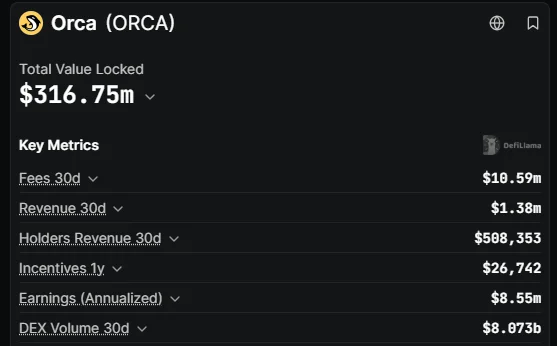
Orca currently holds around $316.8 million in total value locked and has recorded more than $8 billion in DEX volume over the past 30 days, per DefiLlama data.
On the leadership side, Mary Gooneratne, Loopscale's other co-founder, becomes Formation's chief operating officer. Christopher Montagano, who joined Orca in 2022 as its chief legal officer, takes the strategy and legal brief.
A tokenized securities venue under the SEC's Innovation Exemption
Formation also plans to operate a tokenized securities venue and to ship issuer tools within 12 months. That plan rides on an SEC order released on September 17, under which the regulator granted tokenized securities venues (TSVs) a five-year, conditional "Innovation Exemption." The five-year clock and attached conditions define the boundaries within which that venue would have to operate.
The relief allows qualifying venues to trade tokenized National Market System stock through permissioned automated market makers and liquidity pools without registering as exchanges. It comes with limits, however: caps on symbols and volume, a requirement that operators be US persons under OFAC rules, and an opt-out for companies whose shares a venue wants to tokenize without their involvement. It covers tokens backed by real shares.
ORCA holders face a rescheduled governance vote
The merger has tangled with Orca's own governance. The Orca Council is scrapping an on-chain vote that opened on October 5 and reposting the same proposal, with voting now set for October 11 through October 16. It also carries a two-day cool-down through October 18, according to a forum update from a Council member. The original vote had been due to close on October 10, and the Council cited trouble letting xORCA stakers participate; xORCA is the staked version of the ORCA token.
The proposal itself would cut xORCA's share of protocol fees from 40% to 10%. It would also dissolve the Council and shift a community treasury of 14.2 million ORCA into a team-controlled "Strategic Account" earmarked for acquisitions. The October 11–16 voting window is when token holders decide whether those changes proceed.
ORCA, the protocol's native token, is trading around $2.34, having dropped by more than 16% since the news came out.

