Oracle Shares Plunge 12% as $70B AI Infrastructure Spending Plan Sparks Investor Concerns
Key Takeaways
- •Oracle's shares fell approximately 12% on June 11, erasing about $72 billion in market capitalization and bringing its valuation down to near $507 billion.
- •The company forecasts roughly $70 billion in net capital expenditures for fiscal year 2026, with nearly the entire amount earmarked for AI data-center buildout.
- •Oracle's free cash flow deficit widened dramatically to $23.7 billion in fiscal 2026, up from just $394 million in the prior fiscal year.
- •To help fund the spending, Oracle intends to raise $40 billion through a combination of debt and equity issuance.
- •The sell-off extended to broader technology stocks and European IT shares as investors reassessed the return profile of large-scale AI infrastructure commitments across the industry.
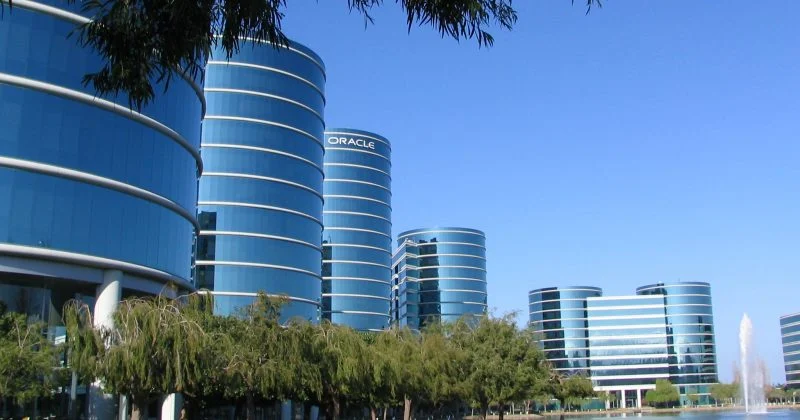
Oracle experienced its steepest single-session decline in eighteen months on June 11, with shares dropping approximately 12% and erasing roughly $72 billion in market capitalization. The sell-off was triggered by the company's projected capital expenditure plans, which call for unprecedented spending on artificial intelligence infrastructure.
Oracle forecasts approximately $70 billion in net capital expenditures for fiscal year 2026, with nearly the entirety allocated to AI data-center buildout. To finance a substantial portion of this spending, Oracle plans to raise an additional $40 billion through a combination of debt and equity issuance. The spending plan places Oracle alongside the largest hyperscalers — Amazon, Microsoft, Google, and Meta — all of which have sharply escalated AI infrastructure investment over the past two years, though Oracle is undertaking this buildout from a considerably smaller revenue and cash-flow base.
Free Cash Flow Deterioration
Oracle's free cash flow deficit expanded sharply to $23.7 billion in fiscal 2026, compared to just $394 million in the prior fiscal year — a dramatic widening that underscores the scale of the company's infrastructure commitment. The deterioration is heightened by a timing mismatch: the bulk of the capital deployment precedes the revenue expected from Oracle's landmark $300 billion, five-year cloud computing contract with OpenAI, which is scheduled to commence in 2027.
The company's strategy centers on the expectation that heavy upfront investment in AI infrastructure will generate returns over time. The OpenAI agreement ranks among the largest technology contracts on record and positions Oracle's Cloud Infrastructure (OCI) as a primary compute provider for one of the most prominent AI labs, representing a bid to close the competitive gap with AWS and Microsoft Azure in the cloud infrastructure market.
Oracle's stock previously reached an all-time high of approximately $345 in September 2025. The company's market capitalization, which at one point approached $900 billion, now stands near $507 billion, down from roughly $579 billion before the June 11 sell-off.
Valuation Pressures
Oracle currently trades at approximately 24.5 times forward earnings — a premium multiple that some market participants view as elevated for a company with rapidly expanding cash burn, especially when compared to larger cloud competitors such as Amazon and Microsoft, which possess greater financial resources and more diversified revenue streams. The concern for investors is whether Oracle can sustain this level of spending without compromising its balance sheet if AI demand ramps more slowly than projected or if the OpenAI contract's terms shift over its five-year duration.
Broader Market Impact
The decline extended beyond Oracle, weighing on broader technology-sector sentiment and pulling European IT stocks lower in tandem. The reaction reflects a broader market debate about the return profile of large-scale AI infrastructure commitments across the industry, as investors reassess how much near-term capital intensive spending can be justified by longer-dated revenue expectations.
The OpenAI contract represents a cornerstone of Oracle's AI infrastructure strategy. While a $300 billion, five-year agreement could justify sustained capital investment over an extended period, agreements of this scale also introduce concentration risk, execution challenges, and uncertainty around whether AI demand projections will materialize as anticipated.

