OpenClaw 2.0 Arrives: What Changed, Why It Took Two Months, and How It Stacks Up Against Hermes
Key Takeaways
- •OpenClaw 2.0 (version 2026.8.1) was built by 933 contributors, 569 of them first-time participants, through more than 16,000 pull requests—roughly half of all PRs ever merged by the project.
- •The headline feature is shared multiplayer cloud sessions, allowing colleagues to join an agent's work mid-task without losing context.
- •New security features include request-specific approvals, Docker and Podman sandboxing, role-enforced execution, and a team-scoped Secret Store, but sandboxing and approvals remain disabled by default.
- •Session storage moved to a new SQLite backend, and users are warned to back up sessions before migrating because downgrades without a backup will lose post-migration sessions.
- •Competition is intensifying, with Nous Research's Hermes Agent differentiating on procedural memory and more secure defaults, while OpenClaw maintains advantages in ecosystem and channel breadth.
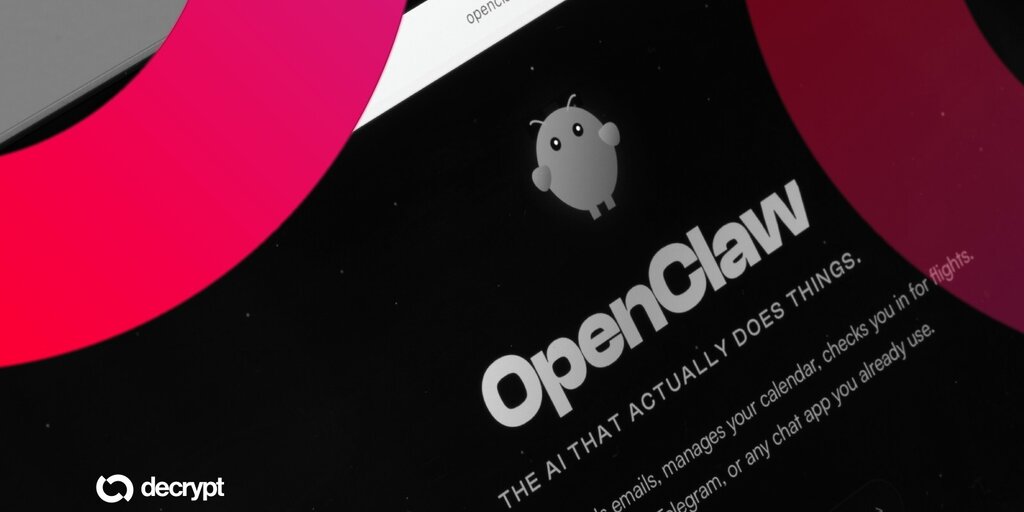
OpenClaw has shipped version 2026.8.1, branded OpenClaw 2.0, built by 933 contributors including 569 first-timers.
The update rebuilds the browser app, adds shared multiplayer cloud sessions, moves session storage to a new backend, and implements features clearly aimed at enterprise buyers. It arrives as Nous Research's Hermes Agent continues attracting users frustrated with OpenClaw's setup headaches.
OpenClaw released its biggest update ever over the weekend. The team calls it OpenClaw 2.0—and also "accidental," a label worth unpacking.
The release notes cover installation, messaging, memory, skills, models, automations, the browser, native apps, plugins, and security—essentially everything a user needs to know.
Per the announcement post, 933 contributors, 569 of them first-timers, participated in the project with more than 16,000 pull requests. That is roughly half of every PR OpenClaw has ever merged, shipped in a single release.
What OpenClaw actually is
OpenClaw is a self-hosted, open-source framework that turns an LLM into an agent that persists after you close the tab. It runs on your machine, wakes up on its own schedule, and communicates over WhatsApp, Telegram, Discord, or Signal rather than sitting in a chat window. With permission, it can access your email, calendar, files, and shell.
Austrian developer Peter Steinberger built it after stepping back from his company PSPDFKit. The project gained a record 147,000 GitHub stars in weeks and spawned an ecosystem of spin-offs, including an AI-only social network called Moltbook.
Steinberger joined OpenAI in February to lead its personal-agent push. OpenClaw itself did not join OpenAI; it moved into its own nonprofit, the OpenClaw Foundation, with OpenAI listed as one partner alongside Microsoft, GitHub, Nvidia, Atlassian, and Tencent.
The project sits inside a broader shift in the agent landscape: as general-purpose chatbots have become commodity products, attention has moved to persistent, tool-using agents that act across services and schedules. Projects like OpenClaw compete on that terrain not just with rivals such as Hermes but with the platform vendors themselves, whose own assistants ship preinstalled on billions of devices.
Why "accidental" is the right word
The original plan for this update was small: simplify installation and rebuild the browser app. Once the team began doing that properly, the work extended to memory, models, plugins, messaging, and security.
Before this release, OpenClaw had shipped 106 releases in 230 days—essentially one per day. Going seven weeks without shipping anything was, by the team's own admission, unusual. They spent that time ensuring existing installs would not break on upgrade, which is why the release notes carry a prominent warning about backing up sessions before migrating to the new SQLite storage.
So "accidental" is not a marketing line; it is the team publicly acknowledging scope creep. Two small fixes—onboarding and the browser—pulled in everything else because everything else touched the same code being rewritten.
Hannes Rudolph, OpenClaw's Community Manager, frames it as OpenClaw eating its own dog food: once the team started running its own workflow through multiplayer sessions, the gaps in the old single-user design became too obvious to ignore. That is how a two-fix plan became 16,000 pull requests.
What's actually new
Setup now starts by checking what you already have—an existing Claude or ChatGPT subscription, an API key, or a local Ollama model—before asking you to configure anything new. It tests whether the model actually works before saving it, then places users directly into a real conversation instead of a settings screen.
The Control UI was rebuilt around chat rather than a separate overview dashboard, putting it in the same visual family as ChatGPT, Claude, and Gemini. Files, Git diffs, pull-request status, a browser panel, and a terminal now sit around the conversation instead of requiring five separate tools.
The team says a simulated latency test cut initial JavaScript requests from 140 to 45 and startup time from 1.6 seconds to 575 milliseconds.
The multiplayer pitch
The headline feature is shared cloud sessions—an agent's work becomes something a colleague can join mid-task without losing context. Steinberger said on X that his own team abandoned individual local coding harnesses for a shared setup at team.openclaw.ai, calling local harnesses "relics of the past."
The shift matters beyond OpenClaw: until now, most personal-agent tools have assumed a single owner, which has been a sticking point for teams that want agents to function like shared infrastructure rather than private assistants. Shared sessions are a step in that direction, though the project's own security documentation makes clear the isolation guarantees are still limited.
Security features were expanded to match. OpenClaw 2.0 adds request-specific approvals, command permissions scoped to specific arguments, Docker and Podman sandboxing, role-enforced execution, and a team-scoped Secret Store that can insert a credential into a request without ever exposing it to the model.
The caveat: sandboxing and approvals remain off by default. OpenClaw's own documentation states that one Gateway equals one trust domain, not a wall between people who do not trust each other. Companies needing actual tenant isolation must stand up separate Gateways—OpenClaw calls them "cells"—rather than flipping a switch.
The competition is heating up
OpenClaw no longer has the field to itself. Nous Research's Hermes Agent, first tagged in March, built its pitch around differentiators from OpenClaw: procedural memory that automatically turns successful workflows into reusable skills, and security defaults that do not assume a single user on the machine.
Architecturally, OpenClaw separates a Gateway daemon from the agents it routes to. Hermes packs the conversation loop, tool dispatch, and memory into one agent class—messier to scale, simpler to reason about. The general assessment circulating this year: OpenClaw leads on ecosystem and channel breadth, while Hermes leads on self-improvement and on not shipping wide open by default.
OpenClaw 2.0's new sandboxing narrows that gap but does not close it—the hardened settings still require someone to turn them on.
Worth watching going forward: whether the OpenClaw Foundation's enterprise partners translate the new security and multiplayer features into managed deployments, and whether Hermes' procedural-memory advantage holds as OpenClaw's skill system matures.
How to get it
Existing users update through the normal CLI path. The fine print matters: sessions created after the SQLite migration will not appear if you downgrade later without a backup.
New users can follow OpenClaw's setup guide, now with guided onboarding across Mac, Windows, Linux, iPhone, iPad, and Android, plus staged imports for anyone switching from Claude, Codex, or Hermes itself.
The project remains free, MIT-licensed, and available at github.com/openclaw/openclaw.

