Hamzat Charts Lagos' Path to Becoming Africa's Innovation Capital at GITEX Nigeria
Key Takeaways
- •Lagos was ranked the world's fastest-growing tech hub in the 2025 Dealroom index, with enterprise value rising 11.6-fold to $15.3 billion.
- •Lagos State has taken regulatory control of its power market under a 2023 constitutional amendment and is procuring an additional 4,000 megawatts targeting 97.5% grid reliability within three years.
- •The state has laid 3,000 kilometres of open-access municipal fibre under a dig-once mandate and plans to expand the network to 6,000 kilometres linking to transatlantic submarine cables.
- •GITEX organisers and NITDA emphasised that Africa must become a producer of AI rather than a consumer, with Nigeria backing its National AI Strategy with 700,000 training placements and a $1.85 billion commitment.
- •The AfCFTA Protocol on Digital Trade and Nigeria's newly signed NIMC Act 2026 are intended to enable interoperable digital identities, cross-border payments, and a single continental digital market.
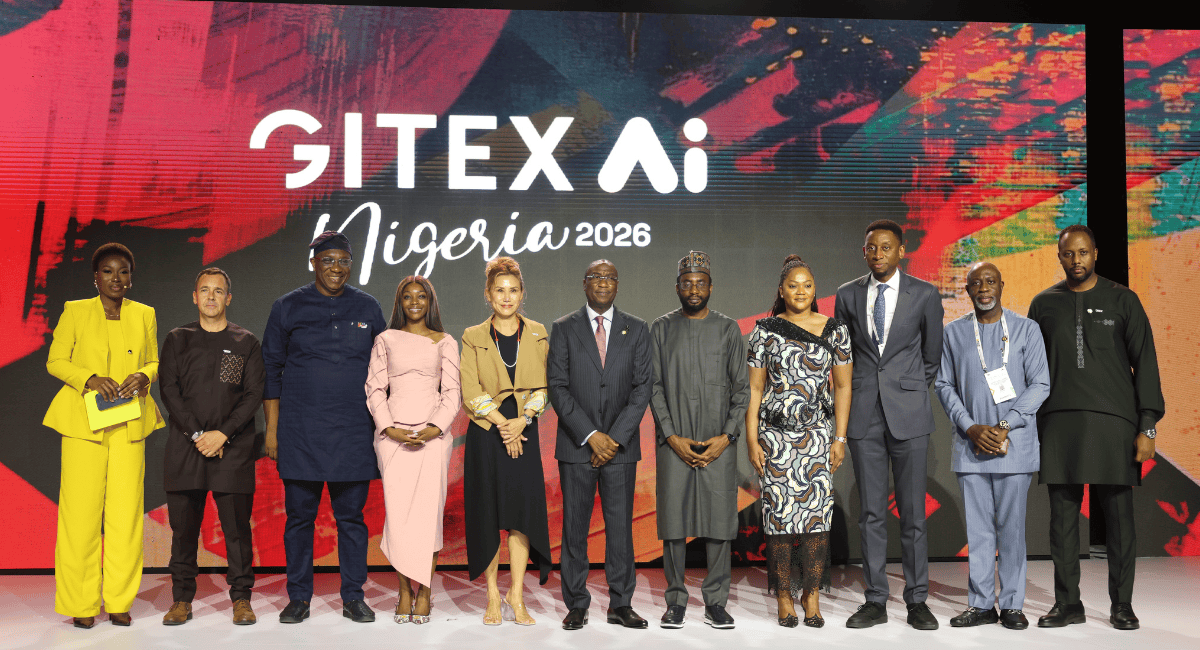
Abuja is where Nigeria's national technology policies are drafted and debated; Lagos is where they either scale or die. After Monday's Government Leadership & AI Summit in the Federal Capital Territory opened the second edition of GITEX Nigeria, the event circuit moved to the country's commercial nerve centre for the Tech Expo & Future Economy Conference — and the change of venue immediately shifted the tone. Where Abuja supplied the regulatory framework for Nigeria's digital ambitions, Lagos demanded the structural receipts.
Global investors and technology executives who travelled to West Africa were not there for recycled pitches about demographic dividends or mobile-first leapfrogging. The romantic era of African tech potential is effectively over. At the Landmark Event Centre, the conversation has matured into a hard-nosed audit of power grids, subterranean fibre ducts and the sovereign capacity to build artificial intelligence hardware.
Lagos Deputy Governor Dr Kadri Obafemi Hamzat, representing Governor Babajide Sanwo-Olu, set out the premise with surgical bluntness. GITEX's arrival on Nigerian soil was neither diplomatic benevolence nor a plea for foreign patronage.
"Exhibitions follow markets," Hamzat told an audience of international delegates, state executives and institutional investors. "And markets follow scale, capital, and talent."
He framed the state's ambition in explicitly competitive terms: Lagos wants to be recognised "not only as Nigeria's commercial capital, but as Africa's innovation capital" — a position, he added, that "cannot be declared; it has to be earned through infrastructure, talent, policy, and execution."
Lagos commands global attention because it is consequential. What happens in this megacity dictates the economic rhythm of a continent approaching 1.4 billion people. Ranked the world's fastest-growing tech hub in the 2025 Dealroom Global Tech Ecosystem Index, Lagos recorded an 11.6-fold surge in enterprise value to $15.3 billion, outpacing 287 cities across 69 countries.
The city is home to nearly 1,000 active startups — two-thirds of Nigeria's nationwide ecosystem — and hosts 23 of the 28 Nigerian firms featured in the Financial Times' 2025 ranking of Africa's fastest-growing companies. It has already produced five unicorns across fintech, e-commerce and logistics, a cohort that includes payments processors Flutterwave, Interswitch, Moniepoint and OPay as well as e-commerce platform Jumia. Yet past laurels offer no insulation against the challenges ahead.
Facing the constraints: power, ducts and policy
The heart of the state's address was an uncommon political posture and genuine public candour about infrastructural bottlenecks. Rather than gloss over the systemic deficits dragging on commercial productivity, Hamzat confronted the electricity question directly. Power remains the single largest tax on African enterprise, draining operating margins through diesel generation and fragmented off-grid stopgaps.
Lagos is breaking with historical inertia through statutory decentralisation. Leveraging the Lagos State Electricity Law and the empowerment of the Lagos State Electricity Regulatory Commission, the state has assumed full regulatory custody of its power market from the federal centre — a step made possible by Nigeria's 2023 constitutional amendment, which removed electricity generation, transmission and distribution from the exclusive federal legislative list and allowed states to regulate their own power markets. By licensing independent power producers across generation, embedded mini-grids and distribution, the government is executing power purchase agreements to procure an additional 4,000 megawatts of dedicated capacity, with an explicit target of 97.5% grid reliability within three years.
A parallel intervention runs beneath the asphalt. To spare operators ruinous capital expenditure, the state deployed a unified open-access duct framework under a strict dig-once mandate, managed by the Lagos State Infrastructure Maintenance and Regulatory Agency. Having already laid 3,000 kilometres of municipal fibre optics, the network is progressing toward a 6,000-kilometre grid connecting directly to the transatlantic submarine cables landing along the Atlantic coastline. New entrants no longer need to excavate the same street twenty times to reach commercial viability, because the state has absorbed that foundational cost into public architecture.
GITEX Nigeria: creating versus consuming AI
This domestic infrastructural push dovetailed with a warning from Trixie LohMirmand, Executive Vice President of the Dubai World Trade Centre and CEO of KAOUN International, the global organiser of GITEX events. While acknowledging that Nigeria has moved aggressively from policy rhetoric to tangible implementation — backing its National AI Strategy with 700,000 technical training placements and a $1.85 billion targeted commitment — LohMirmand cautioned against the intoxicating trap of vanity metrics.
"Celebrating startups cannot stop at the starting line," she said, pointing to the demographic reality that half of Lagos's population is below the age of twenty. "Consuming AI leaves you as a consumer market. When you create AI, you build a superpower. We aim to grow collectively and put Africa at the top."
She further emphasised that GITEX Nigeria exists to "create vital connections that enable Nigerian and African innovators to take their technologies and ideas to the world," with the ambition of positioning Africa "not just as a consumer of AI, but as a globally competitive producer."
NITDA Director-General Kashifu Inuwa Abdullahi pressed the same argument from the federal side, casting sovereignty as a multi-layered project rather than a single policy line. "We are looking at our data sovereignty, our cloud sovereignty, our operational sovereignty, and our AI sovereignty," he said. "We don't want to be at the receiving end of technology; we want to be an active builder of the technology." His agency, the National Information Technology Development Agency, is the federal body responsible for coordinating IT development and is stewarding the National AI Strategy referenced at the summit.
LohMirmand described the global AI race as a brutal contest of speed and industrial concentration. With generative technologies projected to expand global productivity by up to 30% annually, the dividend will not distribute itself equitably by default; capabilities, model weights and compute clusters remain tightly hoarded within a handful of advanced economies.
To correct that imbalance, platforms like GITEX operate as commercial accelerators rather than polite showcases. Convening more than 200 institutional investors managing north of $200 billion in assets and drawing over 400 exhibiting companies to the Tech Expo alone, the Lagos forum compressed years of bilateral negotiations into forty-eight hours. The resulting footprint was tangible: delegations spanning twenty-three enterprises from Moscow, deep-tech cohorts from Canada and Lebanon, European ventures backed by Germany's GIZ, and specialised material scientists from Japan engineering agricultural waste into industrial goods.
The mandate is straightforward: African founders must leverage global liquidity to export solutions outward, rather than perpetually licensing foreign software inward.
The push to convert local technical ingenuity into commercial scale cannot survive in national silos — a reality underscored by the African Continental Free Trade Area Secretariat.
"Africa should not simply import digital infrastructure systems developed for other countries outside of the continent," AfCFTA Secretary-General Wamkele Mene said in his goodwill message. "We possess the talent, innovation, and technical expertise required to shape our own digital transformation and ensure that it serves our integration and development objectives. We must act now; we can connect Africa's innovation to a single digital continental market in which the African private sector can operate, transact, and expand across borders."
Mene warned that without unified digital public infrastructure, the continent risks replacing historical physical borders with digital firewalls. The newly established Protocol on Digital Trade is meant to be Africa's defence against that fragmentation, establishing interoperable continental architectures across digital identities, real-time cross-border payments and electronic customs documentation.
That agenda has a domestic anchor. President Tinubu signed the National Identity Management Commission (NIMC) Act 2026 into law in June, replacing 2007-era legislation with a modern framework built around the National Identification Number as Nigeria's primary identity credential.
"Connection without trust breeds vulnerability," said Engr. Abisoye Coker-Odusote, NIMC's Director-General and CEO. "When trust is embedded into the framework, onboarding becomes effortless, paperwork vanishes, and cross-border trade accelerates." The Federal Government, she added, treats digital identity, public key infrastructure-based trust, and digital public infrastructure as inseparable parts of a single ecosystem.
For smallholders and scaling software firms alike, continental harmonisation is the theory that makes an innovation conceived in Lagos transactable across Accra, Nairobi and Kigali without bureaucratic friction. Whether the protocol and the NIMC Act translate into that frictionless reality, rather than another layer of compliance, remains the open question.
