Republican Sounds Alarm After Trump Officials Refuse Immigration Plea for Nebraska Pilot Graduate
Key Takeaways
- •Juarez graduated with honors from UNO this year with an aviation degree and a concentration in air transport administration.
- •She obtained a private pilot’s license in 2025 after receiving a temporary stay of removal and work authorization.
- •Immigration officials denied her a further extension this summer, and she plans to travel to Mexico on a one-way ticket in early September.
- •An Omaha immigration judge ordered her removed from the United States in 2018 after she did not appear at a hearing tied to notice sent to an old address.
- •Rep. Don Bacon twice pressed Homeland Security Secretary Markwayne Mullin to intervene, but officials said there would be no exception.
OMAHA — Ever since she can remember, Mariana Juarez wanted to fly.
A commercial pilot’s license once seemed far out of reach, however, after family hardship in Guerrero, Mexico, forced her out of school at age 14. Two years later, she and her mother fled to the United States without authorization. They were allowed to remain while the federal government considered their cases. Not long afterward, Juarez said, depression took hold of her mother, who returned to Mexico and left her daughter with relatives in Omaha.
With help from a cousin, Juarez enrolled in high school, earned a full-ride private scholarship and this year graduated with honors from the University of Nebraska at Omaha with an aviation degree. She also worked full time, obtained a private pilot’s license and, at age 24, was working toward commercial pilot certification.
But immigration legal problems have interrupted that plan, underscoring how quickly a young person's education and career path can be derailed when status issues collide with professional licensing requirements. When she was a teenager, an immigration judge ordered her removed from the country, though she did not learn of the order until later.
Despite the involvement of a prominent legal team — and intervention from a Republican congressman — Homeland Security officials have declined to reverse course and allow her to remain legally.
Juarez plans to return in September to the country she has not seen in eight years. She chose to buy a one-way ticket rather than risk detention amid President Donald Trump’s mass deportation push, which he says protects U.S. jobs, public resources and public safety.
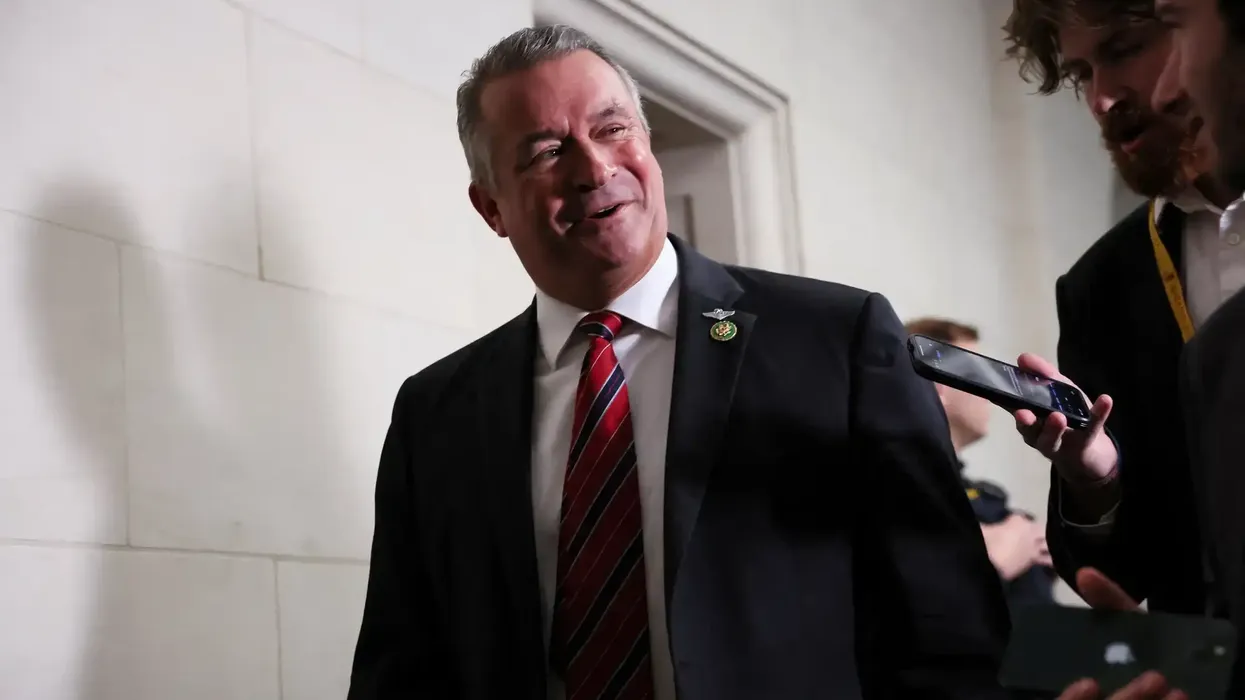
Rep. Don Bacon of Nebraska’s Omaha-heavy 2nd District said he met Juarez and went to the top seeking a different outcome, twice speaking to Homeland Security Secretary Markwayne Mullin. He said he was told — most recently this past week — that there would be no exception.
“It’s an unchristian policy we’re seeing here,” Bacon said in an interview with the Examiner. “I get it, we wanted to secure the borders. I think we’ve done that. We don’t want dangerous people here, I get it. But what’s going on here is a terrible overreach, a terrible injustice.”
Bacon, a retired Air Force brigadier general who is finishing his fifth term, said he is armed with examples from other constituents and is calling on Republican colleagues to support immigration reform that “makes sense.”
Teen steered her own path in a foreign country
Juarez began her U.S. education in 2018 at the largest high school in Nebraska’s most populated city.
By the time she enrolled in Martha Omar’s senior English class at Omaha Central High, she had learned a second language and had become a “bridge” helping other immigrant students adjust.
“She was a student that struck me as someone navigating high school by herself,” said Omar, a teacher of 20 years. “She was getting herself to school and home on her own, and was always working a job during high school.”
Omar said Juarez impressed her so much that after her 2022 graduation, she hired her former student to tutor her two sons in Spanish. Juarez remains a close family friend and sometimes picks the boys up for outings such as Sky Zone. Omar called the situation heartbreaking.
“As a teacher we pour into our students and our dream is they go on to thrive in our community,” she said. “When you have kids like Mariana that have this incredible talent and bravery and drive … what’s better to have in a community than that?”
While at Central, Juarez knew she wanted to attend college and became the first in her family to do so. What she did not know until it was too late, said her attorney Roxana Cortes-Mills, was that in the fall of 2018 an immigration court sent notice of a hearing to an address she had shared with her mother.
Cortes-Mills said the notice in Juarez’s official immigration file was marked undeliverable and “return to sender.” Juarez did not appear at the hearing, and an Omaha immigration judge ordered her removed from the country on Oct. 24, 2018.
“She was 17 years old,” a minor under Nebraska and federal law, said Cortes-Mills, legal director for the Center for Immigrant and Refugee Advancement. “That hearing happened. She didn’t attend. She didn’t know.”
No lawful status, no pilot’s license
As Juarez pursued her dream career, she said she learned that she could not obtain a U.S. pilot’s license without lawful status.
In 2022, she sought help from CIRA, formerly known as Immigrant Legal Center, and its legal experts explained the consequences of the removal order. They said she was no longer eligible for special immigrant juvenile status, which applies to minors deemed by a court to have been abused or abandoned by a parent.
A later effort to reopen Juarez’s case on the ground that she had not received notice of the hearing was denied on April 24, 2024, according to Board of Immigration Appeals records. Cortes-Mills said the legal team did not pursue a further challenge based on a new Supreme Court ruling that at the time appeared to foreclose that option.
That same year, federal officials granted Juarez a temporary stay of removal, which she said allowed her to obtain work authorization while in college and cleared the way for a private pilot’s license in 2025. She said that license is a step toward commercial certification.
This summer, however, immigration officials denied Juarez another extension for a third year on the stay of removal.
In response to a request for comment, Homeland Security officials issued a three-paragraph statement pointing to the immigration court’s 2018 removal order. A spokesperson’s email said Juarez and her mother applied for admission through the San Ysidro Port of Entry and that neither had legal documents to enter the United States.
The department, which oversees Immigration and Customs Enforcement, said in January that it recorded “an estimated 2.2 million self-deportations and more than 675,000 deportations” in the first year since Trump returned to office in 2025. Homeland Security said the crackdown was setting the stage for more records and saving taxpayer dollars.
Faced with a future in the United States without a work permit, driver’s license or protection from detention, Juarez said her $400 ticket to Mexico is booked for early September.
The UNO graduate, who had started working at CIRA greeting clients, said through tears that leaving is not what she wants, but that she understood each renewal of a stay of removal was uncertain. She said she values the friends she has made and her U.S. education.
Her UNO degree includes a concentration in air transport administration, and she hopes to validate her training in Mexico and continue her effort to become a professional commercial pilot.
Juarez, whose roots are in the southwest Mexican state of Guerrero, said she remembers visiting an airport as a child and seeing the joy on people’s faces as planes connected them with family or adventure.
“Since I was a kid, I didn’t see myself being anything else,” she said. “I wanted to be in the sky.”
She said being in aviation classes at the university, where men outnumbered women, strengthened her resolve.
One “extreme” to the next?
Bacon, who has drawn national attention as one of a small number of Republicans in Congress critical of the president but says he chooses his battles carefully, said he sees “no goodness” in removing Juarez. He said his staff spent many hours working on her case.
He cited a recent Gallup poll showing that 73% of Americans believe immigration is a “good thing” for the country. That figure is down from a record 79% last year, but remains above the 25-year trend average of 67%, according to Gallup’s June telephone survey released in July.
Bacon said the real problem is an outdated immigration system. He said the country has gone “from one extreme” under Joe Biden to “another extreme” under Donald Trump.
He said he believes the current approach will hurt Republicans in the midterms.
A supporter of the stalled Dignity Act of 2025, Bacon wants Congress to create a path for contributing and working migrants to remain legally in the country. The bipartisan bill, championed by Rep. Elvira Salazar, a Florida Republican, and Rep. Veronica Escobar, a Texas Democrat, drew support from across party lines and multiple states, offering border protections, asylum and immigration reforms but no amnesty or citizenship for people who entered illegally.
“We can put a little common sense and humanity into the equation,” Bacon said.
Bryan Slone, the former chief executive of the Nebraska Chamber of Commerce & Industry and now a pilot trainee, said he continues to focus on workforce issues and views immigration reform as one way to address the state’s labor shortage.
A registered nonpartisan, Slone said talented undocumented migrants educated in Nebraska represent a strong recruitment and retention pool, and he urged bipartisan solutions.
“We still have the ‘brain drain’ issue and we still have the declining birth rate issue that we’ve been talking about for four or five years,” he said.
Ariel Ruiz Soto, senior policy analyst at the Migration Policy Institute, a Washington, D.C.-based nonpartisan think tank, said an often overlooked part of the debate is what happens to migrants after they return or are removed to their home countries.
He said brain drain, or the loss of young educated talent, can be viewed as “brain gain” for the other side. Ruiz Soto said the Mexican government, for example, has tried to “make the most of this brain gain.” Among its reintegration resources is the “Mexico te abraza” program, or “Mexico embraces you,” which gives returning or deported nationals access to support ranging from food to employment assistance at various reentry points.
Juarez said she hopes her experience will encourage young immigrants with U.S. voting power to speak out on issues affecting their communities.
With her eye on a flight program in Mexico, she said she will “keep chasing my dreams,” though now in a country other than the United States.
This story was published in partnership with Creative Commons. Read the original here.

