Oil Producers Buy Tankers Directly to Navigate Blocked Middle Eastern Shipping Routes
Key Takeaways
- •ADNOC Logistics & Services purchased five very large crude carriers from Frontline for approximately $590 million and has reportedly ordered 25 to 30 additional tankers across multiple shipyards.
- •The Strait of Hormuz carries roughly 20 to 25 percent of global daily oil consumption, making any disruption there a significant risk to worldwide energy markets.
- •Repeated conflicts and Houthi attacks on Red Sea shipping since late 2023 have reduced the number of operators willing to enter high-risk areas, causing shipment delays that can force production curtailments when storage capacity is exhausted.
- •ADNOC has chartered around 25 crude carriers from South Korea's Sinokor Merchant Marine, with roughly 15 serving as shuttle vessels moving oil from within the Strait of Hormuz to storage hubs in Fujairah and Oman that bypass the chokepoint.
- •South Korean shipbuilders Samsung Heavy Industries and Hanwha Ocean received an order from ADNOC L&S for eight LNG carriers in 2024, with deliveries starting in 2028 under 20-year charter agreements.
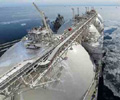
Oil Producers Buy Tankers Directly to Navigate Blocked Middle Eastern Shipping Routes
International Shipping News — August 10, 2026
Oil-producing countries that have faced recurring disruptions along critical Middle Eastern shipping routes — including the Strait of Hormuz and the Red Sea — are increasingly purchasing oil tankers directly, marking a significant departure from longstanding industry practice. Traditionally, producer nations concentrated on crude oil and gas extraction while buyers arranged transportation. Supply chain breakdowns caused by conflict-related delays, however, have upended that convention.
The Strait of Hormuz, located between Oman and Iran, is the world's most important oil transit chokepoint, carrying roughly 20–25% of global daily oil consumption. Any disruption there affects not just Gulf producers but energy markets worldwide, from Asian refiners to European utilities. Red Sea shipping, meanwhile, has been severely disrupted by Houthi militant attacks on commercial vessels since late 2023, forcing many operators to reroute around Africa's Cape of Good Hope — adding weeks of transit time and sharply raising freight costs.
The need for infrastructure capable of deploying tankers at short notice during crises has become increasingly evident, giving rise to what industry observers describe as a drive to secure "strategic vessels." This development could also open new commercial opportunities for South Korean shipbuilders and shipping firms.
Why Oil Companies Are Buying Tankers Directly
Reuters reported on July 31 that ADNOC Logistics & Services (ADNOC L&S), the logistics subsidiary of the UAE state-owned energy giant ADNOC, acquired five very large crude carriers (VLCCs) from Cyprus-based Frontline for approximately $590 million (850 billion Korean won). ADNOC, the national energy company of Abu Dhabi — the UAE's largest oil-producing emirate — controls over 90% of the country's oil production and exports.
Separately, ADNOC acquired three very large gas carriers (VLGCs) and reportedly placed orders for 25–30 crude, LNG, and LPG tankers at various shipyards. The company is purchasing second-hand vessels to address immediate operational requirements while commissioning new builds to meet future demand.
ADNOC L&S has also chartered roughly 25 crude carriers from South Korea's Sinokor Merchant Marine. About 15 of these serve as "shuttle vessels," moving crude from production facilities within the Strait of Hormuz to storage hubs in Fujairah (UAE) and Oman. Fujairah's location on the Indian Ocean side of the Strait of Hormuz allows oil loaded there to bypass the chokepoint entirely — a key reason it has become a preferred export and storage hub for Gulf producers. This arrangement reflects growing demand for short-distance transport to relocate oil from high-risk zones to safer storage facilities, where it is subsequently loaded onto larger tankers for export to Asian and other long-distance markets.
Shifting Economics of Fleet Ownership
Historically, oil producers had little incentive to maintain large fleets. Middle Eastern crude was typically traded through refiners or commodity traders who handled shipping logistics. Even when producers managed their own transportation, chartering vessels from specialized operators was more cost-effective than direct ownership, which entails expenses for purchase, crewing, maintenance, and insurance.
Repeated supply chain crises in the Strait of Hormuz and the Red Sea have altered this calculus. Conflicts reduce the number of ship operators willing to enter high-risk areas, causing shipment delays. Undelivered oil accumulates at export terminals and in storage tanks; once capacity is reached, production must be curtailed — regardless of output levels, oil cannot be exported without available vessels. For countries whose national budgets depend heavily on oil revenue, such bottlenecks carry not only commercial but fiscal consequences.
ADNOC's aggressive fleet expansion is further motivated by a broader tanker shortage. Low freight rates and uncertain oil demand projections in recent years delayed new vessel orders. Uncertainty surrounding future fuel types — including LNG, methanol, and ammonia — additionally slowed shipbuilding investment. Consequently, operational VLCCs are scarce, and newly ordered vessels take years to deliver. As geopolitical conflicts intensify regional risks, producers are racing to acquire second-hand tonnage.
A shipping industry insider noted: "ADNOC's purchase prices for second-hand ships are close to newbuild costs. If the UAE moves this aggressively, other Middle Eastern nations may follow."
Potential Gains for South Korean Shipbuilders
The competition among oil producers to secure strategic vessels could generate fresh demand for South Korean shipyards. ADNOC, ranked among the world's top national oil companies behind Saudi Aramco, produces approximately 4.85 million barrels per day — nearly double South Korea's daily consumption of 2.5 million barrels. Should market leaders of this scale expand fleet acquisitions, other Middle Eastern state-owned enterprises are likely to pursue similar strategies.
South Korean shipyards currently specialize in high-value vessels such as LNG carriers. If Middle Eastern companies broaden their orders to include LNG, gas, and crude carriers beyond second-hand purchases, domestic shipbuilders stand to benefit from increased demand. ADNOC L&S, for example, ordered eight LNG carriers from Samsung Heavy Industries and Hanwha Ocean in 2024, with options for one additional carrier from each builder — two more in total. These vessels, scheduled for delivery starting in 2028, will be chartered to ADNOC affiliates under 20-year agreements.
South Korean shipping companies could also benefit indirectly. Long-term contracts — in which producers commission dedicated vessels and charter them for 10 to 20 years — may become more common, providing revenue stability beyond short-term freight rate fluctuations.
Source: Chosun

