Rising Oil Prices Weigh on Wall Street as Inflation Reports and Fed Meeting Loom
Key Takeaways
- •Brent crude rose 0.6 percent to $97.54 per barrel, having climbed from about $72 since early July as Middle East fighting constricts global oil supply.
- •Economists expect the August wholesale inflation report on Thursday to show an acceleration to 5.4 percent from 4.7 percent in July.
- •Traders assign a 60 percent probability that the Federal Reserve will raise its federal funds rate at its Sept. 16 meeting, according to CME Group data.
- •Novartis U.S.-traded shares fell 13.9 percent after a discouraging update on a myotonic dystrophy type 1 therapy study, while Qualcomm gained 3.8 percent on an AI data center collaboration with Amazon that includes rights to buy up to 25 million shares at $161.26 each.
- •China reported that August exports jumped 25 percent year-on-year, driven by strong demand for autos and high-tech goods.
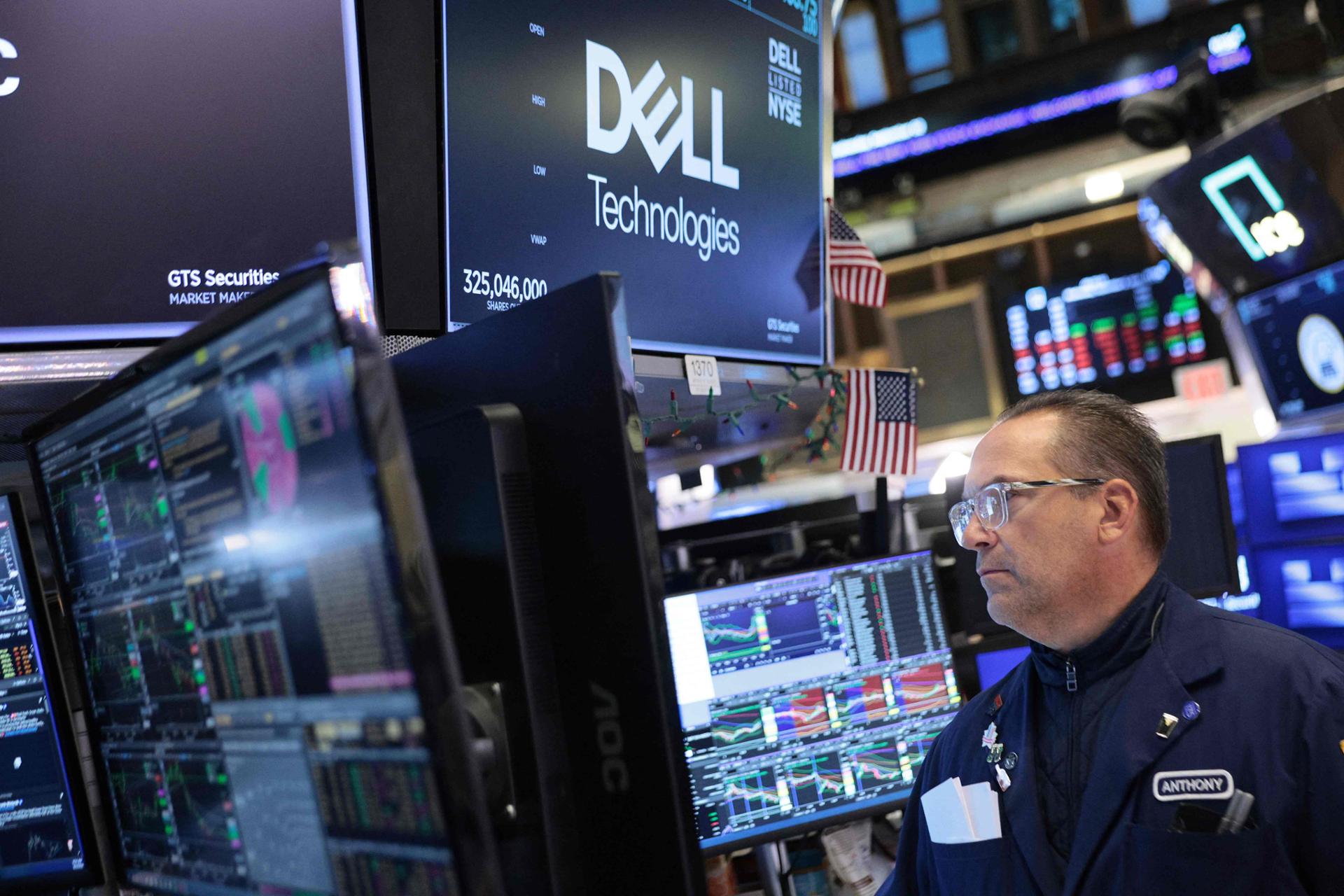
NEW YORK — U.S. stocks drifted lower Tuesday as traders returned from a three-day weekend, with the latest fighting in the war with Iran pushing oil prices higher.
The S&P 500 fell 0.4 percent. The Dow Jones Industrial Average was down 575 points, or 1.1 percent, as of noon Eastern time, and the Nasdaq composite was 0.1 percent lower.
In the oil market, the price of a barrel of Brent crude rose 0.6 percent to $97.54 after briefly climbing as high as $99.46. Brent has jumped from roughly $72 since early July, as increased fighting in the Middle East keeps the global flow of oil constricted. Brent serves as the benchmark for roughly two-thirds of the world's crude trades, so moves in its price ripple through gasoline, shipping and manufacturing costs worldwide. Oil is also a major input across the economy — from transportation to plastics to home heating — which is why sustained rises in crude tend to feed through into broader inflation measures.
More expensive oil has deepened worries about the high inflation weighing on people and companies across the country, lending extra significance to a pair of reports due later this week. On Thursday, the U.S. government will release its August report on inflation at the wholesale level, which economists expect will show an acceleration to 5.4 percent from 4.7 percent in July.
The more closely watched report on the inflation that U.S. consumers are feeling will arrive on Friday. That update will show how much more people are paying for groceries, clothes and other costs of living, and economists expect it eased slightly to 3.3 percent from July's 3.4 percent inflation rate. That figure, however, remains well above the 2 percent target the Federal Reserve has set as its goal.
This week's inflation updates will be the last before the Fed meets next week to decide whether to cut, raise or hold interest rates steady. The Fed's traditional response to high inflation is to raise its main interest rate. Such a move would filter through the rest of the bond market, making it more expensive for companies and people to borrow, slowing the overall economy, undercutting prices for investments and, ideally, reining in inflation.
President Donald Trump, however, has been lobbying for lower interest rates instead, which could give the economy — and inflation — an extra kick. The Fed's new chairman, Kevin Warsh, has meanwhile said he wants to give financial markets fewer clues about what the Fed plans to do with interest rates in the short term.
Taken together, that has traders betting on a 60 percent probability that the Fed will raise its federal funds rate at the conclusion of its next meeting on Sept. 16, according to data from CME Group.
In the bond market, the yield on the 10-year Treasury inched up to 4.79 percent from 4.78 percent and remains near its highest level since the autumn of 2023. Higher Treasury yields put more pressure on companies to grow their profits in order to lift their stock prices.
On Wall Street, Boston Scientific fell 4.8 percent after saying that a network outage earlier this summer, caused by a cybersecurity incident, means it is unlikely to meet the forecasts it gave for sales and profit for the third quarter and the full year of 2026. The company expects to make back some of the revenue as it continues to ramp operations globally, fulfill customer orders and reduce remaining backlogs, but it does not yet know the full impacts.
Shares of Novartis trading in the United States tumbled 13.9 percent after the Swiss pharmaceutical company gave a discouraging update on a study of a therapy for people living with myotonic dystrophy type 1, a neuromuscular disease.
Qualcomm helped limit the market's losses, rising 3.8 percent after announcing a deal to collaborate with Amazon on large-scale AI data centers. The deal also gives Amazon the right to acquire up to 25 million of Qualcomm's shares at $161.26 per share.
In stock markets abroad, Japan's Nikkei 225 sank 1.7 percent under the weight of losses for major exporters, which were hurt by further rises in the value of the Japanese yen against the U.S. dollar. A stronger yen erodes the value of sales made in U.S. dollars when Toyota Motor, Panasonic Holdings and other Japanese exporters have to translate them back into yen. The Bank of Japan is also scheduled to meet next week on interest rates, and speculation is climbing that it could raise rates.
In China, indexes fell 0.4 percent in Hong Kong and rose 0.2 percent in Shanghai after the world's second-largest economy said its exports jumped 25 percent year-on-year in August, driven by strong demand for autos and high-tech items.
Source: The Korea Times
