Nvidia Completes $12.9 Billion Hugging Face Acquisition, Moving Up the AI Stack
Key Takeaways
- •Nvidia completed its $12.9 billion acquisition of Hugging Face, confirmed by CEO Jensen Huang in a Thursday blog post.
- •Hugging Face's platform hosts more than one million open models and datasets, making it a default starting point for open source AI development.
- •Nvidia committed that Hugging Face will remain open, with no requirement to use Nvidia hardware or services, preserving support for rivals like AMD and Intel.
- •The acquisition extends Nvidia's reach beyond AI compute into models, datasets and developer workflows, part of a broader industry trend of vendors owning more of the development pipeline.
- •Questions remain about Hugging Face's neutrality under Nvidia ownership and how regulatory scrutiny may affect the deal's open-platform commitments.
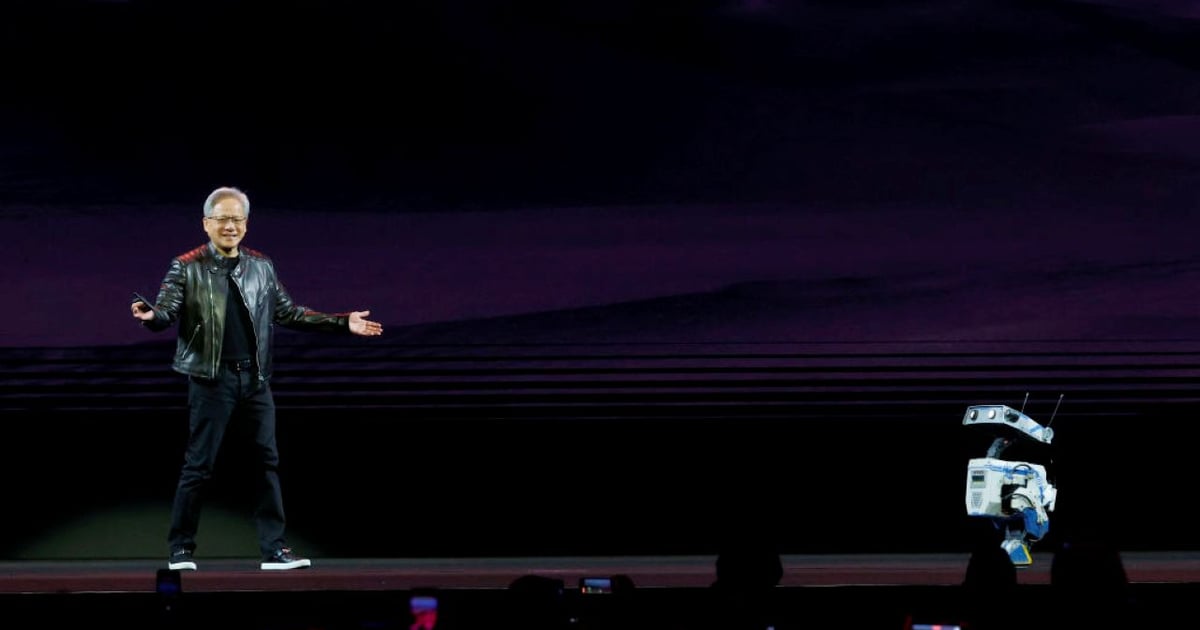
Less than a week after reports emerged that Nvidia had agreed to acquire Hugging Face for $12.9 billion, the deal is done. Nvidia CEO Jensen Huang confirmed the acquisition in a blog post on Thursday, saying the companies will "scale Hugging Face's platform, strengthen its infrastructure and expand access to AI for developers and institutions worldwide" (Nvidia blog).
Hugging Face, best known for its Transformers library and a model hub that hosts over a million open models and datasets, has become a default starting point for open source AI development. Nvidia was already an investor, having participated in Hugging Face's $235 million funding round in 2023, alongside Google, Amazon, Salesforce and others.
Huang also said Hugging Face will remain an open platform, with developers free to use competing models, clouds, inference providers and computing platforms. Nvidia hardware will not be required to build or deploy through Hugging Face.
That commitment matters because Hugging Face's value comes in part from its position as a platform serving the broader AI ecosystem, rather than any single hardware or model provider. It also matters for enterprises that have leaned on open models as an alternative to proprietary APIs, and for rivals such as AMD and Intel, whose chips are supported through Hugging Face's tooling today.
Moving Up the AI Stack
Nvidia's purchase of the open source platform is not simply another expansion of its AI footprint. It moves the company further up the AI stack, giving it a foothold in the open source ecosystem at a time when enterprises are seeking greater flexibility in building and deploying AI. The bigger question is whether Hugging Face can maintain that neutrality under Nvidia ownership, particularly as Nvidia expands its reach across more layers of the AI stack. Regulatory scrutiny of Big Tech acquisitions in AI may also shape how the deal's commitments are enforced, though Nvidia has not disclosed specific oversight arrangements.
For Nvidia, the value goes beyond expanding its developer reach. Owning Hugging Face could give the chipmaker greater visibility into which models, datasets and architectures are gaining traction, providing an early look at where AI development is headed.
The acquisition also brings Nvidia closer to more parts of the AI supply chain, extending its reach beyond compute into models, datasets and developer workflows. It is the latest in a series of moves by major AI vendors to own more of the development pipeline, from cloud providers building model services to chipmakers investing in software ecosystems.
Nick Patience, an analyst at Futurum Group, told CIO Dive that the acquisition could help Nvidia broaden its developer community as the vendor extends its influence beyond its already dominant position in AI compute.
The acquisition shows how Nvidia's ambitions are expanding beyond supplying the hardware that powers AI. The company is increasingly positioning itself across more of the ecosystem where AI is built, deployed and used. The challenge will be expanding that influence without undermining the openness that made Hugging Face worth $12.9 billion.
Also in AI News This Week
-
Self-Improving AI Could Drive Innovation — But Strain Data Centers: With recursive self-improvement, AI could accelerate innovation but also create new challenges for data centers (Data Center Knowledge). Related: With Hugging Face Acquisition, Nvidia Scores Big Win in AI Race
-
Enterprise AI Startup Wonderful Now Valued at $5B: The 2024 startup raised $550 million, bringing its valuation to $5 billion as it continues to expand its AI agent platform globally (AI Business).
-
OpenAI, Anthropic, Google Lead Call to Prioritize Cybersecurity: The generative AI vendors are among a group of companies calling for cybersecurity to become a higher priority as increasingly capable AI systems create new security risks.
-
Nvidia, MediaTek Bring Custom Chips to AI Racks: The chipmaker is opening its rack-scale AI systems to custom accelerators, giving hyperscalers more flexibility to integrate their own chips with Nvidia infrastructure (Data Center Knowledge).
-
California Ban on Workplace AI Emotion Surveillance Heads to Newsom's Desk: California lawmakers have approved a bill that would ban employers from using AI to infer workers' emotions and prohibit the collection of employees' neural data (HR Dive).
-
The Room Where It Happens: Why CIOs Should Make AI a Member of the Team: CIOs should treat generative AI as an active participant in team decision-making rather than simply a tool for automating tasks or documenting work (InformationWeek).
-
AWS Pushes Partners to Rethink Pricing for the AI Era: The tech giant is encouraging partners to reevaluate traditional software pricing as AI drives experimentation with more flexible models (Channel Dive).
Source: AI Business
