NRSC Moves to Preserve Late-Arriving Ballots as Mississippi Senate Race Remains Undecided
Key Takeaways
- •The NRSC asked Mississippi election officials to separate and preserve late-arriving affidavit ballots.
- •Scott Colom’s lead over Cindy Hyde-Smith had grown to more than 1,700 votes by Thursday morning.
- •Approximately 3,600 absentee-by-mail ballots remained outstanding, alongside an unknown number of affidavit ballots.
- •Affidavit ballots must meet registration, signature, and voter-identification requirements to be counted under Mississippi law.
- •Candidates may pursue litigation over ballot eligibility because Mississippi does not provide for recounts.
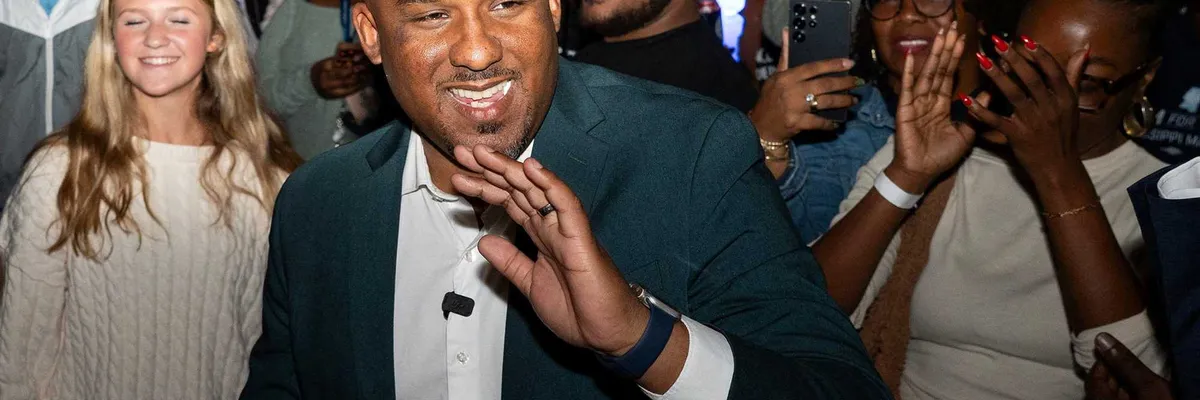
The Republican Party has launched a last-minute effort to intervene in Mississippi's still-undecided Senate race, one of the closest contests of this year's midterms and a potential flip of one of the reddest seats in the country.
With Democrats holding an exceptionally slim lead, the National Republican Senatorial Committee (NRSC) on Thursday sent a letter to county clerks and election officials across the state demanding that late-arriving affidavit ballots be separated and preserved — a step that suggests the party may seek to challenge their validity if the final tally does not go its way.
The Mississippi contest ranks among the biggest surprises of the midterm elections. At one point, the margin stood at just a few dozen votes out of nearly one million counted. By Thursday morning, Democratic candidate Scott Colom's lead had grown to more than 1,700 votes.
"We're confident Scott's lead will continue to grow as the remaining votes are counted. We're staying focused and protecting the integrity of our election," Colom's campaign said in a statement.
According to the Mississippi Secretary of State, there are "approximately 3,600 outstanding absentee-by-mail ballots that must be received within five business days and an unknown number of affidavit ballots that will be processed within the 10-day window counties have to certify their results."
Those deadlines give the unresolved race a defined calendar: outstanding absentee-by-mail ballots and any required voter identification must arrive within five business days, while counties have a 10-day window to certify their results. With Colom's lead standing at roughly 1,700 votes against thousands of ballots still unprocessed, how each category of outstanding ballot is verified and counted is now the central question of the contest.
As Democracy Docket explains, Mississippi — like other states — allows voters whose names do not appear on a polling precinct's registration records to cast a provisional, or "affidavit," ballot. Unlike in most other states, however, Mississippians cast huge numbers of affidavit ballots this year after Secretary of State Michael Watson (R) flagged 230,000 voter registrations as "inactive."
Under state law, election officials must count affidavit ballots provided that the voter was previously registered in the precinct where they attempted to vote, that the voter and the precinct's poll manager properly signed the ballot's envelope, and that the voter provides acceptable voter identification within five business days of Election Day.
"This process will be closely watched by both campaigns and could lead to litigation," Democracy Docket noted. "Unlike most states, Mississippi doesn't have a recount law, but candidates can try to sue to exclude or include certain ballots from the final count."
Judging by the GOP's demands regarding affidavit ballots, the party appears prepared to seek their exclusion if the outstanding ballots add to Colom's lead.
Should Senator Cindy Hyde-Smith (R-MS) ultimately lose, it would mark another historic shift in an already history-making midterm season, one in which the GOP has been decimated by blowback from President Donald Trump's pronounced unpopularity.
Mississippi has not elected a Democrat to the Senate since 1982, and Colom would become the state's first Black senator since just after the Civil War. Other states that saw shocking seat flips included Texas, which elected its first Democratic senator in nearly 40 years and its first Democratic governor since 1991; South Carolina, which has not elected a Democratic senator since 1998; and Kansas, which has not had a Democratic senator in nearly 100 years.

