New Jersey Approves 16 Agrivoltaics Projects Totaling 52.06 MW on Local Farms
Key Takeaways
- •The New Jersey Board of Public Utilities awarded 16 dual-use solar projects totaling 52.06 MW in the pilot program's first solicitation, spanning farms in Atlantic, Cumberland, Gloucester, Hunterdon, Mercer, Monmouth, Salem and Warren Counties.
- •Each selected project will pair photovoltaic generation with agricultural production such as soybeans, hay, grains, vegetables, fruits and livestock on unpreserved farmland already in active use.
- •The three-year pilot supports up to 200 MW overall, with individual projects generally capped at 10 MW, leaving just under 150 MW available for future solicitations after the first round.
- •The first solicitation attracted 33 preliminary proposals totaling about 140 MW, and eligible teams must include a landowner, a farmer and a solar operator.
- •Insights from the full pilot will guide the creation of a permanent agrivoltaics program and contribute to New Jersey's 2035 target of 100% clean electricity set by a 2023 executive order.
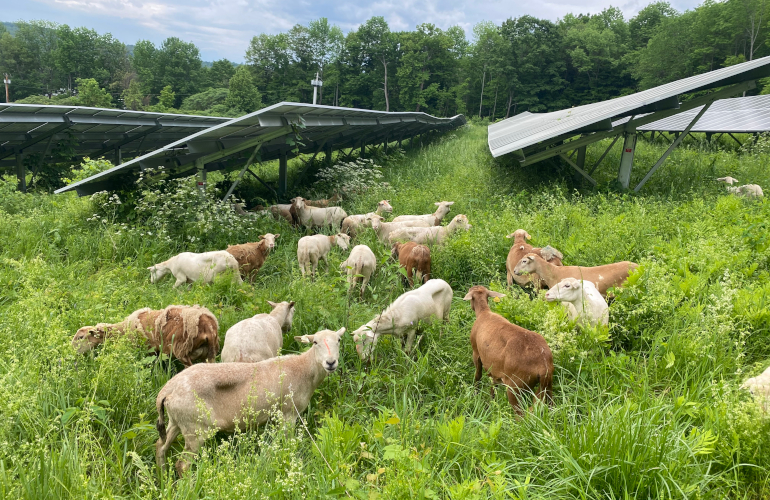
The New Jersey Board of Public Utilities (NJBPU) has voted to award 16 projects totaling 52.06 MW in the first solicitation of its Dual-Use Pilot Agrivoltaics program.
The selected projects will be built on farms in Atlantic, Cumberland, Gloucester, Hunterdon, Mercer, Monmouth, Salem and Warren Counties. Rather than removing farmland from production entirely, agrivoltaics — also called dual-use solar — places photovoltaic panels above or among crops, grazing areas or other agricultural operations. Each of the 16 pilot projects will pair solar generation with crops such as soybeans, hay, grains, vegetables and fruits, as well as livestock production.
Agrivoltaics is gaining traction nationally as a siting strategy: Massachusetts offers incentives for dual-use solar through its SMART program, and the U.S. Department of Energy has funded agrivoltaics research, including field studies led by the National Renewable Energy Laboratory.
“This pilot dual-use program will enable us to support New Jersey farmers in making their operations more profitable while adding capacity to the grid,” said NJBPU President Ben Hertz-Shargel. “It ensures farmland remains in active agricultural or horticultural production while enhancing the value of established farming practices. Combining that with new clean electric supply for the grid represents a true win-win for the Garden State.”
Established under the Dual-Use Solar Energy Act of 2021, the program is being implemented by NJBPU in cooperation with the New Jersey Department of Agriculture, the Department of Environmental Protection, the State Agriculture Development Committee and Rutgers University’s Agrivoltaics Program.
“When we passed the Dual-Use Solar Energy Act, this is exactly the progress we hoped to see: New Jersey farmers producing food and clean power on the same acre of land,” said Senator Bob Smith. “These 16 projects prove we don’t have to choose between keeping farmland in active production and building the generation capacity our state needs — we can have both. Farmers have always been stewards of the land, and now they can help power New Jersey’s clean-energy future while strengthening their own bottom line.”
The pilot may support up to 200 MW over three years, with individual projects generally limited to a maximum size of 10 MW. The first-round awards claim just over a quarter of that ceiling, leaving just under 150 MW for future solicitations within the three-year window. Projects must be located on unpreserved farmland already in active agricultural or horticultural use — a notable constraint in the nation’s most densely populated state, where farmland preservation efforts have permanently protected agricultural acreage for decades. Eligible teams must include a landowner, a farmer and a solar operator, with farmers participating meaningfully in project planning and operation.
The program drew strong early interest: NJBPU’s first solicitation received 33 preliminary proposals totaling about 140 MW. The new in-state generation also feeds a wider state target — a 2023 executive order set a goal of 100% clean electricity in New Jersey by 2035. Lessons from the full pilot will inform how New Jersey establishes a permanent agrivoltaics program.
News item from NJBPU, via Solar Power World

