Unhappy Anniversary: 55 Years Since Nixon Closed the Gold Window
Key Takeaways
- •President Nixon's August 15, 1971 closure of the gold window ended the Bretton Woods system, under which foreign currencies were pegged to the dollar and the dollar was convertible into gold at $35 per ounce.
- •Since 1971, the US dollar has operated as a pure fiat currency, losing more than 97 percent of its purchasing power since the Federal Reserve's creation in 1913, with most of that decline occurring after the gold window closure.
- •Federal debt has grown from approximately $400 billion in 1971 to over $39 trillion today, increasing by an additional $1 trillion every three to five months and now exceeding annual US economic output.
- •Net interest payments on the national debt have become one of the largest federal budget line items, rivaling defense spending and pressuring the Federal Reserve to keep interest rates low.
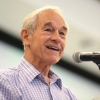
- •Ron Paul, who attributes his entry into public life to the 1971 event, has announced a conference in Washington, DC, over Labor Day weekend to mark its 55th anniversary.
This month marks 55 years since President Richard Nixon closed the "gold window," severing the last link between the US dollar and gold. The August 15, 1971 announcement effectively ended the Bretton Woods international monetary system that had governed global finance since the end of World War II.
Under the 1944 Bretton Woods agreement, foreign nations pegged their currencies to the US dollar, which was in turn pegged to gold at a fixed rate of $35 per ounce. Foreign governments could exchange their dollar holdings for gold at that rate. The system made the dollar the anchor of global trade and finance, a role reinforced by the United States' economic dominance in the postwar era.
By the late 1960s, concerns over the dollar's stability intensified amid President Lyndon Johnson's spending on the Vietnam War and his "Great Society" domestic programs. That spending trajectory continued under President Nixon. In response, foreign nations increasingly converted their dollar reserves into gold. Fearing the depletion of US gold reserves, Nixon moved to close the gold window. After 1971, major currencies transitioned to a system of floating exchange rates, where values were determined by market forces rather than fixed parities.
The closure left the United States with a pure fiat currency—a shift whose consequences, by many measures, have been severe.
The dollar has lost more than 97 percent of its purchasing power since the Federal Reserve's creation in 1913, with the majority of that decline occurring after 1971. Inflation, as measured by the Consumer Price Index, surged through the 1970s, reaching double-digit annual rates by decade's end and prompting the Federal Reserve under Chairman Paul Volcker to raise interest rates to unprecedented levels in the early 1980s.
Fiat money enabled unchecked growth in federal spending. By severing the dollar's final link to gold, Nixon allowed the Federal Reserve to monetize ever-larger volumes of federal debt. When Nixon closed the gold window, the federal debt stood at approximately $400 billion. A decade later, it had reached $1 trillion. Today, the federal debt exceeds $39 trillion and grows by an additional $1 trillion every three to five months. The total now exceeds annual US economic output, a threshold crossed in recent years and one that historically raises concerns among fiscal analysts about long-term sustainability.
The expanding national debt exerts pressure on the Fed to maintain low interest rates, as even modest rate increases substantially raise the government's debt-servicing costs. Net interest payments on the national debt have become one of the largest single line items in the federal budget, rivaling defense spending.
Meanwhile, the average American's wages have failed to keep pace with inflation. According to Dr. Ron Paul, the public's eroding standard of living has fostered skepticism toward Republican figures such as President Trump, whose proposed remedies include large-scale economic interventions—tariffs, increased spending, and government "investment" in private enterprise. At the same time, some Americans have gravitated toward self-described democratic socialists who pledge to address economic problems through expanded government expenditure.
Paul argues that whether pursued by Republicans or Democrats, government expansion will only deepen economic difficulties by inflating federal debt. Rising debt, in turn, increases pressure on the Federal Reserve to monetize obligations, further eroding the dollar's purchasing power and depressing living standards. He contends that this trajectory will eventually culminate in a major economic crisis, potentially involving the loss of the dollar's status as the world reserve currency. That status, underpinned by the dollar's dominance in global trade settlement and central bank reserves, allows the US government to borrow at lower costs than would otherwise be possible; losing that advantage would mark a fundamental shift in the nation's economic position.
The 1971 gold window closure was a catalyst for Paul's own entry into public life, inspiring his run for Congress and deeper involvement in educational and advocacy organizations. In 2021, the Ron Paul Institute for Peace and Prosperity sponsored a conference marking the fiftieth anniversary of the event. Paul has announced an upcoming conference in Washington, DC, scheduled for Labor Day weekend.
Dr. Ron Paul is an American author, activist, physician, and retired politician. A self-described constitutionalist, he is a longstanding critic of federal fiscal policy, particularly the Federal Reserve and the US tax system, as well as the military-industrial complex, the war on drugs, and the war on terror. He has also been an outspoken opponent of mass surveillance programs, including the USA PATRIOT Act and NSA surveillance initiatives. Follow him on X (@RonPaul). The original article was published by GoldSeek. Copyright © The Ron Paul Institute.

