Ninth Circuit Dismisses Republican Appeal Over Nevada's Post-Election-Day Ballot Counting Law
Key Takeaways
- •The Ninth Circuit dismissed the GOP's appeal challenging Nevada's law allowing ballots postmarked by Election Day to be counted if received within four days, deciding the case on standing rather than the merits.
- •The three-judge panel found the plaintiffs were not harmed by the lower court's dismissal and therefore lacked legal standing to appeal, leaving the law's legality unaddressed by federal appellate courts.
- •The RNC and Nevada Republican Party argued in their 2024 lawsuit that the 2021 law unlawfully extended the uniform federal Election Day set by 2 U.S.C. § 7 and 3 U.S.C. § 1 and could dilute Republican votes.
- •In June 2026, the Supreme Court ruled 5-4 in Watson v. Republican National Committee that federal Election-Day statutes do not require ballots to be received by Election Day, upholding Mississippi's five-business-day receipt window.
- •Any future challenge to Nevada's counting window would now have to clear the standing hurdle and proceed under the Watson precedent.
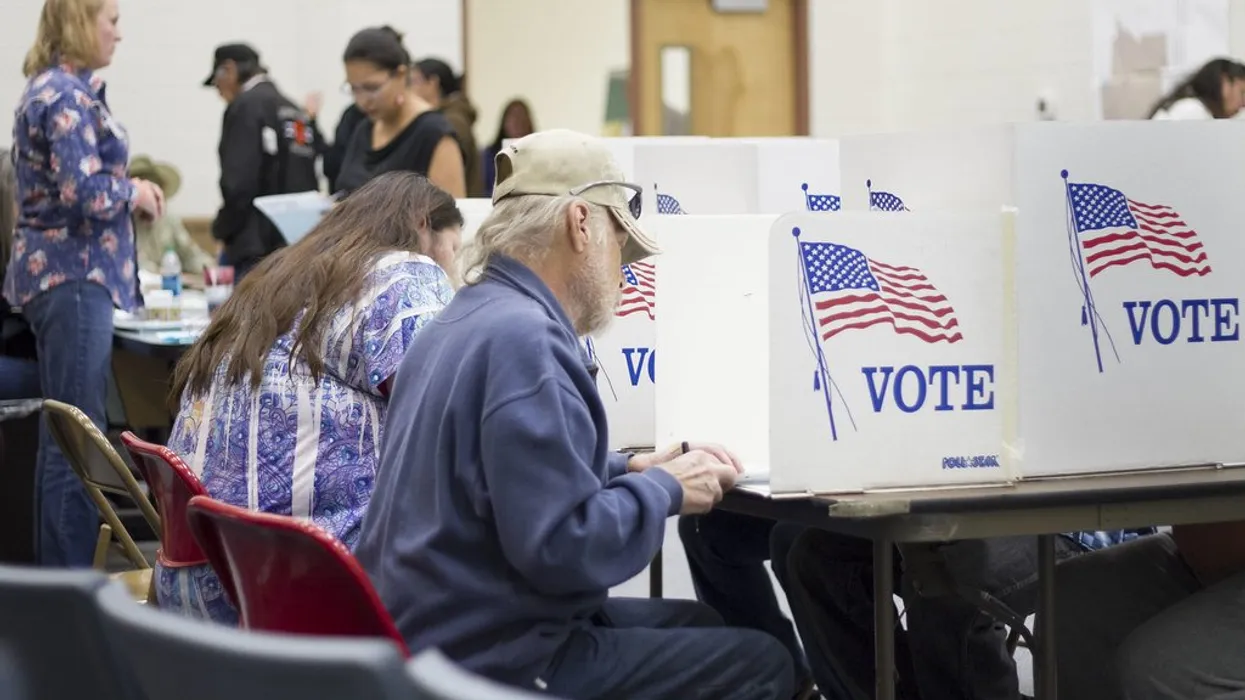
A federal appeals court has dismissed the Republican Party's lawsuit challenging Nevada's law allowing ballots to be counted up to four days after Election Day.
Nevada is among several states where ballots postmarked on Election Day are still counted even if election officials receive them a few days after the election. Nevada's law allows officials to continue receiving ballots for up to four days. Ballots with missing or unreadable postmarks may also be counted as long as they arrive within the three days that follow. California, for example, counts ballots postmarked by Election Day that arrive within seven days.
The Republican National Committee and the Nevada Republican Party sued Nevada in 2024 to block the counting, claiming the law passed in 2021 unlawfully extends Election Day. They pointed to federal laws that set a uniform national date for federal elections — the statutes at 2 U.S.C. § 7 and 3 U.S.C. § 1 that fix the Tuesday after the first Monday in November as Election Day for federal offices — and argued that counting late-arriving ballots could dilute Republican votes and give Democrats an unfair advantage. Nevada officials and voting-rights advocates countered that the legally relevant act is casting or mailing a ballot by Election Day — not the Postal Service's delivery date — and that the law helps ensure legally cast votes are counted.
In the lower court, U.S. District Judge Miranda Du dismissed the challenge, finding that the plaintiffs lacked standing to sue. The plaintiffs then appealed to the Ninth Circuit, where the case remained pending until Friday's decision.
According to Democracy Docket, the Ninth Circuit Court of Appeals likewise decided the case on procedural grounds rather than on the law itself (opinion PDF). The three-judge panel explained that the plaintiffs were not actually harmed by the lower court's ruling, and because they were not harmed, they had no legal right — no standing — to pursue the appeal. The court therefore dismissed the appeal. Because the ruling rests on standing — the Article III requirement that a plaintiff show a concrete, particularized injury — the panel never reached the merits, leaving Nevada's counting window in effect without a federal appellate ruling on its legality.
The Nevada case is not the only litigation the GOP has filed over mail ballots received after Election Day. The most significant came from Mississippi, where the RNC, the Mississippi Republican Party and individual voters challenged a law allowing absentee ballots postmarked by Election Day to arrive up to five business days later. A federal district court initially rejected the challenge, but the Fifth Circuit struck down the law. In June 2026, the U.S. Supreme Court reversed that ruling in Watson v. Republican National Committee in a 5–4 decision. Watson construed the same federal Election-Day statutes invoked in the Nevada suit, so any future challenge to Nevada's window would now have to clear the standing hurdle and proceed under that precedent.
"The federal Election-Day statutes do not prevent Mississippi from counting absentee ballots postmarked by Election Day but received up to five days thereafter; nothing in the federal Election-Day statutes requires ballots to be received by Election Day," SCOTUSblog explained.
Source: Alternet
