DOJ Declares Foreign Service Grievance Board Structure Unconstitutional in New Memo
Key Takeaways
- •The Justice Department’s Office of Legal Counsel said the Foreign Service Grievance Board’s structure violates the Constitution’s Appointments Clause.
- •The memo argues that the Secretary of State cannot be bound by final Board decisions because Board members are removable only for cause.
- •The opinion relies on the Supreme Court’s 2021 Arthrex decision, which required supervision of inferior officers by a politically accountable official.
- •The Foreign Service Grievance Board was created by Congress under the 1980 Foreign Service Act to provide due process for Foreign Service members.
- •The memorandum does not change the law itself, which stays in effect unless Congress revises it or litigation resolves the issue.
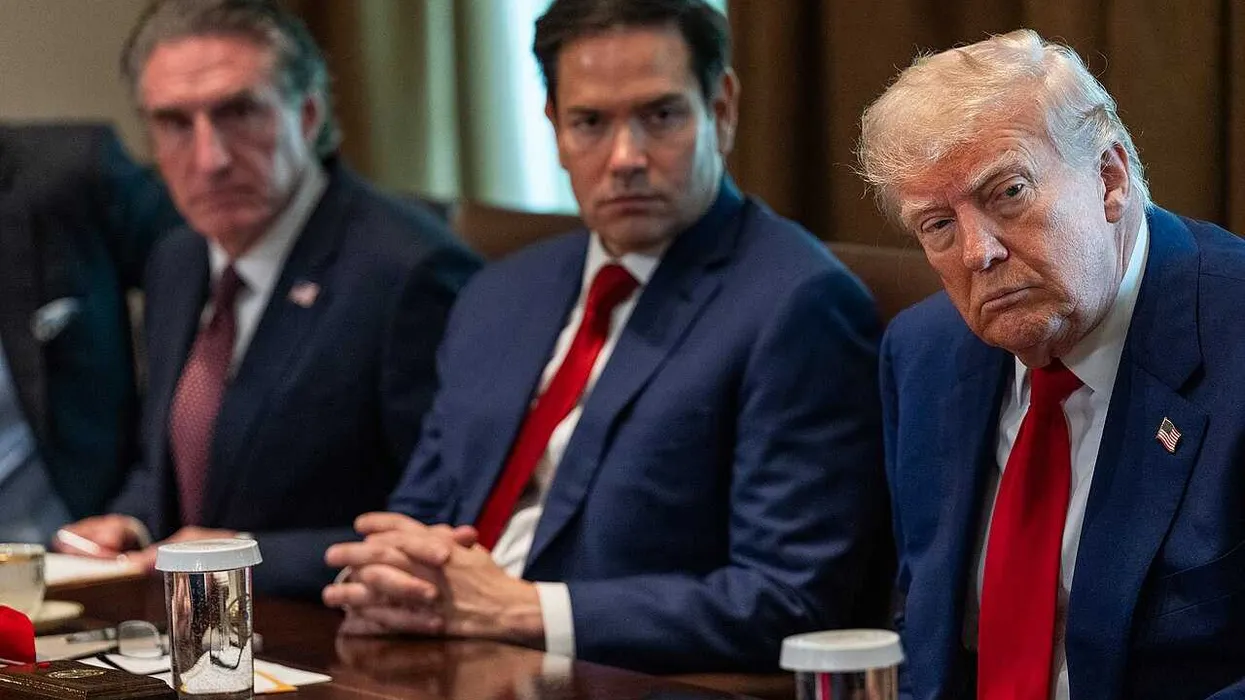
A senior Justice Department lawyer has issued a memorandum declaring that the Foreign Service's disciplinary framework — a system in place since 1980 — unconstitutionally intrudes on presidential power.
T. Elliot Gaiser, assistant attorney general in the U.S. Department of Justice's (DOJ) Office of Legal Counsel, issued the memo this week on changes at the Foreign Service Grievance Board (FSGB). The office serves as the executive branch's in-house authority on constitutional questions, and its written opinions are generally treated as binding on federal agencies unless overridden by the attorney general or the president. As Politico legal reporter Josh Gerstein reported in a Friday post on X, formerly Twitter, the opinion attacks a system that has been in place for 46 years.
"JUST IN: Trump administration declares structure of Foreign Service in place since 1980 is unconstitutional intrusion on presidential power," Gerstein wrote. "DOJ's busy Office of Legal Counsel says Secretary of State has to have final say on discipline."
The document, titled "Memorandum Opinion For The Legal Adviser Department Of State", centers on the Board's authority over career diplomats.
"The Foreign Service Grievance Board ('FSGB' or 'Board') hears grievances filed by members of the Foreign Service. 22 U.S.C. § 4135," Gaiser writes. "Although the Secretary of State is responsible for appointing Board members, the statute prevents him from removing them except for cause and gives the Board final decisionmaking authority within the Executive Branch. This means that, for example, if a high-ranking diplomatic official in the Foreign Service files a grievance after being separated from the Foreign Service or otherwise disciplined by the Secretary, the Board can reinstate the official over the Secretary's objection."
Gaiser argues that "affording the Board final decisionmaking authority in this way violates the Appointments Clause of Article II" of the U.S. Constitution.
The opinion relies on a 2021 Supreme Court ruling. "In United States v. Arthrex, Inc., the Supreme Court held that 'the exercise of executive power by inferior officers must at some level be subject to the direction and supervision of' a politically accountable officer. 141 S. Ct. 1970, 1988 (2021)," Gaiser writes. "But that requirement has not been met here. The Board is comprised of inferior officers removable only for cause, yet the statute empowers it to make decisions that are not reviewable by any politically accountable officer, rendering the statute unconstitutional." Arthrex itself arose from a challenge to administrative patent judges at the U.S. Patent and Trademark Office, and the Court's remedy there was to strip the judges' removal protections so top agency leadership could direct their decisions.
According to the American Foreign Service Association, the Foreign Service Grievance Board "was created by Congress under the 1980 Foreign Service Act to provide due process to Foreign Service members." That statute remains the basic legal framework governing how America's career diplomats are hired, promoted, and disciplined.
Gaiser also contends that the Constitution grants presidents broad executive powers, including wide-ranging authority over foreign relations.
"By declining to enforce those portions of the statute," he writes, "final decisionmaking authority will be appropriately returned to the relevant Executive Branch official — either the Secretary of State or the President himself…. Article II of the Constitution vests in the President the 'executive Power,' which carries with it a 'vast share of responsibility for the conduct of our foreign relations.'"
OLC opinions bind the executive branch but not the courts, and the statute itself remains in force unless Congress amends the Foreign Service Act or the question is resolved in litigation.
