Nigeria to Extend $2 Billion Project Bridge Fibre Backbone to Burkina Faso
Key Takeaways
- •Nigeria intends to extend Project Bridge to Burkina Faso with the aim of reducing internet connectivity costs in the landlocked nation by approximately 50%.
- •Two potential fibre transit routes are being evaluated—Nigeria-Niger-Burkina Faso and Nigeria-Benin-Burkina Faso—both traversing regions affected by security challenges.
- •Project Bridge has secured over $900 million in financing commitments from international development partners toward an estimated $2 billion total cost, but no fibre has been laid since discussions began in January 2025.
- •The broader Nigeria-Burkina Faso partnership includes sharing Nigeria's 3MTT digital skills model and collaborating on artificial intelligence, local-language technologies, startup ecosystems, and cybersecurity.
- •Burkina Faso's internet penetration stands at approximately 28% of its population, with 4G coverage reaching only 46% of the country and no near-term prospects for 5G deployment.
As Nigeria's 90,000-kilometre national fibre rollout, Project Bridge, approaches its long-awaited deployment phase, the federal government has unveiled plans to extend the initiative beyond its borders to Burkina Faso.
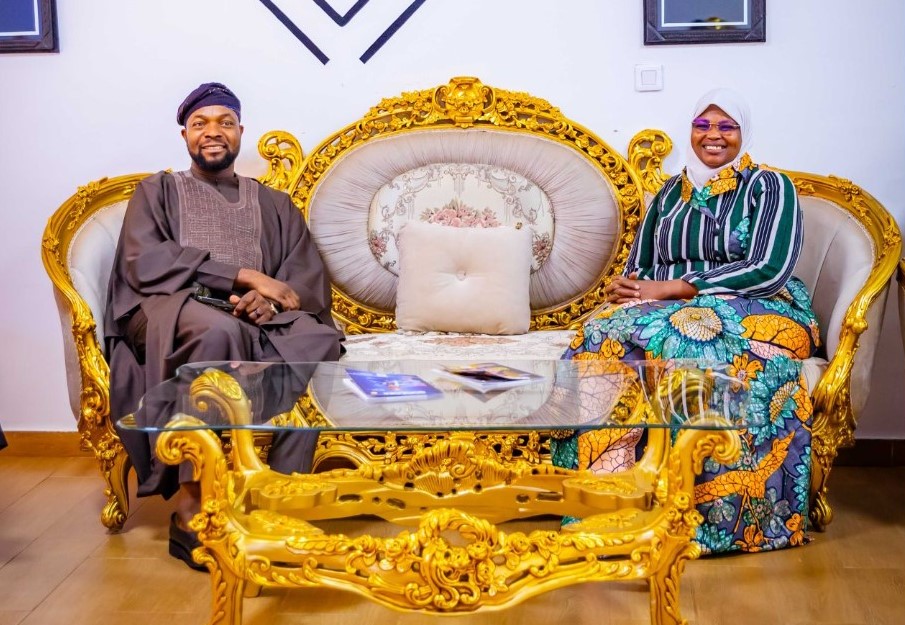
Minister of Communication, Innovation and Digital Economy, Bosun Tijani, announced that the Nigerian government will explore extending Project Bridge to the landlocked West African nation, with the goal of reducing internet connectivity costs in Burkina Faso by nearly 50%.
In a social media post on Thursday, the minister said a joint team will model two potential connectivity routes: Nigeria–Niger–Burkina Faso and Nigeria–Benin–Burkina Faso. The objective, he noted, is to identify a viable pathway to cut internet connectivity costs for Burkina Faso by approximately half. The route selection carries practical significance: landlocked nations in Africa typically face higher internet costs than coastal ones because they depend on transit agreements with intermediary countries to reach submarine cable systems. Nigeria hosts multiple submarine cable landings — including MainOne, WACS, ACE, and Equiano — making it one of West Africa's principal gateways to global internet infrastructure.
"Our objective is to leverage Nigeria's growing digital infrastructure and capabilities to create shared prosperity across our borders, deepen regional economic integration, and position Nigeria as a trusted digital gateway to West Africa and the Sahel," Tijani said.
The announcement followed discussions with Burkina Faso's Minister for Digital Transition, Posts and Communication, H.E. Dr Aminata Zerbo-Sabané. The two sides agreed to establish a Technical Working Committee tasked with developing a framework for the initiative.
Beyond Project Bridge, Nigeria will share its 3MTT (Three Million Technical Talent) model to help strengthen Burkina Faso's digital skills pipeline. The broader partnership also includes fostering ties between startup ecosystems, collaborating on Burkina Faso's Innovation Campus, and establishing joint work on artificial intelligence, local-language technologies, and cybersecurity.
For Burkina Faso, the partnership addresses a pressing need. The country has an overall mobile network coverage rate of 85%, yet high-speed internet gaps remain substantial, with 3G covering 64% of the country and 4G reaching only 46%.
In a telecom market served by Orange Burkina, Moov Africa, and Telecel Faso, Burkina Faso has 29.3 million active mobile connections across a population of roughly 24.6 million, reflecting widespread multiple-SIM ownership. Internet usage, however, lags considerably — only about 28% of the population is online. Contributing factors include poor rural electricity access, regional insecurity, community resistance to new tower installations, vandalism, and a broadband infrastructure deficit.
While state-led programmes such as PACTDIGITAL and the Universal Access and Service Fund (FASU) aim to deploy hundreds of new 4G telecom sites, the coverage gap persists. Burkina Faso's inability to achieve large-scale 4G deployment has also stalled any near-term prospects for 5G, with the technology not expected to arrive in the country within the next two years.
For Dr Zerbo-Sabané and Burkina Faso, expanding robust 4G coverage remains the priority, and Project Bridge could provide the infrastructure needed to bring more citizens into the digital economy. Both proposed transit routes, however, traverse regions affected by security challenges — particularly the Nigeria–Niger corridor, which passes through areas impacted by insurgent activity and political instability following Niger's 2023 military coup and subsequent suspension from ECOWAS. The security environment along either route will factor into feasibility assessments and construction costs.
The extension plan, however, has drawn criticism given that Project Bridge has yet to see any active deployment within Nigeria itself.
Conversations around Project Bridge began in January 2025. Since then, the initiative — which calls for deploying 90,000 kilometres of new fibre optic backbone infrastructure across Nigeria — has secured over $900 million in financing commitments from international development partners, including the World Bank Group, the African Development Bank, and the European Bank for Reconstruction and Development (EBRD). The total project cost is estimated at $2 billion.
Nearly two years after initial discussions, the rollout has not commenced. However, following a meeting with President Bola Tinubu last week, Minister Tijani indicated that the federal government will begin laying fibre across the country in the coming weeks.
"In a few weeks, Nigerians will begin to see us laying fibre across the country. This project will transform Nigeria for good," he said.
Nigeria itself continues to face significant connectivity challenges. Rural communities suffer from substantial coverage gaps due to infrastructure deficits and the high cost of constructing telecom towers in remote areas. Despite a surge in smartphone adoption, poor network coverage in rural Nigeria persists and continues to widen the digital divide. This prompted a recent announcement to deploy 3,700 telecom towers nationwide, primarily targeting rural and underserved communities.
The 5G coverage gap also remains a significant issue in 2026. While many Nigerians are purchasing 5G-enabled devices, a large share remains unconnected to next-generation networks, with capable smartphones often downgraded to 4G. According to recent data, only half of 5G-enabled devices in Nigeria's top three cities are connected to a 5G network. Telecom operators continue deploying supporting infrastructure, but the pace of consumer demand is outstripping capacity expansion.
Project Bridge is designed to expand Nigeria's broadband connectivity and narrow these coverage gaps. If successfully extended, the cross-border fibre backbone would also advance continental connectivity goals under the African Union's Programme for Infrastructure Development in Africa (PIDA), which identifies missing cross-border links as critical bottlenecks to regional integration. Critics, however, argue that extending the initiative abroad before a single kilometre of fibre has been laid domestically reflects misplaced priorities. With the Burkina Faso extension still at the conversational and mapping stage, the debate over timing and domestic readiness continues.
