Nigeria's Youth Policy Shift: N-Power's Stipends Give Way to 3MTT's Tech Bootcamps
Key Takeaways
- •N-Power, launched in June 2016, paid graduates ₦30,000 monthly for two years but was indefinitely suspended in October 2023 amid an EFCC investigation into alleged ₦37.1 billion fraud in the Humanitarian Ministry.
- •The 3MTT programme, launched in October 2023 under the Federal Ministry of Communications, Innovation and Digital Economy, targets three million trainees across 12 digital and deep-tech tracks without paying monthly allowances.
- •3MTT decentralised execution by partnering with private-sector Applied Learning Clusters, state governments, and ed-tech platforms, directing funds toward training infrastructure rather than trainee stipends.
- •The article identifies structural weaknesses in 3MTT, including 90-day training periods that produce entry-level novices, low employment conversion rates, and reliance on a tightened global remote-work market.
- •Outstanding issues shaping the policy pivot include the EFCC probe outcome, eight to nine months of arrears owed to former N-Power volunteers, and the placement results of Phase 2's 270,000 fellows.
For nearly a decade, two contrasting philosophies have shaped the Nigerian government's approach to the country's youth unemployment crisis. Under former President Muhammadu Buhari, the answer was a large, state-funded social safety net, in which hundreds of thousands of young graduates received a monthly stipend while filling staffing gaps in public schools, farms, and rural clinics. Under President Bola Ahmed Tinubu, the federal government pivoted sharply from welfare to workforce architecture, effectively ending universal cash transfers to young people and moving instead toward training millions of them in software engineering, data analysis, and artificial intelligence. The stakes are considerable: Nigeria is Africa's most populous country, with one of the world's youngest populations, and the model it settles on for absorbing young jobseekers carries weight well beyond any single scheme.
On the surface, it is a seductive story of policy evolution—from handouts to human capital development. In practice, the picture is far more complicated. Years after the transition from N-Power to the Three Million Technical Talent (3MTT) programme, the fundamental question remains unresolved: did replacing monthly stipends with three-month coding bootcamps actually build a better ladder out of unemployment?
Two Programmes, Two Models
Launched in June 2016 as the flagship pillar of the National Social Investment Programme (NSIP), N-Power was designed for immediate macroeconomic relief. Its target beneficiaries were Nigerians aged 18 to 35, segmented into a graduate volunteer corps (N-Teach, N-Health, N-Agro) and non-graduate vocational tracks (N-Build, N-Knowledge). The premise was to pay graduates ₦30,000 a month for two years while they gained work experience in understaffed public institutions across all 774 Local Government Areas.
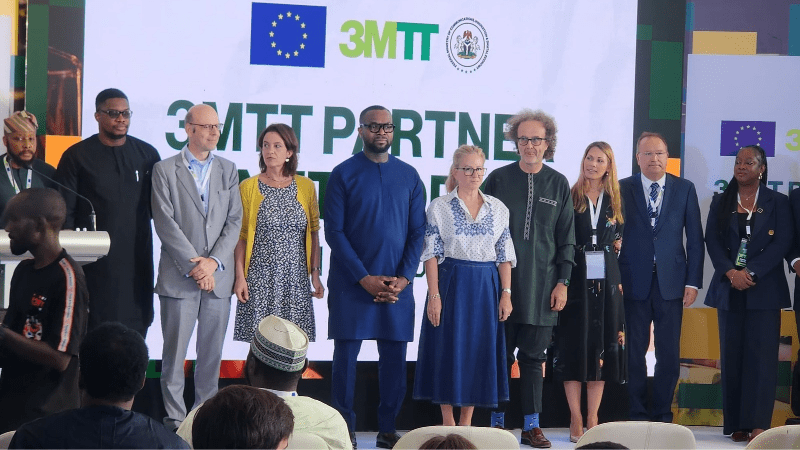
3MTT, launched in October 2023 under the Federal Ministry of Communications, Innovation and Digital Economy led by Dr Bosun Tijani, rejected the temporary payroll model. Framed around a “1%-10%-100%” execution strategy, the programme set out to build Nigeria's technical talent backbone in support of the president's target of two million digital jobs. The three-million target embedded in the programme's name makes the intended scale explicit. Rather than deploying young people to public primary schools, 3MTT focused on 12 digital and deep-tech tracks, including AI/Machine Learning, Cybersecurity, Cloud Computing, UI/UX Design, and Software Development.
Why N-Power Collapsed
The roots of N-Power's collapse lie in its payment and verification architecture. Initially managed from the Office of the Vice President before moving to the newly created Ministry of Humanitarian Affairs in 2019, the scheme relied on a centralised federal payroll administered through the National Social Investment Management System (NASIMS).
The arithmetic turned sour quickly. With a monthly funding requirement reaching ₦13.5 billion across batches, the scheme became a magnet for bureaucratic rent-seeking. By October 2023, the federal government had indefinitely suspended N-Power amid a sweeping Economic and Financial Crimes Commission (EFCC) probe into the Humanitarian Ministry over alleged ₦37.1 billion fraud and payment irregularities. External consultants stood accused of holding on to billions in disbursed funds, while hundreds of thousands of legitimate volunteers were owed eight to nine months of unpaid arrears.
3MTT sidestepped the direct cash-transfer trap by decentralising execution. Run alongside the National Information Technology Development Agency (NITDA), with backing from the private sector and development partners, the programme partnered with hundreds of existing private-sector Applied Learning Clusters (ALCs), state governments, and global ed-tech platforms across the 36 states and the Federal Capital Territory (FCT). Instead of paying monthly allowances to trainees, federal and partner funds went directly toward subsidising training infrastructure, community managers, hackathons, and internet data support.
Milestones and Structural Cracks
On paper, both programmes posted striking enrolment figures. Between 2016 and 2023, N-Power onboarded more than 1.5 million young Nigerians across Batches A, B, and C, injecting hundreds of billions of naira directly into grassroots rural and semi-urban economies. For a graduate in Gusau or Yenagoa in 2017, when the national minimum wage stood at ₦18,000, a guaranteed ₦30,000 payment each month was lifeblood capital.
Yet N-Power's fatal flaw was the absence of an exit strategy. When the two-year tenure expired, beneficiaries aged back into the unemployment market.
3MTT attempted to address this by rolling out in structured phases: Cohort 1 with 30,000 fellows, followed by Phase 2's 270,000 fellows split across Cohorts 2, 3, and 4, supported by regional hackathons and startup placement pipelines.
A closer look at 3MTT's architecture, however, exposes three deep structural cracks.
The first is the pedagogical illusion: is three months really enough to train anyone in production-grade tech skills? Twelve weeks of hybrid learning can introduce syntax, basic UI wireframing, or data cleaning, but it cannot forge a job-ready software engineer, cloud architect, or cybersecurity analyst. By compressing complex engineering disciplines into 90-day sprints, the programme largely mass-produces entry-level novices rather than industry-ready builders.
The second is the conversion mirage. While pockets of success recorded across cohorts are genuine, the conversion ratio tells a sobering story: training hundreds of thousands of young people when only a few hundred or a few thousand secure gainful employment reveals a massive funnel failure.
The third is the fallacy of banking on offshore demand. Training millions of junior talents for domestic jobs that do not exist, while hoping global companies will hire them remotely, is not a feasible national labour strategy. Local startups are shutting down, and some are shrinking headcount under the weight of a harsh economic climate. Meanwhile, the global remote-work market has tightened severely, with foreign employers favouring senior engineers and using AI coding assistants to automate the very entry-level tasks 3MTT graduates are trained to perform.
Compounding this is the socio-economic reality. Learning Python or cloud computing requires a functional laptop, stable electricity, and heavy data bandwidth. In an economy battered by fuel subsidy removal and currency devaluation, asking an unemployed graduate to complete a three-month intensive hybrid bootcamp without a living stipend created a silent socio-economic filter. Many low-income fellows struggled to cover basic transport fares to physical learning centres.
For now, several threads remain open, and each will shape how the pivot is ultimately judged: the outcome of the EFCC probe into the Humanitarian Ministry, the settlement of the eight to nine months of arrears owed to former N-Power volunteers, the placement record that emerges from Phase 2's 270,000 fellows, and whether any form of trainee support is reintroduced to ease the costs that filtered out low-income learners.
A Supply-Side Answer to a Demand-Side Crisis
Beyond the political branding, the comparison reveals a hard truth about youth intervention in Nigeria: stipends without marketable skills only delay unemployment, while crash-course skills without a vibrant job market produce only educated frustration.
Was 3MTT a better replacement for N-Power? On fiscal governance and private-sector coordination, the answer is an unequivocal yes—the programme eliminated the massive payroll leakages that turned N-Power into a target for anti-graft investigators. Yet a 90-day certificate cannot replace a missing industrial policy. The underlying message is blunt: until Nigeria fixes the macroeconomic bottlenecks choking local business growth, churning out millions of three-month tech graduates for unavailable jobs will remain a supply-side solution to a demand-side crisis.

