Nigeria Cuts EV Import Costs but Power Grid Challenges Threaten Adoption
Key Takeaways
- •Nigeria eliminated import duties and granted tax waivers for electric vehicles, resulting in nearly 4,000 EVs receiving tax breaks during the first half of 2026.
- •Nigeria's national grid supplies approximately 4,000 megawatts for a population exceeding 200 million, causing EV charging stations to rely on generators when grid power fails.
- •Nigeria had roughly 48 public charging stations as of 2025, concentrated mainly in Lagos and Abuja, while South Africa had over 500 at the same time.
- •Companies such as Spiro and MAX are focusing on electric motorcycles and tricycles with battery-swapping models, which may scale faster than passenger EV charging networks.
- •Spiro reports having deployed 22,000 electric motorbikes and completed more than 15 million battery swaps, and recently secured $50 million to expand its network across Nigeria, Kenya, and Uganda.
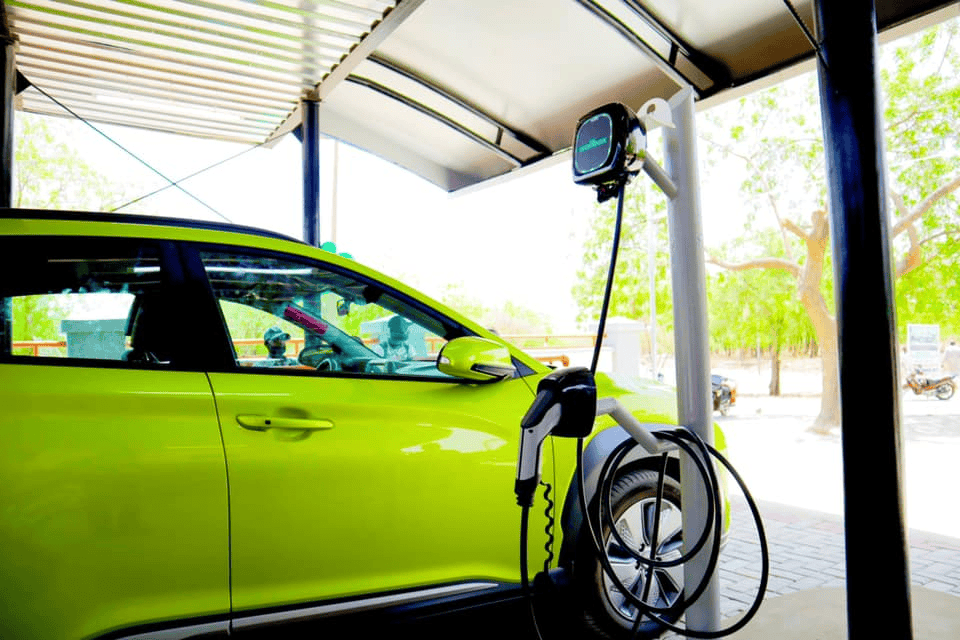
Nigeria is moving to make electric vehicles (EVs) more accessible by eliminating import duties and granting tax waivers. According to Reuters, nearly 4,000 electric vehicles received tax breaks during the first half of 2026, signalling potential growth in the sector. The policy fits within Nigeria's Energy Transition Plan, launched in 2022, which targets net-zero emissions by 2060 and positions transport electrification as a key pillar. Yet a fundamental obstacle persists: Nigeria is trying to build an electric transport ecosystem while its electricity system cannot reliably serve homes and businesses.
The national grid supplies approximately 4,000 megawatts for a population exceeding 200 million — a capacity lower than many cities in other African nations serve for a fraction of the people. When outages occur, households and businesses routinely fall back on petrol and diesel generators, which together account for a significant share of the country's actual energy consumption. The EV sector is not exempt — Reuters reported that charging stations, dealerships, and battery-swapping operators are also resorting to generators when grid power falters.
This dynamic raises a pressing question for a nation promoting EVs as part of a cleaner transportation future: how environmentally beneficial is an electric vehicle if its battery is charged with electricity produced by a diesel generator? It is a question other African markets face as well, but Nigeria's grid limitations make it especially acute.
For a Lagos driver buying an electric car, the appeal is straightforward. Petrol prices have risen sharply since the subsidy was removed in May 2023 under President Bola Tinubu's administration, while EVs promise lower running costs. The challenge, however, is finding a dependable place to charge. Overnight home charging may appear simple in theory, but power outages can leave a driver waiting for electricity to return, searching for a public charger, or turning to another energy source entirely. For someone who depends on a vehicle for daily work, that uncertainty may matter more than the purchase price.
Public charging infrastructure remains sparse. A 2025 policy brief reported that Nigeria has roughly 48 public charging stations, concentrated mainly in Lagos and Abuja. By comparison, South Africa had over 500 at that time. Nigeria's Energy Transition Plan sets an ambitious long-term target: EVs should account for 60% of the vehicle market by 2050, with charging infrastructure scaling alongside adoption.
The gap between policy and reality is clear. Lowering EV costs alone will not drive mass adoption in a vehicle market where imported used cars dominate and where electricity access itself is uneven outside major cities. Nigeria also needs adequate electricity supply, sufficient charging points, distribution networks, and reliable power at those charging stations so consumers can trust EVs for everyday use.
Rather than waiting for the national grid to stabilise, parts of the industry are innovating around the problem. Electric motorcycles and tricycles may scale faster than electric cars — a pattern already visible in Kenya and Rwanda, where battery-swapping networks for two- and three-wheelers are expanding more rapidly than passenger-car charging.
For a commercial motorcycle rider, the economics differ from those of a private car owner. Fuel is typically one of the largest daily expenses. An electric motorcycle can sharply reduce running costs, and battery swapping eliminates long charging downtime. Riders can visit a swap station, exchange a depleted battery for a fully charged one, and resume work within minutes.
The approaches taken by companies such as Spiro and MAX are central to Nigeria's Energy Transition Plan, which emphasises the role of two- and three-wheelers in transforming the transport sector. The government recognises Spiro as a provider of electric bikes and battery-swapping services in Ogun, Oyo, Lagos, and the Federal Capital Territory (FCT). MAX is known for its electric mobility initiatives, including a pilot programme for electric motorcycles in Gbamu-Gbamu, Ogun State.
MAX is focused on deploying electric motorcycles and tricycles for commercial operators rather than selling EVs primarily to individual consumers. Spiro, meanwhile, is expanding its battery-swapping model across Africa and reports having deployed 22,000 electric motorbikes and completed more than 15 million battery swaps.
The swapping model mirrors the convenience of petrol stations: riders exchange batteries quickly instead of waiting for a recharge. It also partially mitigates Nigeria's electricity challenges. Rather than every rider depending on a consistent power source, companies can charge batteries at designated facilities and distribute them as needed. This does not solve the country's broader power problems, but it transfers part of the burden to a more manageable, company-operated infrastructure.
Spiro's expansion signals that investors see value in battery infrastructure within Africa's EV market. The company recently secured $50 million in funding to strengthen its battery-swapping network across several countries, including Nigeria, Kenya, and Uganda. (Related coverage: Spiro raises new $215M equity funding to expand battery-swap network across Africa)
Nigeria's transition to electric mobility may not follow the pattern seen in wealthier nations. Large-scale replacement of petrol cars with electric ones is unlikely in the near term. Instead, the shift may be led by commercial riders switching from petrol motorcycles to electric models, delivery services adopting electric two-wheelers to cut fuel costs, and tricycle operators benefiting from swappable batteries. Hybrid and extended-range vehicles are also reportedly gaining traction, offering drivers a dependable option while still using some conventional fuel. Chinese brands such as BYD and Geely are expanding their presence in the Nigerian market as well, reflecting broader Chinese automaker activity across the African continent.
Nigeria does not need a fully functional electricity system before embracing electric mobility. However, as more EVs take to the roads, electricity demand will rise. The charging network must be prepared to handle that growth with reliable power and predictable pricing. Off-grid solar solutions, which already supply a growing share of Nigeria's electricity, could play a role in powering charging infrastructure where the grid falls short. If the bulk of electricity continues to come from generators, the environmental advantages of EVs will erode.
Nigeria's EV policy must therefore look beyond import numbers. Nearly 4,000 tax-waived EVs in six months is a positive indicator, but the decisive challenge is building an electricity and charging ecosystem that makes owning an EV more convenient than operating a petrol vehicle. Until that is achieved, Nigeria's electric transition will remain tethered to the same costly, unreliable fossil-fuel energy it seeks to leave behind.
(Related: Solar energy now powers 20% of Nigeria's electricity usage, to hit 50% in 3 years)
