New Mexico Sues Acting AG Todd Blanche and DOJ Over Epstein Investigation Access
Key Takeaways
- •New Mexico has sued Acting Attorney General Todd Blanche and the DOJ, alleging the department blocked ten separate information requests related to the Epstein investigation at Zorro Ranch.
- •The DOJ has refused to share materials by citing federal court orders protecting victim identities, while New Mexico argues these restrictions should not apply to state law enforcement agencies conducting criminal investigations.
- •DOJ officials previously assured New Mexico that requested information would be provided, creating a more precarious legal position since those assurances were never honored.
- •The DOJ's definition of a victim as anyone who self-identifies has drawn scrutiny because it could theoretically allow individuals involved in misconduct to claim protected status rather than face prosecution.
- •Acting Attorney General Blanche previously served as President Trump's personal criminal defense counsel, adding public scrutiny to his role in decisions about Epstein-related document disclosures.
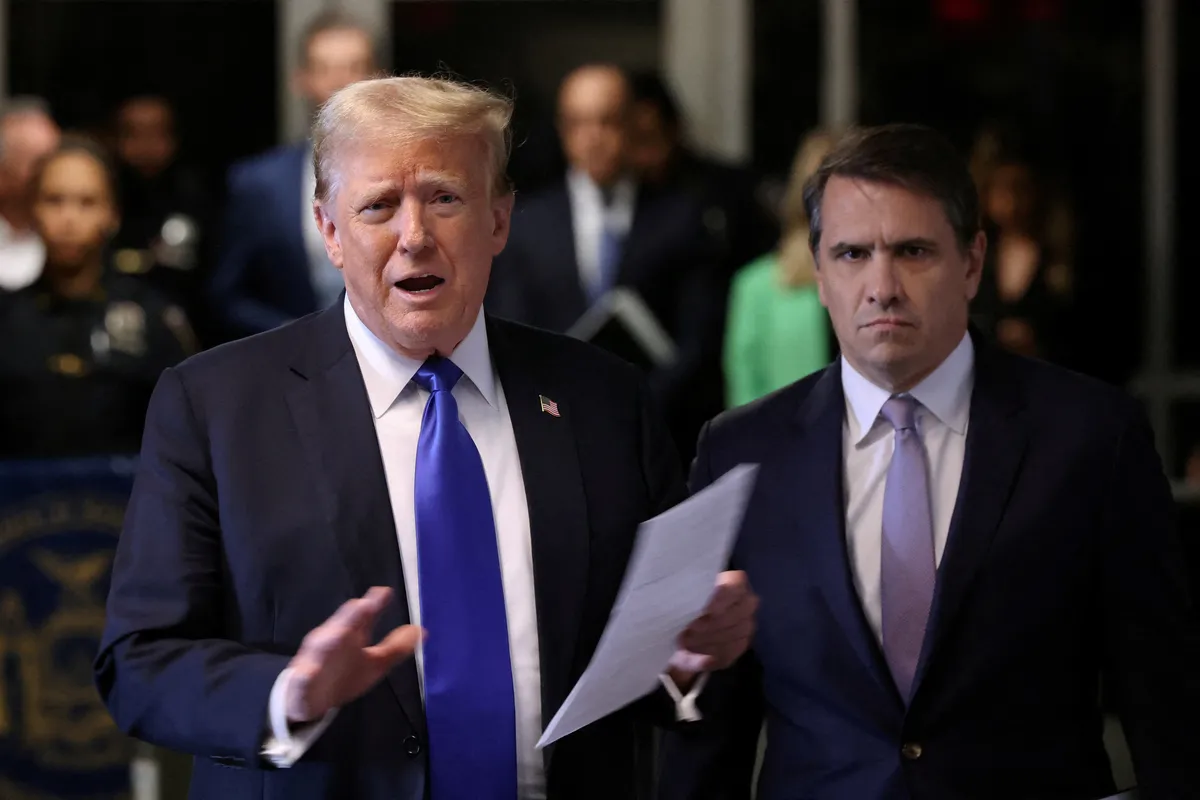
The State of New Mexico has sued Acting Attorney General Todd Blanche and the United States government, alleging that the Department of Justice has systematically blocked the state from investigating the Jeffrey Epstein matter — a dispute that now places the DOJ before a federal judge to explain its conduct.
New Mexico, exercising what it describes as both its duty and legal right, seeks to investigate potential crimes committed at "Zorro Ranch," a sprawling Epstein estate located approximately 30 miles south of Santa Fe. Epstein died in federal custody in August 2019 while awaiting trial on federal sex-trafficking charges, leaving unresolved questions about co-conspirators and the full scope of crimes committed at his properties. The state contends that its investigation has repeatedly stalled due to roadblocks and a lack of cooperation from Blanche's DOJ, leaving New Mexico with no recourse but to petition a court to compel the Justice Department to act.
New Mexico Attorney General Raúl Torrez stated that his office has made ten separate requests for key information related to the Epstein investigation, all of which were either ignored or denied. "We have heard repeatedly they will cooperate and what our team has experienced is anything but cooperation," Torrez said.
DOJ's Justification: Victim Privacy
The Justice Department has defended its refusal to release certain information by citing federal court orders that prohibit disclosing victim-identifying information. According to MS Now, DOJ stated: "The Justice Department said it was not releasing some information the state requested because federal court orders ban disclosing 'victim-identifying information carte blanche, and New Mexico has provided no lawful basis to justify such sweeping disclosures."
New Mexico challenges this framing, noting that the request comes from state law enforcement — not the general public or media — and that federal court orders restricting public dissemination of victims' names should not logically extend to all other American law enforcement agencies pursuing criminal investigations. This is a notable position because inter-agency information sharing between federal and state law enforcement is a routine feature of the U.S. justice system, facilitated through joint task forces, criminal databases, and formal cooperation agreements.
Moreover, the state emphasizes that it is not seeking only victim names. Torrez said the ten denied or ignored requests encompass a broader range of investigative materials essential to the state's case.
The Broken Promise Problem
A central complication for Blanche and the DOJ is evidence suggesting that the department previously signaled a willingness to cooperate. According to Torrez, DOJ officials assured New Mexico that requested information would be forthcoming — assurances that were never honored.
This creates a significantly more precarious legal position. A federal judge learning that DOJ initially agreed to provide information, then reversed course without explanation, may be far less sympathetic to DOJ's victim-privacy rationale than if the department had consistently maintained its refusal from the outset. Judges are generally reluctant to issue court orders compelling parties to fulfill commitments they voluntarily made.
States' Authority to Investigate
The lawsuit also raises a constitutional dimension. New Mexico asserts that it possesses at least as strong a legal basis to investigate crimes committed within its borders as the federal government. The U.S. constitutional framework reserves to the states the police power — the authority to protect the safety and welfare of their residents — while assigning national defense and foreign affairs to the federal government. The FBI itself emerged only as cross-state commerce and transportation necessitated a federal law enforcement presence.
While Epstein transported victims across state lines into and out of New Mexico, the state argues this does not diminish its jurisdictional duty to prosecute crimes committed on New Mexico soil. Sharing victim names with New Mexico state police, the state contends, does not constitute "publication" and does not endanger victims; it enables further protection.
The Definition of "Victim"
Perhaps the most consequential issue involves the DOJ's definition of who qualifies as a "victim" in the Epstein matter. As reported, Blanche supplemented his filing to a federal judge by stating that the definition of a victim is anyone who self-identifies as such.
This definition has drawn sharp scrutiny. Critics note that, under this standard, individuals who engaged in misconduct with underage girls could potentially self-identify as victims of the investigation itself — claiming that law enforcement scrutiny constitutes victimization — rather than as perpetrators. This could theoretically shield such individuals from prosecution and keep their names protected from disclosure to other law enforcement agencies.
Judge Sullivan's Prior Skepticism
U.S. District Judge Emmet Sullivan has already signaled deep skepticism toward DOJ's handling of Epstein-related files. Sullivan previously ordered the DOJ to substantiate its redaction decisions, effectively demanding proof rather than accepting the department's representations at face value. He took the files in camera — reviewing them privately in his chambers — to assess the government's claims.
Now, another federal judge will be asked to determine why the DOJ must be compelled through litigation to fulfill commitments it made voluntarily, and why the department's victim-identification process could permit individuals connected to Epstein's crimes to claim protected status.
Broader Implications
The lawsuit's outcome carries implications beyond New Mexico's investigation. If DOJ is compelled to release withheld materials, the state's inquiry could uncover information that the federal government has not previously disclosed — including evidence that may have been intentionally suppressed.
The case also raises questions about the degree to which the executive branch has involved itself in the Epstein investigation, an inquiry that could implicate individuals connected to the administration. Blanche served as personal criminal defense counsel to President Donald Trump before being appointed to the Justice Department, a background that adds a layer of public scrutiny to his role in decisions about Epstein-related document disclosures. Historically, presidents maintained an arm's-length relationship with the DOJ precisely to avoid the appearance or reality of interfering in investigations that might involve the president, Cabinet members, or their associates.
No Easy Answers for DOJ
As the litigation proceeds, DOJ attorneys — including Blanche — will be required to answer pointed questions before a federal judge. Even the department's most favorable framing — that it does not determine who is or is not a victim and allows individuals to self-identify — does not address the fundamental question: why the DOJ refuses to share victim names with other law enforcement agencies actively working to identify and prosecute perpetrators.
The inability to provide a straightforward answer to that question, legal observers note, invites the application of Occam's razor — the principle that the simplest explanation is most likely correct — to potentially damaging conclusions about the department's motivations.
Jason Miciak is a Raw Story columnist, past editor of Occupy Democrats, author, political consultant, and attorney.

