Nepotism overload: How 'neporuption' became the business model of Trump-era power
Key Takeaways
- •Conservative writer Amanda Carpenter, in a Sunday column for The Bulwark, coined the term "neporuption" to describe an overlapping system in which sons of powerful officials hold major positions in companies with substantial business before the government.
- •The families cited include those of President Trump, close aide Steve Witkoff, and Commerce Secretary Howard Lutnick, with business interests spanning cryptocurrency, critical minerals such as rare earths and tungsten, and defense technology.
- •A federal anti-nepotism statute in place since 1967 bars officials from appointing relatives to posts in the agencies they lead, but the arrangement Carpenter describes operates outside it because the sons remain in private business while their fathers hold policy-influencing offices.
- •Federal financial-disclosure and conflict-of-interest rules generally cover officials' own assets, spouses, and minor children, leaving the private ventures of adult children largely unreported and difficult to trace, particularly since they involve private equity and foreign capital.
- •David Kass, executive director of Americans for Tax Fairness, said billionaire families made record-breaking political contributions in 2024 to secure a GOP trifecta and accused Trump and congressional allies of pursuing tax and spending policies favoring wealthy elites and corporations.
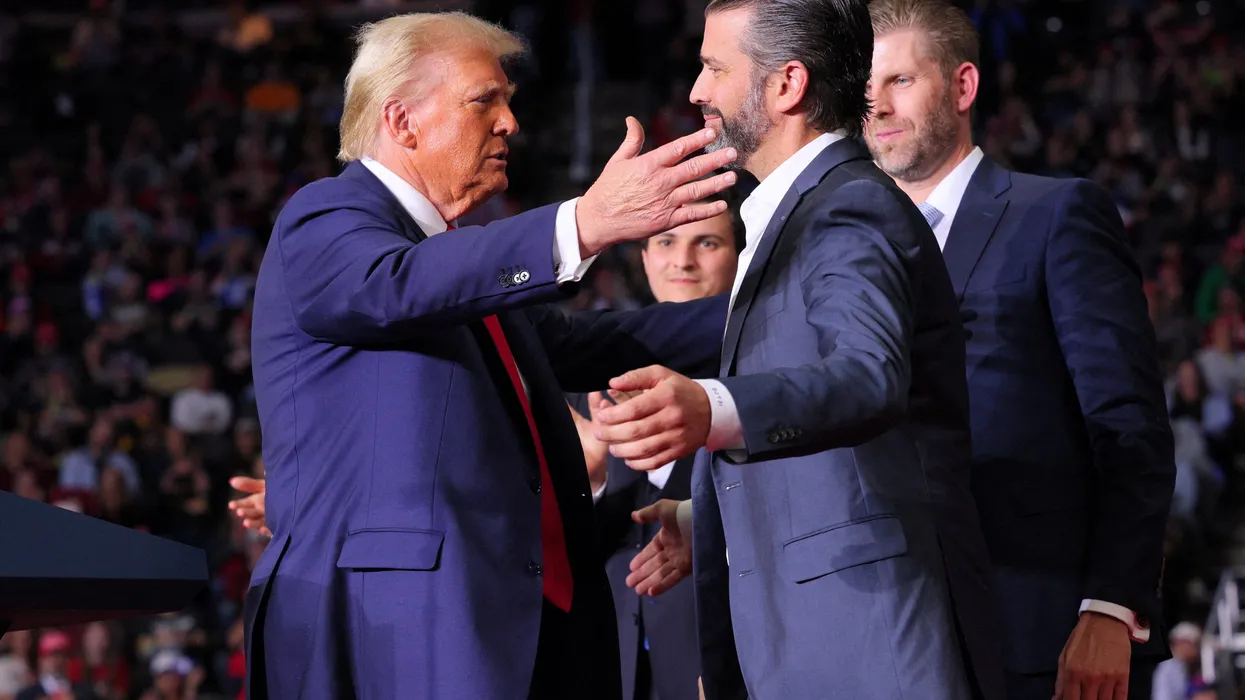
President Donald Trump has long blended his family into his administration — from his sons securing a major mining deal in Kazakhstan while their father holds office, to his son-in-law negotiating on his behalf on matters connected to Russia's invasion of Ukraine and Israel's invasion of Gaza.
In a column published Sunday for The Bulwark, a conservative opinion outlet, writer Amanda Carpenter observed that "For the last decade, MAGA made President Joe Biden's son, Hunter Biden, a national avatar for nepotism." She noted that critics "railed against the cushy jobs he secured, objected to the expensive amateur artwork he sold, and fixated on a laptop that allegedly contained evidence of illicit foreign influence peddling — a saga that culminated in a gun and tax convictions for which his father pardoned him."
Carpenter argued that "now the very thing that MAGA spent years treating as a five-alarm scandal involving one president's son has become the business model for multiple powerful fathers and sons simultaneously — and on a much larger scale."
"The nepotistic grift perpetrated by MAGA goes far deeper than the basic arrangement that anti-nepotism laws are designed to prevent," she wrote. "It's not just a case of 'father gives undeserving son a fancy job.' And it's not just the Trumps, either. It's the Lutnicks. It's the Witkoffs. We need a word that describes their sprawling, overlapping system of patriarchal influence and enrichment."
The anti-nepotism laws she invokes trace to a federal statute on the books since 1967, which bars officials from appointing relatives to posts in the agencies they lead. Her argument is that the system she describes operates outside that guardrail: the sons stay in private business while their fathers hold the offices that influence policy and steer the contracts and loans those companies depend on.
To that end, Carpenter coined the term "neporuption," defining it as a situation in which "the sons obtain major stakes and positions in companies with huge business before the government. Happily for them, their fathers hold positions that influence policy and determine contracts and loans that move these industries."
She elaborated that the billion-dollar interests embraced by these children stretch across consequential industries — cryptocurrency; critical minerals, including rare earths and the "war metal" tungsten; and defense technology, among other sectors. These interests, she wrote, often intersect with national security and foreign affairs, and at times the sons' companies invest alongside one another, "literally dealing one another into the grift."
The sectors themselves help explain the stakes. Cryptocurrency companies depend on regulatory rulemaking in Washington, critical-minerals ventures on permits, trade policy and government stockpiling, and defense-technology firms on federal contracts. Rare earths and tungsten — used in everything from consumer electronics to munitions — have also become focal points of U.S. efforts to secure supply chains that run heavily through China.
"Forget what you thought political nepotism looked like," Carpenter concluded. "This is bigger, brasher, and much harder to trace. And since it involves private equity and foreign capital, it often moves outside public view."
That traceability problem is structural: unlike publicly traded companies, private firms face no public reporting requirements, and federal financial-disclosure rules generally require officials to report their own assets, not the private ventures of their adult children.
According to the report, the pattern extends beyond the Trump family to the families of Trump's close aide Steve Witkoff, Commerce Secretary Howard Lutnick and others. When nepotism flourishes on this scale, the article contends, it damages both democracy and the free character of the economy.
Federal conflict-of-interest rules, for their part, bar officials from acting on matters in which they hold a financial interest — a framework that reaches a spouse's and minor children's interests but generally not the private business dealings of adult children. That gap is one reason watchdog groups have long pressed for broader transparency rules covering officials' families.
"The vast wealth inherited by centuries-old billionaire families is staggering," David Kass, executive director of Americans for Tax Fairness, a liberal advocacy group focused on tax policy, said in a 2024 statement. "While these heirs and their billions go undertaxed, enormous sums are squandered on lavish mansions, private jets, and vanity projects instead of funding crucial public investments."
"In 2024, these billionaire families used their enormous wealth to make record-breaking political contributions to secure a GOP trifecta," Kass added.
"Now, Trump and his allies in Congress are doing their donors' bidding by rigging the system in their favor and pushing a $4 trillion giveaway to wealthy elites and giant corporations — all while advocating for cuts to vital programs that working and middle-class Americans depend on," Kass said.

