Can Alito and Thomas Really Hold On for Six More Years?
Key Takeaways
- •Ron Brownstein and Bill Kristol argued that Democrats should prioritize Senate races over the House because the Senate confirms Supreme Court nominees who could fill vacancies left by Justices Alito and Thomas.
- •Alito, 76, and Thomas, 78, would be 82 and 84 in six years, exceeding the 79-to-81 age range at which justices appointed after 1970 typically leave the bench.
- •Alito told CBS News he is considering retirement but not until 2027, and told Bloomberg News he intends to remain through the current term.
- •If Democrats take back the Senate, Republicans will likely pressure Alito to step down during the two-month lame-duck session before the newly elected chamber is sworn in.
- •Senate majority control also determines confirmations of federal judges who rule on President Donald Trump's executive orders and other unilateral actions.
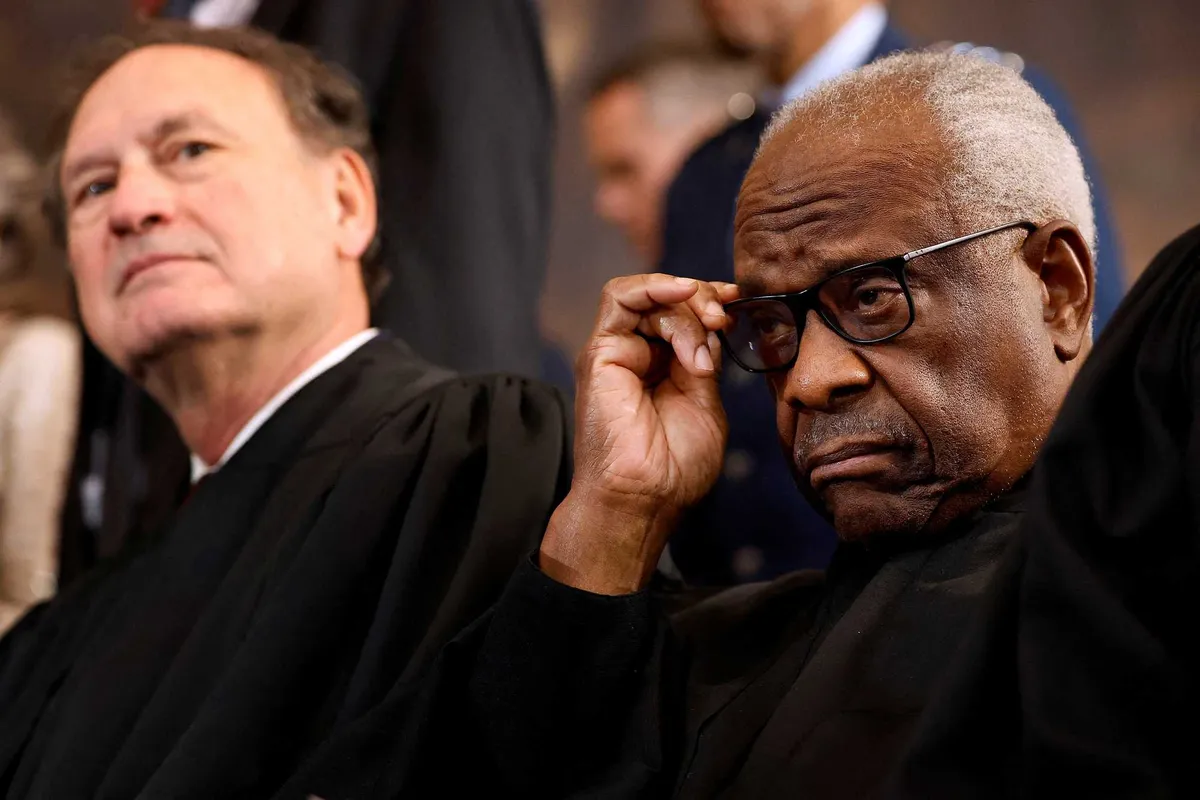
Veteran journalist Ron Brownstein recently sat down with former Republican Bill Kristol of The Bulwark for a conversation, streamed on YouTube, about whether Supreme Court Justices Samuel Alito and Clarence Thomas can realistically hold onto their seats for the next six years.
With the election approaching, both Brownstein and Kristol mocked Democratic donors for being more obsessed with flipping the House when the Senate should be the bigger focus, given what is at stake for the U.S. Supreme Court. Justices hold lifetime appointments, and the Senate confirms every nominee who would fill a vacancy on the court, so the party that controls the chamber holds a direct lever over its future composition.
"You know, you can make a case that after you get past 230 or 232 in the House you're renting seats for two years that you're going to give back," Brownstein explained. "Like, so what, you know? I mean, like, really. The Senate is six years, okay? How old are Alito and Thomas?"
Alito is 76 years old, and Thomas is 78.
"Every additional Senate seat reduces the odds of Republicans regaining the Senate before 2030 and maybe 2026, given how little playing field there normally is," Brownstein said.
A glance at the seats up for reelection in 2028 shows mostly safe Democratic and safe Republican territory. One possible exception is Wisconsin, where Sen. Ron Johnson (R-Wis.) has drifted so far to the right in a deeply purple state that a well-funded moderate could unseat the man, who will turn 73 that year. In 2028, 34 Senate seats will be on the ballot.
Brownstein noted that Democrats hold zero Senate seats in the states that voted for Trump in the last three elections, and only one Senate seat across the 19 states that voted against Trump three times. The map leaves very little room for movement.
"So, if Democrats can swipe in a historically bad year seats in Nebraska, Kansas, Iowa, much less South Carolina and Florida, you could build a cushion that will make it very hard for there to be a Republican Senate, I think before 2030 and probably 2032. Which would require Alito and Thomas to stay on six more years."
Six years from now, Alito would be 82 and Thomas would be 84. Justices who serve past 85, as the late Justice Ruth Bader Ginsburg did, are rare. A 2016 report on the court found that justices appointed after 1970 leave the bench, whether through death or retirement, at roughly 79 to 81 years of age. Ballotpedia has published a fact check examining whether the justices will be past the court's average retirement age on Election Day.
Alito has addressed the speculation directly. He told CBS News that he is considering retirement, but not until "next year" — meaning 2027 — remarks that Politico reported on Oct. 2. Days later, he put the matter more plainly to Bloomberg News: "I intend to stick around through this term. I made that decision many months ago."
If Democrats take back the U.S. Senate, someone in the GOP will likely do the math and pressure Alito to step down during the two-month lame-duck session before Republicans lose power — the stretch between Election Day and early January, when the newly elected Senate is sworn in.
Kristol said he and his colleague Tim Miller "pull our hair out" over Democrats' obsession with the House as "the key" when the Senate is inches from their grasp.
"Are you kidding me? The House is done," Kristol said.
Both men agreed that there is little practical difference between 235 and 255 seats in the House. Winning a single Senate seat in a reliably red state, by contrast, carries enormous consequences.
It is not just about the Supreme Court, either. Federal judgeships, which have served as the backstop for President Donald Trump's executive orders and other unilateral actions, depend on the same Senate math. Like Supreme Court nominees, federal judges are confirmed by the Senate, so the majority that emerges will have a hand in shaping the bench that rules on those actions for years to come.

