MSTR Stock Falls as High-Yield MSTY ETF Draws Interest
Key Takeaways
- •Strategy shares dropped more than 50% from a May high near $196 to around $93 as Bitcoin traded near $63,000, well below its all-time high of $126,300.
- •To help cover preferred-dividend costs exceeding $1.7 billion a year, Strategy has sold Bitcoin at a loss, below its average purchase price of over $74,000, while continuing to issue new MSTR shares.
- •YieldMax's MSTY ETF reported a 90.51% annualized distribution rate against a 3.26% 30-day SEC yield, and portions of its distributions, such as an estimated 97.18% of the July 15 payment, consisted of return of capital.
- •Technical indicators, including a bearish pennant breakdown and closes below the 50-day and 100-day EMAs, suggest MSTR could extend its decline toward the year-to-date low of $81.73.
- •MSTY does not hold MSTR shares directly and instead uses synthetic option positions, leaving it exposed to MSTR losses while sacrificing part of the stock's upside during rallies.
Key Insights
MSTR stock fell sharply as Bitcoin weakness pressured Strategy’s valuation.
Strategy’s capital structure added dilution and preferred-dividend obligations.
MSTY offered high distributions, but it also carried significant capital-loss and distribution risks.
MSTR continued to underperform the broader U.S. equity market as Bitcoin weakened and Strategy issued additional shares.
Strategy shares traded near $93 after dropping more than 50% from their May high near $196. Bitcoin also traded near $63,000, well below its previous record high.
That decline increased attention on income-focused alternatives tied to Strategy. One of them is the YieldMax MSTR Option Income Strategy ETF, or MSTY. Launched in early 2024 as part of YieldMax’s family of single-stock option-income ETFs, the fund quickly attracted billions of dollars in assets.
MSTY’s headline distribution rate should not be treated as a guaranteed investment yield. YieldMax reported a 90.51% annualized distribution rate on July 29, while its 30-day Securities and Exchange Commission yield stood at 3.26%. The 30-day SEC yield is a standardized measure of the income a fund’s portfolio actually generated over the trailing month, and it excludes return of capital, which helps explain why the two figures diverge so sharply.
MSTR Stock Falls as Bitcoin Remains in a Bear Market
Strategy, known as MicroStrategy until it rebranded in early 2025, began buying Bitcoin for its corporate treasury in August 2020 and went on to become the largest publicly listed corporate holder of the cryptocurrency. The main reason Strategy’s stock has fallen is Bitcoin’s weakness this year. BTC was trading at $62,920 on Saturday, sharply below its all-time high of $126,300. That decline has reduced the value of Strategy’s assets.
The situation has become severe enough that the company has shifted from saying it would never sell its Bitcoin to increasing its sales. It sold Bitcoin worth millions of dollars this year, with most of those sales taking place at a loss. Its average Bitcoin purchase price was above $74,000, and the company is now selling its coins for less than $65,000. Strategy discloses those purchases and sales in its filings with the SEC.
The sales are being driven by the need for cash to pay dividends and debt. Strategy pays preferred shareholders, a process that costs more than $1.7 billion a year. Those obligations trace back to several series of preferred stock the company issued beginning in early 2025 — STRK, STRF, and STRC — which carry dividend rates between 8% and 10% and were sold to fund additional Bitcoin purchases.
The company is also raising cash by diluting MSTR shareholders. It is doing this by selling shares, a process that is expected to continue in the coming years. Notably, it is selling those shares and using some of the proceeds to repurchase STRC shares in an effort to push their price to par, which for that series is $100 per share.
Strategy, unlike Tom Lee’s BitMine, invests in Bitcoin, an asset that generates no income. BitMine holds Ethereum, which pays at least 2.8% in annual returns. With its Ethereum buying nearing completion, the company aims to generate more than $300 million in annual revenue. Strategy’s treasury model has since been adopted by a wave of other publicly traded companies holding crypto on their balance sheets, which has made its stock a closely watched reference point for that group.
Technicals Suggest a Bearish Breakdown in MSTR Stock
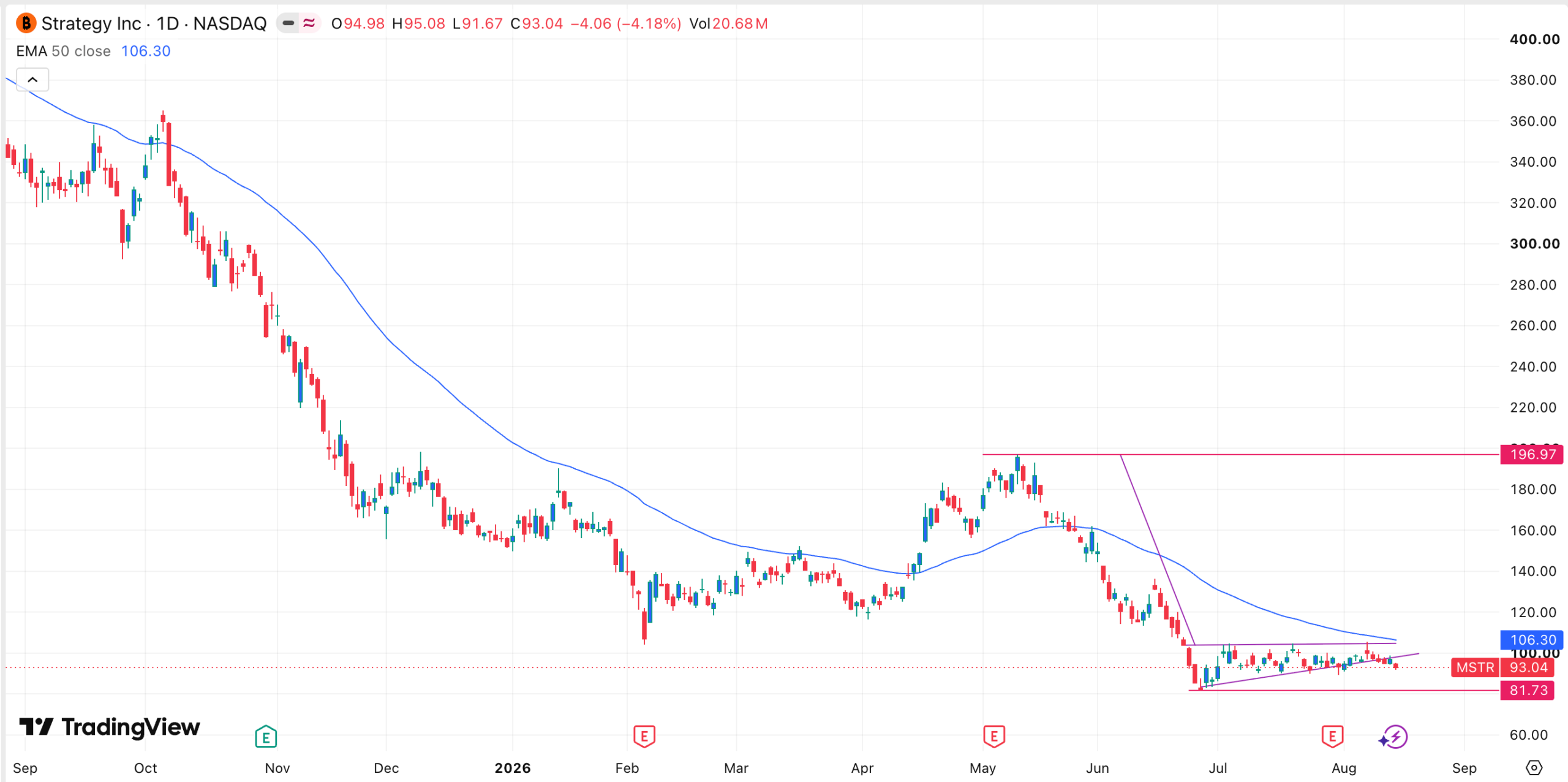
The daily chart shows that MSTR has slumped over the past few weeks, falling from a high of $196 on May 11 to about $93. The stock has formed a bearish pennant pattern, a common continuation signal in technical analysis.
It has moved below the lower side of the triangle pattern, confirming the bearish breakout. It has also slipped below the 50-day and 100-day Exponential Moving Averages, or EMAs.
Taken together, these technical signals suggest the stock could continue falling in the near term. If that happens, it may move toward the year-to-date low of $81.73.
MSTY Distributions Carry Return-of-Capital Risk
MSTY uses options linked to MSTR to generate income from the stock’s volatility. Contrary to a conventional covered-call description, the fund does not directly invest in MSTR shares.
YieldMax says MSTY uses call spreads and other synthetic option positions. The portfolio also holds U.S. Treasury securities and cash collateral.
The strategy can produce substantial distributions when MSTR volatility remains elevated. However, those payments can include return of capital.
For example, YieldMax estimated that 97.18% of MSTY’s July 15 distribution represented return of capital. The July 22 payment contained an estimated 8.09%. Distribution amounts also vary from week to week, so a single large payment can inflate the headline annualized rate.
Return of capital can reduce the fund’s net asset value over time. It should not be confused with investment income generated from underlying business profits. For tax purposes, return of capital is generally not taxed as income when it is received; instead, it typically reduces an investor’s cost basis, which can increase the taxable gain or shrink the deductible loss when shares are later sold.
YieldMax also warns that MSTY remains exposed to potential MSTR losses. Options premiums may not be enough to offset those declines. YieldMax publishes its estimated distribution composition on its website, giving holders a way to check how much of each payment is return of capital.
Is MSTY Better Than MSTR Stock?
MSTY and MSTR serve different investment objectives.
MSTR offers more direct upside exposure to Strategy and Bitcoin. It does not pay the large weekly distributions offered by MSTY.
MSTY prioritizes current distributions generated through options. That structure can sacrifice part of MSTR’s upside during strong rallies.
It also remains exposed to substantial downside when MSTR falls.
For that reason, the headline distribution rate does not make MSTY automatically superior to MSTR.
Total return is the more useful comparison because it combines distributions with changes in market value.
During extended MSTR declines, MSTY’s distributions may partially offset losses, but they cannot prevent the fund’s net asset value from falling.
During a strong MSTR rally, the options strategy can also limit how much upside MSTY captures.
The choice depends on the exposure an investor wants. MSTR provides stronger directional exposure, while MSTY exchanges some upside potential for weekly distributions.
With MSTR stock near its yearly lows, Bitcoin remains the central variable for both investments. A deeper decline in Bitcoin could pressure both MSTR and MSTY despite MSTY’s high headline distribution rate.

