Master of Mistaken Identity: Twice Confused for Metallica in 1990s Seoul
Key Takeaways
- •Metallica performed two concerts in Seoul in April 1998 as part of their ReLoad album tour, a notable event for a country that rarely hosted major international rock acts.
- •A bartender at a Bennigan's restaurant near the concert venue believed Jeffrey Miller was a member of Metallica due to his long hair and band T-shirt.
- •A stationery store clerk in Sinchon enthusiastically asked Miller for his autograph under the same mistaken impression, and Miller complied by signing.
- •The clerk discovered the deception weeks later when Miller returned to the store, prompting her to declare he was not in Metallica.
- •The mistaken identities were plausible in 1990s Korea, where Western heavy metal remained a niche genre and few locals could recognize individual band members.
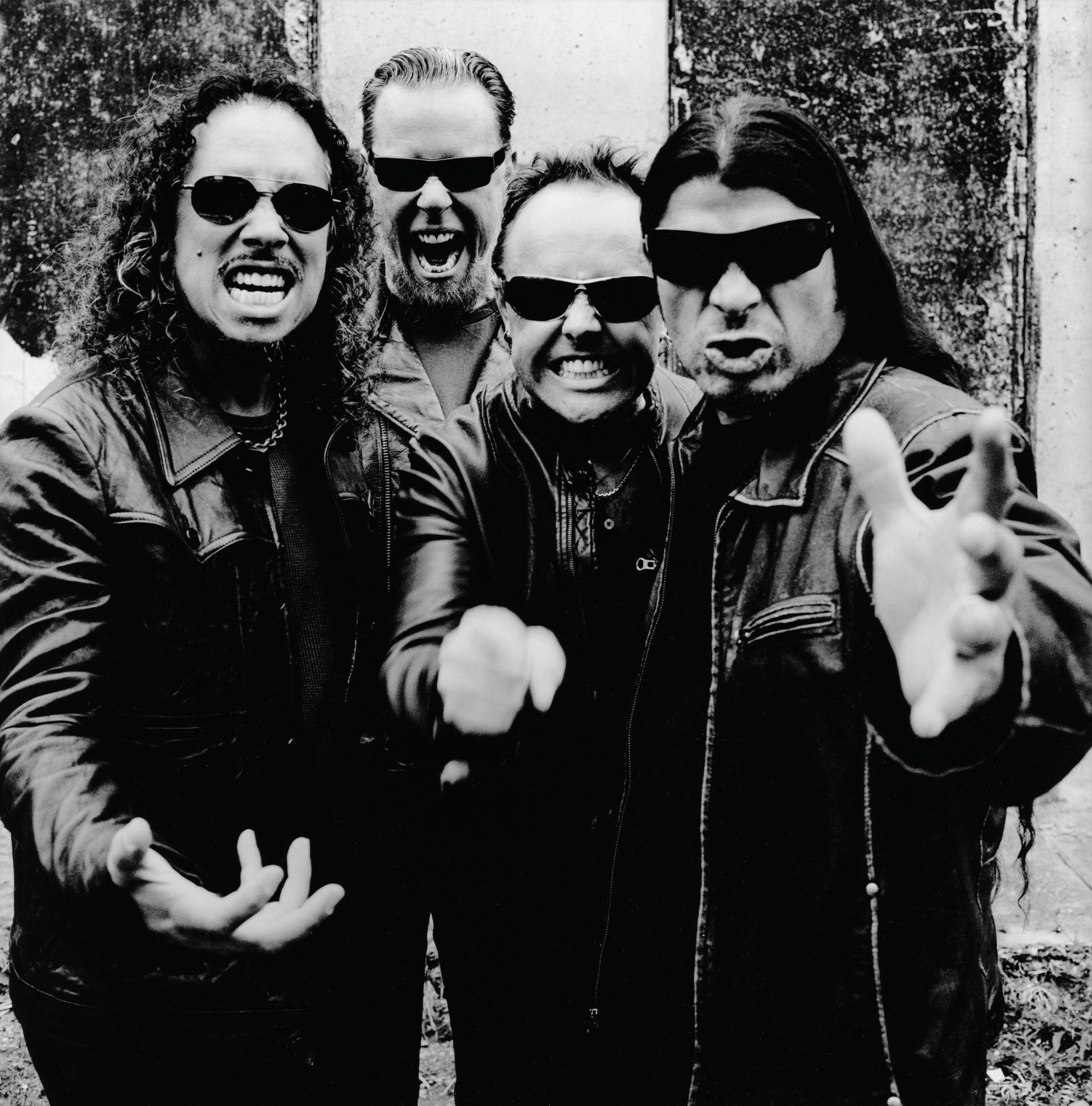
I lived a blissfully anonymous life in Seoul — at least, until I was mistaken for a member of Metallica. Not once, but twice.
This was the 1990s, a time when Korea did not exactly host a who's who of global music acts. Aside from the occasional megastar like Michael Jackson, pop juggernauts like New Kids on the Block, or pop/rap phenom M.C. Hammer, most big names did not bother. Instead, we got aging rockers on their third or fourth comeback tours — bands like Uriah Heep or Deep Purple — and, oddly enough, 1950s crooner Paul Anka. No offense to "Diana," but it was not exactly the height of cutting-edge entertainment. This was also before K-pop existed as a global force, before the Korean Wave made the country a cultural exporter. Korea was still very much an importer of Western pop culture, and live shows by major international acts were rare enough to be genuine events.
So, when it was announced that Metallica was coming to Korea for two shows in April 1998, it was a big deal. By then, Metallica was arguably the biggest heavy metal band on the planet, having sold tens of millions of albums since their 1991 self-titled release — the so-called "Black Album" — transformed them from thrash metal pioneers into mainstream rock giants. Their Korea shows were part of the tour supporting "ReLoad," their seventh studio album. I scored tickets the moment they went on sale. On the day of the concert, which was being held at one of the Olympic venues in Seoul's Olympic Park, I met up with two of my colleagues, Ray Smith and Joe Blake. We arrived early and decided to grab a drink across the street at a Bennigan's.
At the time, I had shoulder-length hair and often wore a Metallica T-shirt — every bit the aging rock and roller. We sat at the bar, and the bartender did a double-take when she saw me. Her eyes lingered just a little too long, mouth half open like she was trying to place me.
Ray leaned over, smirking. "I don't know, man... the way she looked at you, I wouldn't be surprised if she thinks you're in Metallica."
"Yeah, OK," I said, rolling my eyes.
"I'm serious, bro."
Joe nodded. "You kinda do look the part. The hair, the shirt, the brooding stare…"
"What brooding stare? I'm always brooding."
Ray was not letting it go. "I think we should see if we can get some free drinks out of this. This could be your rock star moment."
"You guys are ridiculous."
Ray leaned over to his Korean girlfriend. "Ask her when she comes back."
When the bartender returned with our drinks, she gave me another long look — eyebrows slightly knit, like her brain was playing Name That Rock Star. Before Ray's girlfriend could speak, another customer flagged the bartender away.
As we left, Ray's girlfriend circled back and asked the bartender if she had thought I was in Metallica.
Outside, Ray turned to her eagerly. "Well?"
She nodded. "Yes, she did."
And to be fair to the bartender, it was not totally outlandish. The concert was just across the street. One of the band members could have wandered over for a quick pre-show refreshment. Stranger things have happened. In 1989, I bumped into Don Henley's backup band at an Indian restaurant in Roppongi, Tokyo. Rock stars do eat, drink, and occasionally venture out without a security detail. It was plausible. Barely.
But the story of mistaken identities did not end there.
A few days later, I stopped by a stationery store in Sinchon. Still wearing my Metallica T-shirt, still rocking the long hair. The young woman behind the counter looked up, froze, and then lit up like she had just found a Willy Wonka golden ticket.
Without a word, she grabbed a thick sheet of paper and a black marker — the famous Korean "sign pen" — and thrust them at me.
"Sign," she said.
"Why?" I asked her in Korean.
That caught her off guard, but also seemed to impress her. "Sign, please," she repeated, eyes shining with anticipation.
Oh. My. God.
She thinks I'm in Metallica.
There was a moment — just a flicker — where I could have set the record straight. Told her the truth. But let's be honest: how often does someone ask for your autograph because they think you are a global rock star?
I know — I should have said something. But honestly, if someone hands you a pen with that much hope in their eyes, it is almost cruel not to sign.
What was I supposed to do? Correct her? Crush her dreams? So I gave her an autograph. I have no idea what I wrote — maybe something like "Rock on!" or "Thanks for the support." After all, I was representing the band. Had smartphones existed, we would probably have posed for a selfie and she would be telling the story to this day.
Now, before you judge her too harshly for the confusion, consider this: around that time, there were actual news reports that Metallica had been seen shopping in Namdaemun Market. So yes, it was technically possible that a member of Metallica could have wandered into Sinchon.
Sure, a stationery store was a bit of a stretch — but not entirely out of the realm of possibility. Of course, until I (ahem) showed up.
I imagined the conversation afterward:
"You'll never believe who came in today."
"Who?"
"A guy from Metallica."
"Metal-a-what?"
"You know, the band. Heavy metal. They had a concert."
"No kidding?"
"I even got his autograph!"
Of course, her friends probably told her she had been duped. That no member of Metallica would pop into her store. But she had proof. A signature. Undeniable, sign pen evidence.
Weeks passed. I forgot all about it — until fate struck again.
I went back to the same store to pick up something for class. As I browsed the aisles, I heard a voice behind me — sharp, indignant, and unmistakably familiar.
"You're not Metallica."
I turned. It was her. The clerk. The believer. Now very much a nonbeliever.
Busted.
I shrugged, paid for my stuff, and left with my head hung low.
To this day, I wonder what she did with that autograph. Maybe she kept it. Maybe she tossed it. Maybe it is still buried in a drawer labeled "Things That Lied to Me."
Had either the bartender or the clerk known the first thing about heavy metal, I would have been outed on the spot. But they did not. In a country where metal was still a niche import and Western rock stars were almost mythical figures seen mainly on MTV Asia, the gap between fandom and recognition was wide enough for a nobody with long hair and the right T-shirt to slip through. Long live the subterfuge.
One thing's for sure — I had my 15 minutes of rock star fame. Twice.
And I did not even need a guitar.
Rock and roll.
Jeffrey Miller is the author of several novels including "War Remains," a story about the early days of the Korean War, and "No Way Out," a thriller set in Seoul in 1990. Reach him at daejeonscribe@yahoo.com.

