Missouri’s 2025 Congressional Map Faces Narrow Legal Path Ahead of November Election
Key Takeaways
- •The 8th U.S. Circuit Court of Appeals is scheduled to hear remote arguments Thursday on whether Missouri’s 2025 congressional map can be used.
- •The U.S. Supreme Court’s stay means an 8th Circuit ruling for the Republican plaintiffs would not automatically reinstate the 2025 map.
- •The Missouri Supreme Court ruled that the 2025 districts never took effect under state law because a referendum petition placed them before voters.
- •Missouri held its Aug. 4 congressional primaries under the 2025 map but is preparing for the general election using the districts in effect in 2022 and 2024.
- •Secretary of State Denny Hoskins instructed local election officials to use the 2022 map, with military and overseas ballots due by Sept. 19.
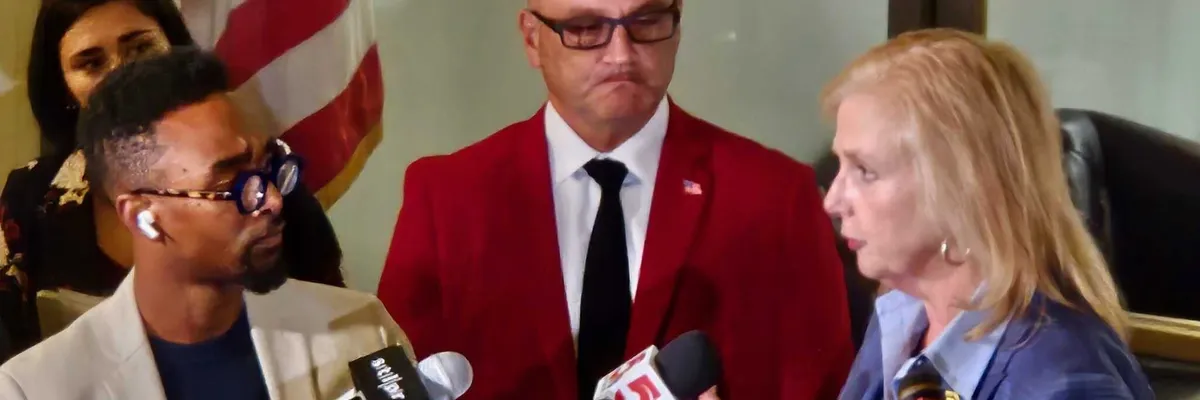
Republican officials are continuing their effort to reinstate a congressional map that Missouri lawmakers approved last year, despite two setbacks at the U.S. Supreme Court and a ruling by the Missouri Supreme Court that the map never became law.
The next step is scheduled for Thursday, when the 8th U.S. Circuit Court of Appeals will hear remote oral arguments. The hearing is set for 10 a.m., two days before the federal deadline for Missouri to send ballots to military and overseas voters.
The legal path to restoring the 2025 map for the November general election appears narrow. Even if the 8th Circuit rules for Republicans challenging the use of Missouri’s previous congressional districts, a U.S. Supreme Court order blocking the 2025 map would remain in effect unless the justices lift it themselves. The Missouri Supreme Court has also ruled that the map Republicans want to use never took effect under state law.
Former Missouri Supreme Court Judge Michael Wolff called that ruling an “insuperable obstacle.”
“The Supreme Court of Missouri is the final authority on what Missouri law is,” Wolff said, “and the court has said that (the 2025 map) is not the law and never was, because it has not been approved by a vote of the people.”
Wolff said the Republican plaintiffs would effectively need the 8th Circuit to order Missouri to conduct an election using districts that the state’s highest court has determined are not legally in effect. He added that the U.S. Supreme Court’s stay would still prevent the map from being reinstated.
“The chances,” Wolff said, “are between zero and zero.”
Justin Levitt, a law professor at Loyola Marymount University, told the St. Louis Post-Dispatch that there is virtually no chance an 8th Circuit ruling will ultimately change the map used in November.
“The war’s over,” Levitt said, “but there’s still soldiers fighting.”
Republican leaders maintain a different position. Gov. Mike Kehoe, who called lawmakers into a special session last year to redraw Missouri’s congressional districts at President Donald Trump’s request, said after the U.S. Supreme Court intervened last week that he still hoped the appeals court would revive the map.
“I look forward to the 8th Circuit’s consideration of the merits of the Missouri First Map and remain confident in the legal process moving forward,” Kehoe said. “Voters deserve certainty and clarity.”
The case was filed by U.S. Rep. Bob Onder, state Sen. Rick Brattin and two Missouri voters after the Missouri Supreme Court ruled Sept. 3 that a referendum petition challenging the new map was legal, sufficient and timely. The unanimous decision placed the map on the Nov. 3 ballot as Proposition A and held that the 2025 districts never took effect because a successful referendum petition suspends the challenged law until voters decide its fate.
The ruling created an unusual election situation. Missouri held its Aug. 4 congressional primaries under the 2025 map but is preparing to hold the general election under the districts used in 2022 and 2024. Onder, Brattin and the other plaintiffs argue that changing maps between the primary and general election violates the U.S. Constitution by effectively nullifying votes cast in the primary.
Chief U.S. District Judge Stephen Clark in St. Louis agreed that the plaintiffs were likely to prevail on that argument. On Sept. 8, he issued a temporary restraining order barring Secretary of State Denny Hoskins from using any congressional map other than the 2025 plan.
The order triggered two days of rapid legal developments. The 8th Circuit initially declined to hear an appeal, noting that appeals courts generally lack jurisdiction to review temporary restraining orders.
People Not Politicians, the group behind the referendum, then appealed to the U.S. Supreme Court. On Thursday morning, the high court stayed Clark’s order without any noted dissents. The court said the stay would remain in effect while the case was before the 8th Circuit and through any timely petition asking the justices to review the appeals court’s eventual ruling.
As a result, an 8th Circuit decision favoring Onder and the other plaintiffs would not, by itself, restore the 2025 map. After the Supreme Court intervened, the 8th Circuit ordered expedited briefs and scheduled Thursday’s arguments.
Hours after the U.S. Supreme Court acted, Hoskins reversed a directive he had issued to local election officials and instructed them to use the 2022 map. The Missouri Supreme Court found Hoskins in contempt of its Sept. 3 order but said he purged the contempt by reversing course.
During the contempt hearing, Chief Justice W. Brent Powell repeatedly questioned Hoskins’ lawyers about whether a federal court could alter the Missouri Supreme Court’s conclusion that the 2025 map never became state law.
“(The 2025 map) never went into effect, right?” Powell asked William Seidleck, an assistant attorney general representing Hoskins.
“Per this court’s holding, yes,” Seidleck replied.
Powell later asked whether a future federal ruling could change the fact that the map had never taken effect.
“As a matter of state law,” Seidleck said, it could not.
Chuck Hatfield, an attorney for People Not Politicians, told the judges that he believed the U.S. Supreme Court’s intervention had largely eliminated the immediate stakes of the federal appeal.
“I think we’re done, judge, as a practical matter,” Hatfield said, while acknowledging that the litigation could continue.
Another unresolved issue before Thursday’s hearing is the position that Attorney General Catherine Hanaway’s office will take. Hanaway represents Missouri and Hoskins in the federal litigation. Her office sided with the Republican plaintiffs before Clark and urged him to block use of the 2022 map. It later asked the U.S. Supreme Court to leave Clark’s order in place.
After the Supreme Court stayed that order and Hoskins agreed to follow the state court’s directive, however, Hanaway was less definitive about the next step.
“As far as our strategy for the 8th Circuit, I don’t know, because it’s a very confusing posture,” Hanaway told reporters last week.
Asked whether any path remained to revive the 2025 map, she said: “As I stand here today, no.”
Military and overseas ballots must be sent by Sept. 19. Local election officials spent much of last week waiting for the courts to determine which congressional districts they should use before Hoskins’ Thursday directive returned them to the 2022 map.
Primary sources: Missouri Independent, St. Louis Post-Dispatch, Missouri Independent, Missouri Independent, Missouri Independent

