Former Trump Homeland Security Chief of Staff Miles Taylor Accuses President of Governing Like a Soviet-Style Communist
Key Takeaways
- •Miles Taylor, who served in Trump's first administration and was revealed as "Anonymous," published an essay characterizing Trump's governance as resembling that of a Soviet general secretary rather than an American president.
- •The Trump administration has acquired equity stakes in 30 U.S. corporations through approximately $27 billion in government investments, an unprecedented expansion of federal ownership in private enterprise.
- •The administration invoked the Defense Production Act to direct corporate manufacturing decisions, a use not seen since the Korean War era.
- •Trump renewed efforts to remove Federal Reserve governor Lisa Cook, asking officials to disregard a Supreme Court ruling that determined she could not be dismissed from her position.
- •Taylor reported being placed on a national security blacklist and cited government pressure on the press, including DOJ subpoenas for reporters' cell phone records.
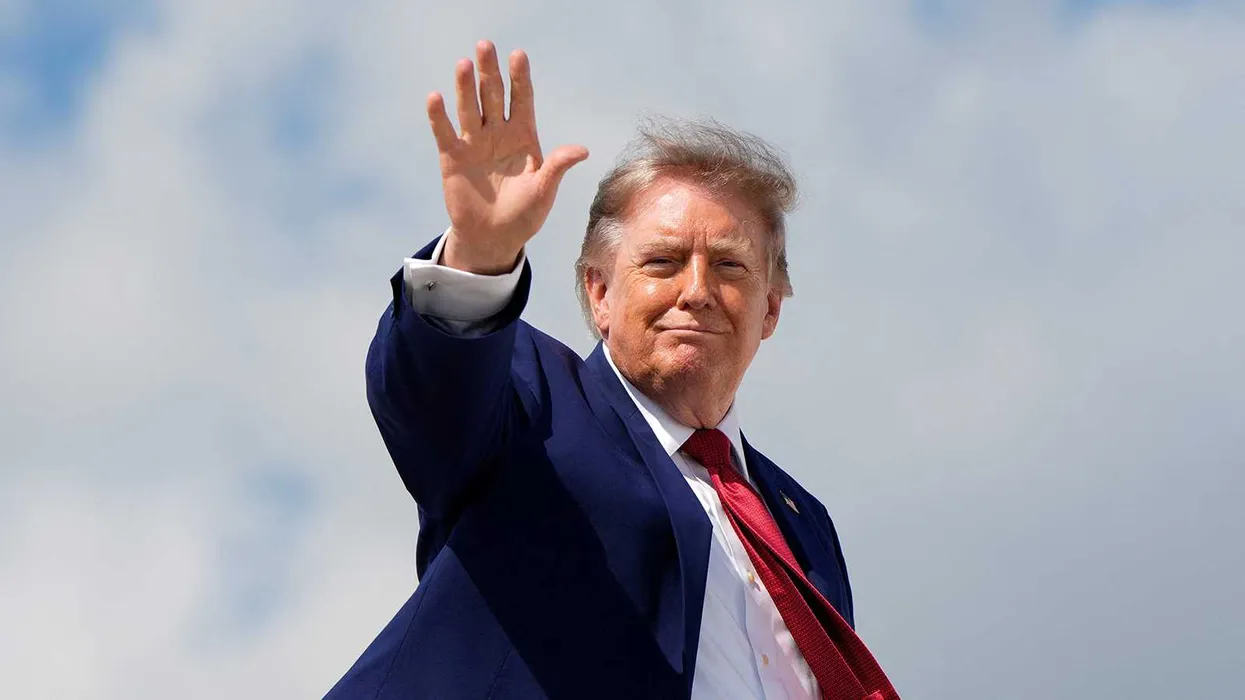
Miles Taylor, who served as chief of staff at the Department of Homeland Security during President Donald Trump's first administration and was later revealed as "Anonymous," the author of a 2018 New York Times op-ed and a 2019 book critical of the president, argued in a publicly published essay on Monday that Trump's 2026 reelection campaign is reviving 1950s-era "red scare" rhetoric while simultaneously implementing policies that Taylor characterizes as communist in nature.
"Donald Trump himself is a communist, or at least as close to the rulers of past communist regimes as anyone we've ever seen hold power in America," Taylor wrote. "I don't say that in jest. I say it as a former Republican who spent two-and-a-half years inside Trump's first administration, watching his rule trend away from democracy and toward something darker yet familiar to any student of history. If you strip away the flag pins and look at how Trump actually governs, you find something closer to a Soviet general secretary than to any American president of either party."
Taylor pointed to several administration actions as evidence. Last week, Forbes reported that the Trump administration has acquired equity stakes in 30 U.S. corporations through approximately $27 billion in government investments, a move Taylor described as having "almost no public transparency on the process, the purpose or the ongoing relationship." The investments mark an unprecedented expansion of federal ownership in private enterprise, coming alongside the administration's broader push to reshape domestic supply chains and onshore critical industries.
The administration has invoked the Defense Production Act, a Korean War-era statute that grants the federal government authority to direct what products companies manufacture. The law had not been invoked in this manner since the Korean War era. "All of a sudden, you have a president starting to command the means of production," Taylor said.
Taylor also cited Trump's renewed efforts to remove Federal Reserve governor Lisa Cook, an economist confirmed to the Board of Governors in 2022. According to the Washington Post, Trump stated in a letter that he is "considering removing" Cook, reiterating previous allegations of "mortgage fraud" and asking officials to disregard a Supreme Court ruling that determined Cook could not be removed from her position. The president has expressed frustration over the Federal Reserve's interest rate decisions. At its most recent meeting, no member of the board of governors voted to lower interest rates, including Trump's own nominee. The move against Cook comes amid longstanding tension between the White House and the central bank, whose policy independence has been a cornerstone of U.S. economic governance since the 1951 Treasury-Fed Accord established the Fed's autonomy in setting monetary policy.
"When a ruler seizes the central bank so he can personally direct the flow of money, it's what's known as state control of the economy," Taylor wrote. He warned that such tactics, deployed in contexts ranging from "Weimar Germany to Venezuela," historically led to "hyperinflation" and savings accounts becoming "worth nothing."
Taylor noted the shift among conservative politicians. The Tea Party movement previously warned against a "command economy" and opposed government involvement in healthcare. "Now, MAGA candidates are running as full-fledged champions of it, promising to see Trump's strongman agenda through," Taylor said. "After all, the president is only partway done transforming the U.S. government into his own, personal brand of communism. He needs a compliant Congress to finish the job."
Taylor identified additional examples of what he described as Soviet-style governance: the Justice Department's use of its prosecutorial power against political adversaries, FBI Director Kash Patel's efforts to dismiss agents involved in investigations concerning Donald Trump, and Secretary of Defense Pete Hegseth's campaign to remove generals who decline to pledge personal loyalty to the president. Taylor also cited government pressure on the press, including the DOJ issuing subpoenas for reporters' cell phone records, and stated that he has been placed on a national security blacklist.
Taylor further argued that Trump's campaign slogans echo communist-style promises: "The best healthcare in the world! Higher wages! Lower prices! On day one! Groceries down! Energy down! Cleaner cities with everything gleaming! In gold!"
"No leader of a free-market economy could ever make such promises because they'd know that the government can't control such things," Taylor said. "Yet Trump promised them anyway, the way Soviet general secretaries promised record harvests."
Taylor concluded by urging Americans to recognize what he described as the president's authoritarian tendencies and to oppose them through elections.
Source: Alternet

