Michigan Pilot Aims to Boost Local Food Purchases and Farm Partnerships
Key Takeaways
- •Bendle Public Schools, Chippewa-Luce-Mackinac Community Action Agency, Corewell Health, and Dearborn Public Schools received more than $650,000 combined through the Good Food for Michigan Project.
- •The project will assess the past year's food purchasing data from each institution to establish a baseline for measuring local sourcing.
- •Participating institutions will receive incentive dollars to make investments that support local food purchasing.
- •The initiative is a partnership among the Michigan Department of Agriculture and Rural Development, the Center for Good Food Purchasing, and MSU's Center for Regional Food Systems.
- •The participating institutions span schools, a community action agency, and a health system, reflecting the variety of institutional food buyers that can anchor regional food economies.
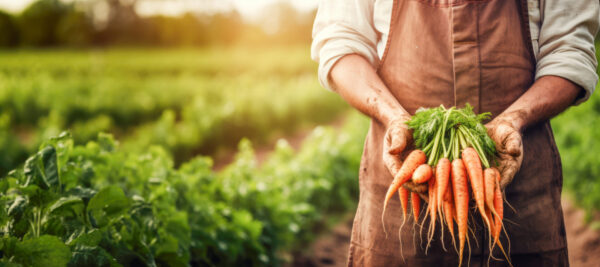
Four Michigan institutions are evaluating how they can increase their purchases of locally grown food and strengthen partnerships with farmers and suppliers.
Melanie Tran, Michigan impact manager at the Center for Good Food Purchasing, described the initiative's straightforward goal.
"The idea is really simple, and it is to help Michigan institutions connect with local farmers, producers and distributors to get fresher, better food into the communities that they serve and support market demand for Michigan-grown and produced products," she says.
Bendle Public Schools, Chippewa-Luce-Mackinac Community Action Agency, Corewell Health, and Dearborn Public Schools have received a combined total of more than $650,000 through the Good Food for Michigan Project.
The participating institutions span different sectors — a school district, a community action agency serving the eastern Upper Peninsula, and a major health system — reflecting the range of institutional food service operations that buy in volume, from school cafeterias to hospital kitchens. Such institutions are often cited as anchor buyers in regional food economies because their steady purchasing volume can create reliable demand channels for local growers.
"We will be taking a look at all of their food purchasing data for a baseline assessment from the past year's purchases," Tran explains.
"They'll also be receiving some of those incentive dollars to make investments," she adds.
The baseline assessment approach mirrors methods used in institutional food procurement programs elsewhere, where purchasing data is used to measure how much of an institution's food spend goes to local sources and to track progress over time.
During a recent webinar, Tran introduced collaborators to the initiative and encouraged farmers and suppliers interested in expanding their reach to participate.
The project is supported by a partnership among the Michigan Department of Agriculture and Rural Development, the Center for Good Food Purchasing, and Michigan State University's Center for Regional Food Systems. The Center for Good Food Purchasing works with institutions nationally on values-based purchasing standards, while MSU's Center for Regional Food Systems has long focused on strengthening Michigan's local and regional food supply chains.

