Medicare for All Gains Momentum After 2026 Midterm Blue Wave, but Faces Steep Political Hurdles
Key Takeaways
- •Progressive Democratic candidates who campaigned on Medicare for All won races in states including Texas, Iowa, Maine, and Michigan, though generally by smaller margins than more moderate Democrats.
- •Healthcare affordability dominated the 2026 midterms, but polling shows voter support for Medicare for All declines when people weigh arguments about higher taxes or treatment delays.
- •The expiration of enhanced Affordable Care Act subsidies has sharply raised costs for marketplace consumers, with one Michigan couple's monthly premiums jumping from $700 to $1,300 alongside a $7,500 deductible.
- •Projected Medicaid cuts are expected to leave 7.5 million additional Americans uninsured by 2034, intensifying pressure on both parties to pursue healthcare reforms.
- •Potential Democratic responses range from reinstating ACA subsidies and limiting prior authorization to a public option or a baseline version of Medicare for All that keeps private insurance in place.
LANSING, Mich. — After fifteen years as an emergency room nurse, Kim Bogan has concluded that the only way to fix the American healthcare system is to tear it down and start over.
The patients who arrive for triage at her hospital are sicker than ever, she has found. Many cannot afford the prescriptions they receive in the emergency department, and when patients die, she sometimes wonders whether she could have saved them if she had not been caring for five or six other people at once.
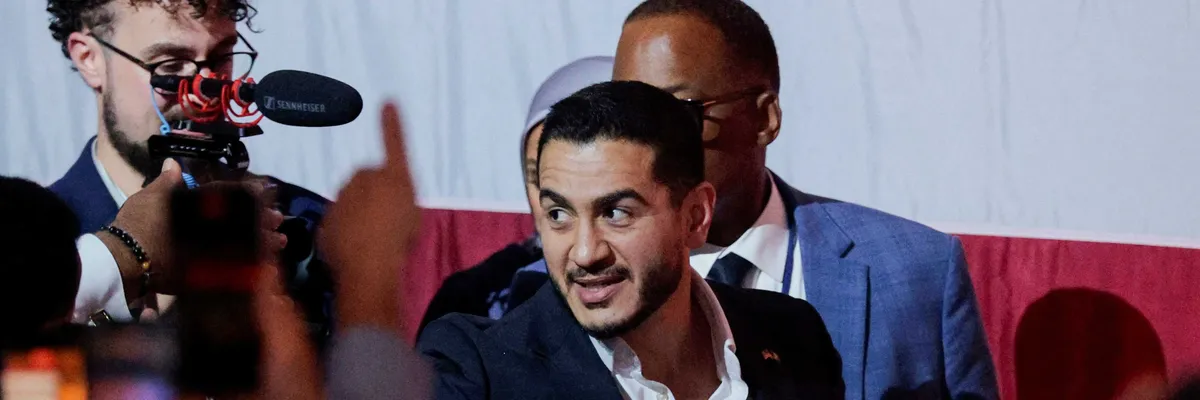
That conviction led her to spend the past year shuttling between 12-hour shifts at Lansing's Sparrow Hospital and campaigning for Abdul El-Sayed, the Democrat who made "Medicare for All" a signature issue in his congressional campaign and is now a senator-elect.
Bogan knows, however, that the success of progressive candidates who campaigned on some form of the policy in states such as Texas, Iowa, Maine, and Michigan does not mean Medicare for All will be an easy sell. "Nobody expected that," Bogan said.
Medicare for All typically refers to a government health program that would guarantee Americans coverage by replacing most or all private insurance. The name borrows from Medicare, the federal insurance program created in 1965 that covers Americans 65 and older; the proposals would extend that kind of government-backed coverage to people of all ages. Critics are already pointing out that, even in a blue wave as massive as the 2026 midterms, the most vocal Medicare for All champions generally won by smaller margins than more moderate Democrats.
"Whatever else people voted for in this midterm election — anger about inflation, anger about corruption, anger about the Iran war — they by and large didn't vote to have the government take over health insurance," said Jonathan Oberlander, a professor and healthcare reform expert at the University of North Carolina-Chapel Hill.
Still, supporters of universal healthcare see the moment as a once-in-a-generation opportunity. Americans are buckling under the weight of healthcare costs and are hungry for change, and several states, including Oregon, are already exploring what it would take to set up single-payer systems, in which a single public payer would replace the current mix of private insurers.
The affordability crisis "dominated this election, and Medicare for All speaks to that," Oberlander said. Supporters expect the policy agenda to gain major momentum heading into the 2028 Democratic presidential primaries, he added.
But more moderate Democrats, who made key gains in states such as Iowa, Kansas, and South Carolina, may view the idea's growing popularity as a threat to those victories. "If Democrats want to hold those seats, which were very difficult to win, they're probably not interested in passing Medicare for All," Oberlander said. "That's a huge political risk in red-leaning states. So just because Democrats have a majority doesn't mean it's a majority for Medicare for All."
Previous Medicare for All proposals would have required millions of people to willingly give up their existing coverage, fueling unprecedented opposition from the healthcare industry, said Michael Cannon, a healthcare economist at the libertarian Cato Institute and a Medicare for All opponent. "If Medicare for All actually had the price levels that Bernie Sanders and Abdul El-Sayed envision, the industry would tear it to shreds," he said.
Public opinion complicates the picture as well. Even as voters express support for Medicare for All in greater numbers than at nearly any point in the past decade, that support falters when they are confronted with common arguments against it — such as the prospect of higher taxes or delays in treatment — according to a recent KFF poll.
For one former Michigan nurse, the debate is intensely personal.
Jaime Bardenhagen said she feels a little guilty about the idea of getting her healthcare coverage from the government. A former nurse in rural Leelanau County in northern Michigan, Bardenhagen has Parkinson's disease and sialidosis, a rare genetic disease that can cause seizures. Yet she "feels bad" about qualifying for disability benefits next year. Growing up on a farm, she said, such programs were something she "didn't believe in" — people were supposed to work for what they needed, not rely on government support. "And I did work as hard as I could, for as long as I could," she said.
But like millions of Americans, Bardenhagen and her husband saw their health insurance costs skyrocket this year after enhanced Affordable Care Act subsidies expired — temporary federal subsidies that had lowered premiums for people buying coverage on their own through the law's marketplaces rather than through an employer. Their monthly premiums jumped from $700 to $1,300, with a deductible of $7,500, and they began putting off medical tests her doctor wanted. "We couldn't afford that," she said.
Her husband voted for Donald Trump in 2016, Bardenhagen said; this time, he stayed home. Bardenhagen, a Democrat, also considered sitting out the midterms. "I just don't trust either party anymore," she said.
Despite those misgivings, she supports Medicare for All. Her years as a nurse left her disillusioned with the current healthcare system, she said, because she felt insurance companies — not doctors — were calling the shots, determining which prescriptions and procedures patients could receive. Wouldn't it be fairer, she figured, if "good people" in government were making those calls? "So, absolutely, the government should take it over."
That takeover is Cannon's worst-case scenario. Giving the federal government greater control over the healthcare system would only backfire, the libertarian economist said, leaving patients "in even more vulnerable positions, because they would be relying for their access to healthcare on government spending that is just not sustainable." In his view, Medicare for All supporters are naive to think the government could negotiate lower drug and healthcare prices by replacing private plans with a public one. "Everyone knows that the industry is going to end up running the show, and that has been the case since they passed Medicare," Cannon said.
For Bardenhagen, the message she wants Democrats to take from the midterms is simple: "Do something," the former nurse said.
"With the election results, both parties are going to be under pressure to come up with solutions to address the current affordability crisis in healthcare," said Sara Collins, a senior scholar at the Commonwealth Fund, a private foundation that supports healthcare research.
That could mean smaller but still significant bipartisan deals that might have seemed unthinkable before the midterms: reinstating the enhanced Affordable Care Act subsidies that expired at the end of last year, or advancing other measures with broad support, such as curbing insurance companies' use of prior authorization, which requires patients to get insurers' approval before proceeding with a covered treatment. "That's probably the lowest-hanging fruit for them, I'd think," said Patricia Votava, a political strategist based in Sullivan's Island, South Carolina.
Pressure for reform is likely to build, with Affordable Care Act premiums set to rise by double digits again next year, employers passing more of their growing insurance premium costs to workers, and massive cuts to Medicaid looming — cuts to the joint federal-state program that covers low-income Americans — that are projected to leave 7.5 million more people uninsured by 2034.
On the whole, the midterm results could push Democrats' healthcare agenda further left, Oberlander said. Some Democrats could support a public option, a government-backed health plan people could opt into. Others in the party could coalesce around a version of Medicare for All that stops short of fully replacing private insurance and instead serves as "guaranteed baseline government health insurance," as El-Sayed described his current plan during the campaign. "If you like your insurance from your employer or from your union, that can still be there for you," he said.
Whatever they opt for, Democrats should not expect voters to wait patiently for years of gradual change, Oberlander said. "If the window opens, you better jump right through."
South Carolina correspondent Lauren Sausser contributed to this report. This article first appeared on KFF Health News and is republished by Alternet under a Creative Commons Attribution-NonCommercial-NoDerivatives 4.0 International License.

