Why You Can't Find McDonald's $3 Value Menu
Key Takeaways
- •McDonald's launched its revamped McValue platform, including a 10-item Under $3 EDAP menu, in mid-April with unanimous franchisee field vote approval.
- •CEO Christopher Kempczinski said only about 60-65% of the U.S. system is executing the recommended under-$3 pricing architecture.
- •McDonald's removed many digital and loyalty app offers to support the value menu, a trade-off Kempczinski said accounted for two-thirds of the Q2 miss.
- •U.S. same-store sales grew only 0.8% in Q2.
- •Roughly 95% of McDonald's U.S. restaurants are independently owned franchisees who set their own prices and are not required to follow corporate promotions.
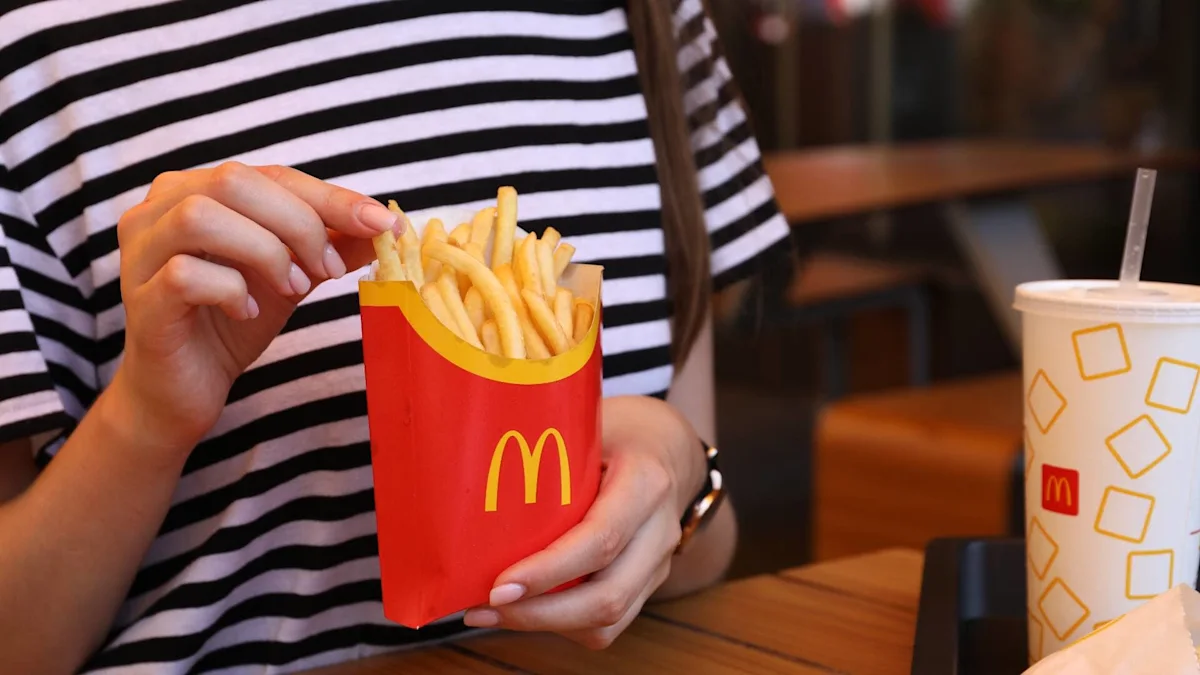
McDonald's (MCD -0.51%) franchises nearly all of its restaurants in the United States, which gives franchise operators significant influence over operational changes — including, in some cases, the ability to reject deal pricing.
Typically, when McDonald's rolls out a promotion such as $2.99 Snack Wraps or $4 breakfast meals, only a handful of franchise operators decline to participate. Franchisees running locations in airports, rest stops, and other high-cost real estate may pass, but most generally get on board. That appeared to be the situation with the chain's new $3 Value Menu.
Value pricing has become a central battleground in fast food, as chains including Wendy's, Burger King, and Taco Bell have leaned on combo deals and limited-time offers to pull inflation-weary customers back through the doors. McDonald's revamped McValue platform was its answer to that pressure — and, like many of its rivals' deals, it runs through franchisees who set their own register prices.
During the chain's first-quarter earnings call, CFO Ian Borden said franchisees had overwhelmingly supported adding the promotion. "With unanimous approval through the franchisee field votes, we launched the revamped McValue platform in mid-April. The new under $3 menu features well-known a la carte items available throughout the day," he said.
"Unanimous" sounded encouraging — but in practice, something else has unfolded that has left customers in a difficult position.
McDonald's franchisees make their own choices
As a retail and restaurant writer who has covered these industries for more than 30 years, I generally expect heavily promoted deals to actually appear on the menu when I visit a chain. That has not always been the case with McDonald's Under $3 Every Day Affordable Price (EDAP) menu.
CEO Christopher Kempczinski explained the menu during the Q2 earnings call.
"That is the EDAP menu. You could call that 10 items for under $3. That was sort of the last piece that we felt like we needed to get done in the U.S., and that was what McValue 2.0 was, as we referred to it. That's what we introduced in April of this year," he said.
The $3 menu "has not delivered against our expectation," the CEO acknowledged.
"Part of that was due to the fact that we're getting really inconsistent execution. Only about, call it, 60% to 65% of our system is currently executing the recommended pricing architecture with the 10 items for under $3," he added.
Those restaurants are not necessarily selling the items for more than $3; they simply are not selling them at the prices the company recommends.
McDonald's actually pulled other deals
While Kempczinski was careful not to blame franchise operators for the $3 menu's shortcomings, he did disclose that the chain had removed other promotions to clear the way for its adoption.
"We compounded that unintentionally by our system pulling off a lot of digital offers. And digital offers for us is something that is core to kind of our loyalty program. It's something that's valued by our most loyal customers. And so that ended up being a bad trade," he said.
That trade-off mattered because McDonald's has built its digital app and loyalty program into a major sales channel in recent years, with the company regularly touting the tens of millions of active U.S. loyalty users it draws deals and repeat visits from. Pulling back app-only offers risked undercutting one of its most consistent growth levers.
He attributed much of the company's weak 0.8% Q2 U.S. same-store sales growth to that decision.
"Putting in an EDAP program that didn't deliver and taking away a lot of digital offers and the Buy One, Add One program that was the point I referenced or Ian referenced in the call, which is 2/3 of our miss in the quarter was related to that bad trade," he shared.
McDonald's needs buy-in from franchise operators
The chain's franchise operators are not required to implement promotions created by corporate — though they usually do, albeit not always at the exact prices corporate suggests.
"McDonald's prices vary by location. Ninety-five percent of McDonald's restaurants are independently owned and operated by franchisees, who have the ability to set their own prices," the company states on its website.
That is something the chain has to manage actively, according to RTM Nexus CEO Dominick Miserandino.
"McDonald's corporate can spend millions on national ad campaigns promoting $5 meal deals, but the franchisee owns the register — and that's where the strategy falls apart," he told TheStreet.
Franchisees do not have to comply, and many have good reasons not to.
"Corporate can set a recommended price, but these operators are independent business owners fighting local wage spikes and rising food costs. When a franchisee looks at a low-margin national promo and realizes it eats into their bottom line, they simply opt out or jack up prices elsewhere on the menu to offset it," he added.
Consumers, meanwhile, do not always understand why the commercials they see do not match the reality at their local McDonald's.
"That creates a massive disconnect for consumers. You see a dollar deal on TV, drive up to the window, and get charged full price because the local owner refused to take the margin hit. McDonald's biggest pricing battle isn't with food inflation — it's with its own franchisees protecting their unit economics," Miserandino said.
How McDonald's closes that gap — whether by restoring digital offers, adjusting the EDAP pricing architecture, or winning fuller franchisee execution — is likely to shape how its U.S. value strategy performs in the quarters ahead.
This story was originally published by TheStreet on Sep 2, 2026, where it first appeared in the Restaurants section.
