Mary Trump Warns 'Deteriorating' Trump Has 'Lost Grip on Reality,' Says Psychological Crisis Has Reached 'Breaking Point'
Key Takeaways
- •Mary Trump, a clinical psychologist and prominent critic within the president's family, warned on Thursday that she believes his psychological crisis has reached a breaking point.
- •She identified Trump's late-September address to the UN General Assembly, his first since returning to office in January, as a moment that revealed a breakdown in his grip on reality.
- •As evidence, she cited his musing about annihilating Iran, his promotion of debunked accomplishments, and his call for the world to rename AI 'super intelligence.'
- •She argued the situation is structurally dangerous because the president holds sole authority to order the use of nuclear weapons as commander in chief.
- •She concluded that the danger Trump poses to the United States and the world grows more severe each day and urged that his conduct not be treated as normal.
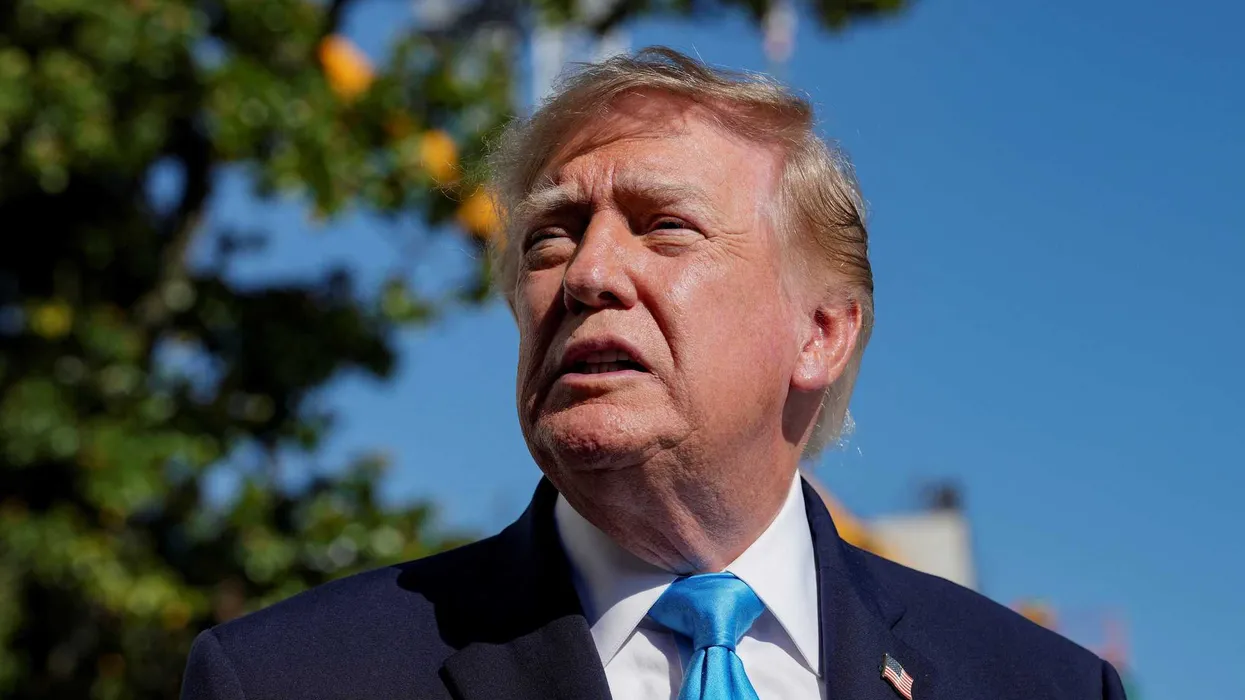
Mary Trump, the niece of President Donald Trump and a clinical psychologist who has been among the president's most prominent family critics, warned on Thursday that the president's "psychological crisis" has reached a "breaking point," arguing that his latest threats, what she described as his "deterioration," and his authority to use nuclear weapons form an increasingly dangerous combination. Her comments appeared in a post on her Substack, highlighted in a report by Alternet. She has written about her uncle's psychology before, most prominently in her 2020 bestseller "Too Much and Never Enough," and her Substack has since served as a regular outlet for those assessments.
Writing in the post, she said that she has observed her uncle's "psychological deterioration" for some time, "what he did at the United Nations General Assembly in late September was something different, though. It wasn't just the usual cascade of lies and misstatements we've come to expect from him." The General Assembly brings world leaders to United Nations headquarters in New York each September, and American presidents have traditionally used its podium to lay out their foreign policy before a global audience. For Trump, the late-September appearance was his first address to the body since returning to office in January.
In her assessment, the address demonstrated that the president's "grip on reality" has broken down entirely. During the speech, Trump mused about whether he would annihilate Iran, driving them "into hell with no chance of survival and no hope of future greatness or generations." He also touted a string of debunked accomplishments that Mary Trump contends go beyond mere lies.
"There is no hesitation, no moment of doubt, no acknowledgment that perhaps he is conflating something he imagined with something that actually occurred," she wrote. "This is not a man who is deliberately lying. This is a man whose grip on reality has become so tenuous that he genuinely cannot distinguish between what he has accomplished and what he fantasizes about accomplishing."
One of the most blatant examples, she argued, came when the president proclaimed that the world rename AI "super intelligence" — a remark that offered, in her view, "perhaps the clearest view yet into his delusional thinking."
"He believes that by declaration, he can change the terminology used by the entire world," she wrote. "He is not joking. He is not being playful or rhetorical. He genuinely believes that his saying this at the United Nations means it will now happen. This is the thinking of someone who has lost the ability to understand how the world actually works, how language functions, how institutions operate."
From there, she noted, the president went on to ramble about the "Russia hoax," the "Ukraine hoax," climate change, open borders and China in a manner that became increasingly incoherent. "This is not leadership," she wrote. "This is a deeply disturbed individual revealing his complete detachment from reality and from responsibility." In other words, she said, "he cannot distinguish between fantasy and fact."
"What makes this so dangerous is that Donald is no longer operating within the confines of what might be called a personality disorder," she argued. "He is no longer simply a narcissist or a sociopath. He is a man whose relationship to objective reality has fundamentally broken down. When he speaks, he is not filtering facts through a self-serving lens. He is speaking from a place in which his fantasies have become, for him, indistinguishable from fact. He has been given the power of a nuclear arsenal, control over America's military and the ability to set foreign policy for the most powerful nation on Earth. And he is using that power to act out his psychological pathologies on the world stage." The stakes she is pointing to are structural: under the American system, the president serves as commander in chief, and the authority to order the use of the country's nuclear weapons rests with that office — a long-standing arrangement whose safeguards have periodically been the subject of debate in Washington.
Mary Trump urged that the world take seriously what she called the "chilling moment" when Trump "presented the choice before him regarding Iran not as a policy decision to be made in consultation with his advisors, his military, his intelligence agencies and Congress, but as his personal decision. And he did so in language that suggested he was genuinely considering whether to destroy an entire nation. This is not normal. This is not something we should accept or accommodate or attempt to spin as anything other than what it is: a deeply disturbed individual revealing his complete unfitness to hold the office of the presidency."
She concluded with a warning: "What we witnessed at the United Nations was not a president speaking to the world. It was a man in psychological crisis, broadcasting his deterioration in real time, while representatives from other nations sat and watched the leader of the free world lose his grip on reality. And we, as a nation, need to understand what this means. We need to understand that with each passing day, the danger Donald poses to this country and to the world grows exponentially more severe. The breaking point is here. We are watching it unfold before our eyes."

